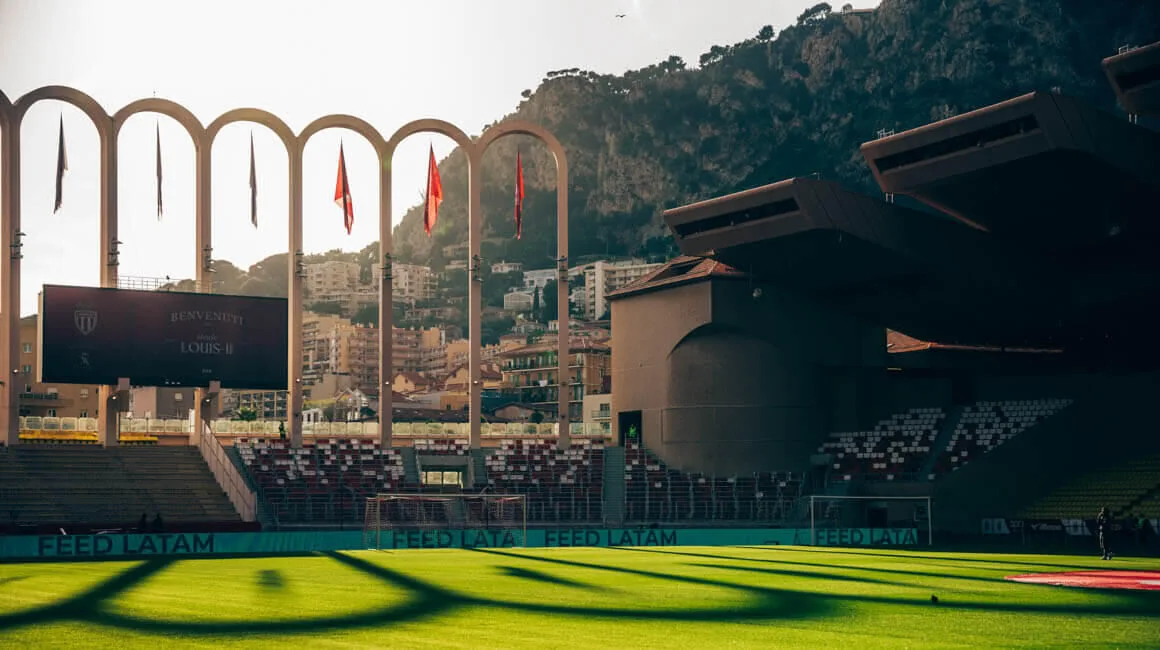
AS Monaco plays in Ligue 1 because it is historically affiliated to the French football system, although Monaco is an independent country. Its football organisation registered with the French federation in 1919, and its route to the top flight came through the French pyramid. Here is how that history affects the club’s domestic honours, European identity and home ground.
Monaco is a country; Ligue 1 is the club’s league
AS Monaco is a Monégasque football club that plays in the French league system. Those two descriptions answer different questions: Monaco identifies where the club belongs, while Ligue 1 identifies the competition its first team plays in. The club does not become geographically French because its league opponents include Paris Saint-Germain, Marseille or Lyon.
The Principality’s status is explicit. Article 1 of Monaco’s constitution describes it as a sovereign, independent state. The United Nations country profile records its admission to the UN on 28 May 1993. Monaco is therefore neither a neighbourhood of Nice nor a French administrative region with a football nickname.
Football’s organising boundaries can differ from political borders. In this case the relevant relationship is the club’s longstanding affiliation to the French Football Federation, the FFF. AS Monaco’s own history traces that connection to the football organisation registered in 1919. Its development then took place through regional and national French competitions. The modern league appearance is the continuation of that sporting history, rather than a new decision to change the Principality’s nationality.
That distinction helps when reading a results app. A competition heading such as “France — Ligue 1” groups Monaco with the other participants because their results count toward the same championship. It tells you which table, matchday and domestic trophy the fixture belongs to. It does not tell you that every participating club’s stadium sits inside the same sovereign territory.
The reverse mistake is to treat Monaco’s special location as evidence that the team plays only occasional exhibition matches against French clubs. Its league games are ordinary competitive fixtures. The points have the same sporting purpose as those won by the other participants, and Monaco’s position in the table matters for its league ambitions. The interesting exception is the geography of the club, not whether a Monaco victory counts.
“Monaco” also carries several sporting associations, so identifying the entity matters. AS Monaco is the football club. A reference to the Principality in Formula One, or to a different Monaco sports team, does not establish anything about its football competition. Similarly, Monte Carlo is a district name used widely in descriptions of Monaco; it is not the name of a separate sovereign country that supplies a rival national league.
For a wider comparison, the Ligue 1 teams guide places Monaco alongside its domestic opponents. Keep the location and competition questions separate when using it: the club represents a distinctive Monégasque home, while the season’s sporting context is French league football.
How Monaco became part of the French football pyramid
The 1919 affiliation and the 1924 foundation
Two dates appear in Monaco’s early history, and they describe different stages of the organisation. The club’s official birth history dates AS Monaco Football to 1 August 1919 and records its French federation registration number as 91. The wider Association Sportive de Monaco was created on 24 August 1924, the foundation date celebrated by the club.
That earlier football history matters because it puts French affiliation near the beginning of the story. It was not a solution invented when Monaco first qualified for the Champions League, nor a recent accommodation for a wealthy owner. The football organisation had already connected itself to the neighbouring country’s competition structure before the modern club’s celebrated foundation date.
Both dates can therefore be correct in a properly labelled account. A centenary tied to 1924 concerns the club’s institutional foundation; an explanation of federation affiliation needs the earlier football registration. Treating one date as proof that the other must be a mistake loses the very distinction that explains Monaco’s place in French football.
The proximity to French clubs made that sporting relationship intelligible, but proximity alone is not the complete answer. A border location does not automatically confer entry to another association’s professional league. Monaco’s specific historical affiliation, followed by participation in the French pyramid, is the concrete explanation. The club’s identity grew within that system rather than alongside an independent professional championship in the Principality.
Professional football and the first top-flight promotion
Joining a football system and reaching its highest division were separate achievements. AS Monaco’s early professional history includes a Division 2 attempt in 1933, a promotion-playoff defeat against Saint-Étienne and a retreat to amateur football amid financial problems. A regional title in 1947/48 enabled its return to Division 2; the first promotion to Division 1 followed in 1953.
Those setbacks are useful evidence against the idea that Monaco was simply handed a permanent place among the elite. The club had to survive organisational difficulties and climb through sporting levels. Its Monégasque location remained the same while its competitive status changed. The story is much closer to the development of a club within a pyramid than to an outside team buying a guest appearance.
The first top-flight match came against Toulouse on 23 August 1953 and ended in defeat. That milestone shows how long the path from initial federation affiliation to elite competition had been. By then Monaco’s football relationship with France was established history; the new achievement was reaching the highest level of that relationship.
Division 1 is the historical name you will encounter in accounts of this period. Today’s Ligue 1 belongs to that same top-flight lineage, so an old report calling Monaco a Division 1 participant is not placing it in a different country’s championship. Read the competition name in its historical context. The enduring feature is the French pyramid, while the level, branding and sporting strength of the club have changed over time.
Monaco competes for French trophies and can be relegated
A place in the league is earned on the pitch
Monaco’s affiliation to French football does not guarantee membership of Ligue 1 in every season. The clearest recent example is the relegation at the end of 2010/11, followed by two seasons in Ligue 2. The club’s rebuilding history records its return in 2013 under Claudio Ranieri, when it also won the second-division title.
That episode separates the two questions fans often combine. “Why does Monaco play in France?” concerns its football affiliation. “Why does Monaco play in Ligue 1 rather than Ligue 2?” concerns sporting performance and the division it has reached. In 2011 the first answer did not change, but the second did. Monaco moved down within the same system, rather than returning to a separate Monégasque championship.
Promotion also had to be achieved through that system. A club’s reputation, stadium, owner or previous European results do not themselves supply points in a new league campaign. Monaco’s eventual return required a successful second-division season. That is why its revival is a sporting achievement in its own right, even for a club with an extensive top-flight history.
For the current campaign, the relevant comparison is consequently the Ligue 1 table. Monaco’s results need to be assessed against those of its league competitors: points won, games played and the position reached. The Principality’s sovereign status does not create a separate standings column or a second title race beside the French championship.
Why its league titles and cup wins are French honours
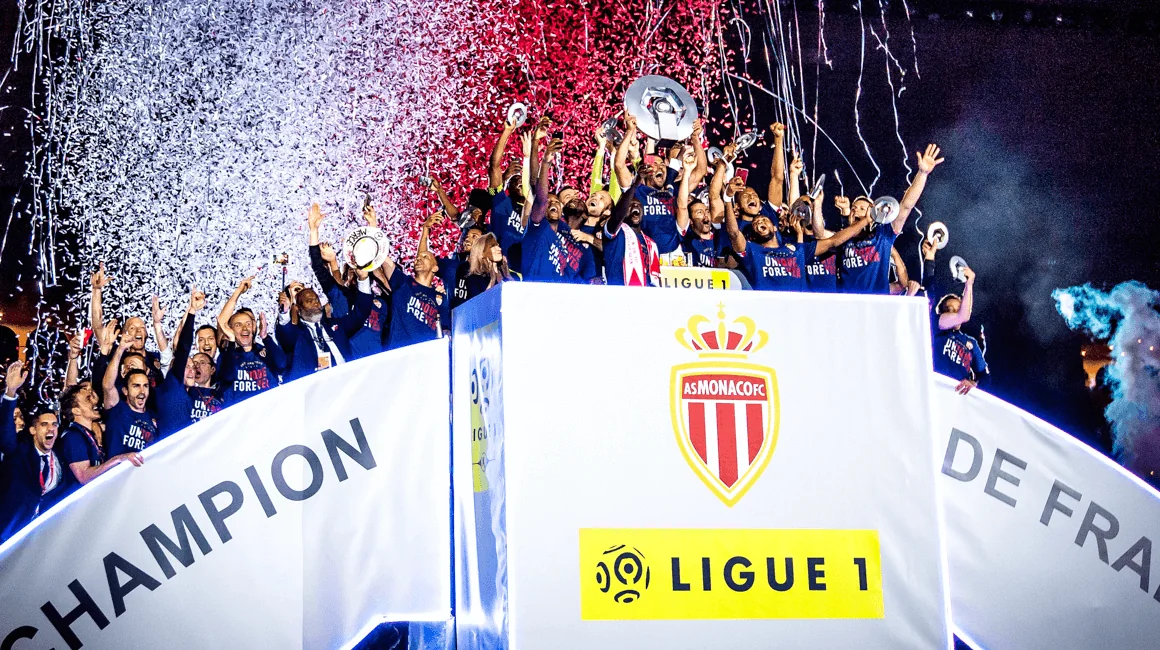
AS Monaco’s official honours list records eight French league titles and five Coupe de France victories. The first league championship came in 1961, and the most recent listed title is the 2016/17 triumph. These are achievements in France’s competitions by a club based in Monaco, not victories in a separate domestic league of the Principality.
The cup record makes the distinction especially clear. Monaco won its first Coupe de France in 1960, beating Saint-Étienne 4–2 after extra time. In 1963 it added another cup victory, against Lyon, in the same year as a league title. Opponents, competition and trophy identify those wins as part of French football history even though the winning club’s home community is Monégasque.
A league championship and a cup win also reward different kinds of success. The league measures performance across a season against the rest of the field; a knockout cup requires survival through individual ties. Monaco’s presence in both gives supporters two domestic contexts for judging the team. A cup result should not be mistaken for a league result, and a successful cup run does not automatically mean a strong position in the championship.
This is why checking the competition label alongside a score is useful. A Monaco–Marseille meeting can matter differently depending on whether it is a league fixture or a cup tie. Use the league results page for championship matches, and keep that record separate from the club’s wider schedule.
How Monaco’s French affiliation works in Europe
European club football retains the distinction between a club’s home and its football association. On UEFA’s Monaco page, the team is marked FRA. That is its French sporting affiliation in the competition’s organisation, rather than a statement that the Principality has ceased to be a country.
Monaco’s route into European competition therefore runs through its performance in the French system. An instructive example followed its 2013 promotion: second place in Ligue 1 in 2013/14 brought qualification for the 2014/15 Champions League. The club did not obtain a separate entry simply because it was the leading professional team based in Monaco. Its domestic league finish was the decisive sporting context.
The club’s European achievements are substantial, but they also need the correct competition labels. Monaco reached the 2004 Champions League final and lost 3–0 to Porto. In 2016/17 it eliminated Manchester City and Borussia Dortmund on the way to the semi-finals before Juventus ended its run. Those campaigns made a Monégasque club prominent on the European stage while it competed through a French football affiliation.
UEFA’s historical account documents both runs. The 2017 season is especially useful for separating achievements: Monaco won the French league, but it did not win the Champions League. Domestic success and continental progress can happen in the same campaign without becoming the same honour.
The club’s European identity is separate from player nationality
A footballer can play for Monaco without representing either Monaco or France internationally. Folarin Balogun provides a concrete example: U.S. Soccer lists him as a United States national-team player while recording AS Monaco as his club. The club competition and the international team answer different questions about the same player.
This distinction becomes useful during international breaks. A Monaco player’s national-team fixture is not another AS Monaco league match, and an international goal is not added to the club’s Ligue 1 total. The player may move between two sporting contexts while remaining employed by one club. Neither context turns his teammates into members of the same national team.
The same care applies to European histories. “Monaco represented French football” describes the association through which the club competed; “Monaco is a Monégasque club” describes its identity and home. Both descriptions can be used accurately in an account of the same match. Reading them together preserves the special character of the club without inventing a separate European qualification system for it.
The Stade Louis-II is in Monaco, not in a French host city
The stadium provides the most tangible answer to the country question. AS Monaco’s home is the Stade Louis-II in the Principality itself. The club’s official venue page places it in Fontvieille and dates the inauguration of the present complex to 25 January 1985. A Monaco home league fixture is therefore a French championship match played in Monaco.
The setting also explains why its television appearance differs from many football grounds. The venue incorporates an athletics track and forms part of a larger sports complex, including a sports hall and aquatic facilities. Its familiar arches, the track and the surrounding buildings belong to an urban sporting venue with several functions. They are not signs that the football match is being staged at a neutral exhibition site.
That is a useful distinction for an away supporter. Travelling to Monaco for a Ligue 1 match means visiting the opponent’s actual home ground, with its own supporters and matchday arrangements. The league’s national label does not replace the stadium address. Equally, a Monaco away fixture takes place at the other club’s ground; selecting the club name alone is not enough to identify the destination.
Fontvieille, Monte Carlo and the matchday destination
Monte Carlo is a familiar name internationally, but it is not the district where the football stadium stands. The Stade Louis-II is in Fontvieille, developed on land reclaimed from the sea. Use the ground’s specific name and address when planning a visit, rather than assuming that a casino, race circuit or broadly labelled Monte Carlo attraction is the matchday destination.
There is also an older Stade Louis-II in the club’s historical story. AS Monaco’s ticketing presentation explains that the original ground opened in 1939 and hosted the team until 1985. The present complex replaced it nearby. An old photograph of Monaco playing at a differently configured Louis-II is consequently not evidence that the club once had a French home city.
For visitors, the distinction between a historic ground and a current ticketed venue has practical consequences. Book for the fixture and seat shown by the official ticket office, and use the current access information for that booking. Stadium-history articles explain the setting; they do not confirm which entrances, sections or transport arrangements apply to a particular match. Nor does a historic capacity figure establish the number of tickets released for sale.
The Ligue 1 ticket guide can help with the buying process, while today’s match listings help identify the immediate football schedule. Confirm the fixture’s home team and official kickoff before attaching travel plans to it. The stadium is a permanent location; a match date and ticket availability are separate pieces of information.
The complete answer is visible in that home fixture: a Monégasque club, playing in a Monégasque stadium, contests points in the French championship. Its French affiliation is rooted in football history, its place in the top flight depends on sporting results, and its home remains the Principality. Knowing which question each label answers makes the club’s apparently unusual position straightforward to follow.
Loading comments…