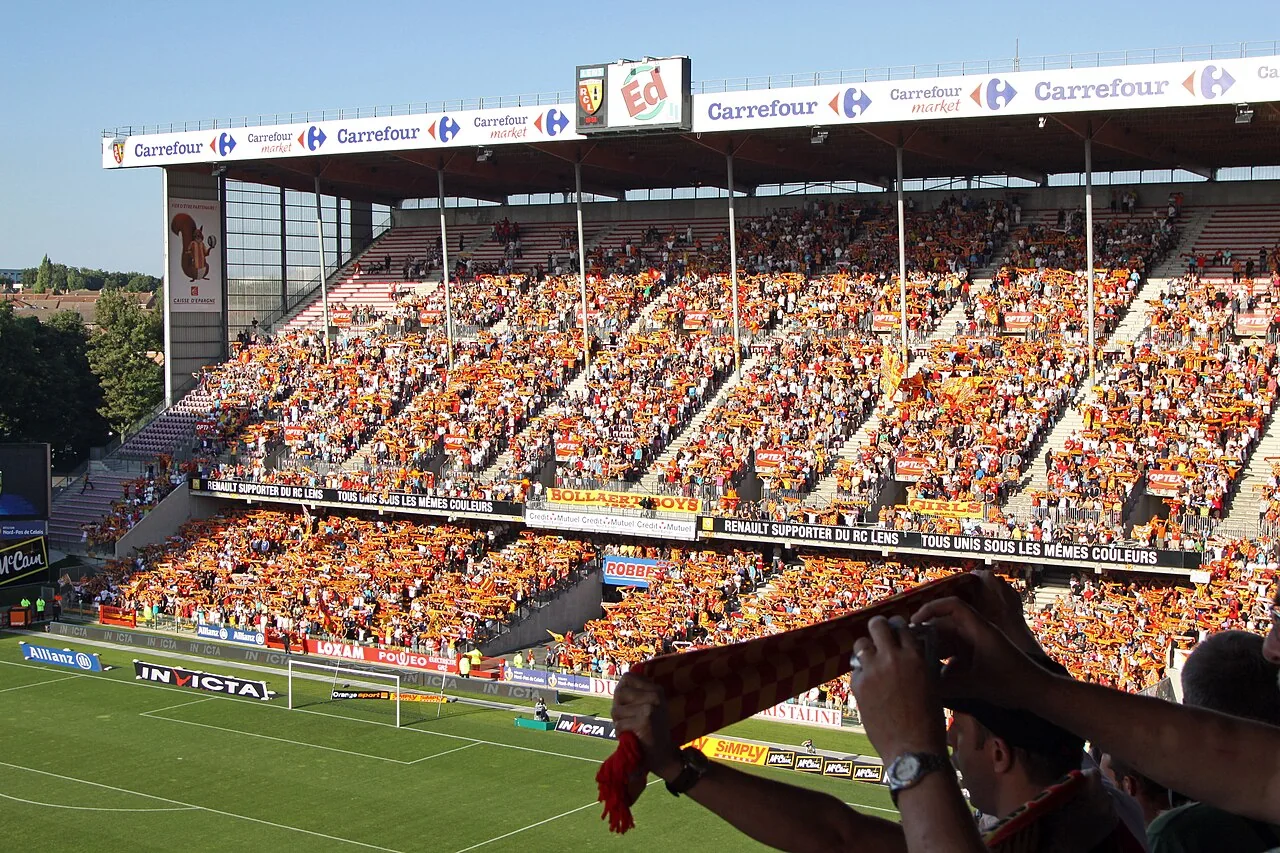
Buying a Ligue 1 ticket for 2026/27 starts with the home club, the exact fixture and the current sale conditions. This guide explains where to look, why there is no universal price, when to trust a kickoff time and what to check before travelling. It uses current league and club information as of 18 September 2026; always reconfirm changing details for your match.
Start at the host club's official ticket page
The safest starting point for a Ligue 1 ticket is the club hosting the match. Find the fixture first, confirm which stadium it will use, and follow the host club’s own ticket link. There is no single league-wide checkout that makes every seat at every club available at the same time. Paris Saint-Germain, Marseille, Lens and the other top-flight clubs each control their home sales, release schedules and seating rules. A search result advertising “Ligue 1 tickets” may be a marketplace rather than the club’s primary sale.
Home-club sales and account requirements
Begin with the fixture schedule, then move to the club’s own site. Olympique de Marseille’s official calendar, for example, places a “Reserve your seat” action beside a home match. RC Lens’ club homepage points visitors to its official ticket office. PSG’s ticket help center explains its own purchase and resale route. These are different interfaces, but the principle is the same: use the host club to identify the authorized path for that match.
Before payment, read the details attached to the exact seat. Clubs may require an account, restrict some sales stages to members or season-ticket holders, or ask for a named ticket. Those conditions can differ by game. A prominent rivalry, a smaller stadium or an away allocation may have tighter rules than a routine league fixture. Do not assume that a past purchase at another club tells you what is required here. The checkout and club’s current terms are the decisive information for the ticket being offered.
Check the competition and date as carefully as the opponent. A club can host a league match, a cup tie and a European game against different ticket terms in the same month. The page title should identify the match you intend to attend, and your order confirmation should identify the seat or section. If a fixture has only a provisional time, buying the seat and booking nonrefundable travel are separate decisions. The ticket may be valid even if the kickoff later moves; your train or flight may not be.
Away allocations and hospitality
An away supporter should not treat an ordinary home-seat listing as an away ticket. Visiting clubs may receive a separate allocation and distribute it under their own supporter rules. That can mean a different entry gate, a designated section and different release timing. Check the visiting club’s official announcement and the host club’s match information before buying. If there is no public away sale, a third-party listing labelled “away section” is not evidence that it came from the authorized allocation.
Official resale can provide a second route when a primary sale is unavailable. PSG’s Ticketplace help page identifies its club-run resale service, while Marseille’s official app describes in-app ticket transfer and resale. Marseille’s membership information also describes priority access for eligible members. These examples show why a sold-out message on the first page does not always mean no official route remains. Availability and eligibility still vary by match.
Hospitality is another distinct product, often combining a seat with services. It can be useful for someone whose priority is a particular date or group experience, but its price and entry terms should be compared with ordinary seating on the same official club site. Whether buying a standard home seat, a valid away allocation or hospitality, the useful rule is to keep the transaction within an identifiable club-approved channel and retain the confirmation. That makes it far easier to resolve a seat, entry or rescheduling question later.
What does a Ligue 1 ticket cost?
There is no reliable single price for a Ligue 1 ticket. A seat for one club and fixture cannot stand in for the entire league, and an advertised starting price may refer to a narrow block of seats, a particular buyer group or even another competition. The useful answer is the price displayed for the exact match, stand and buyer at the host club's current checkout. Treat any undated range in a travel article or resale advertisement as an illustration, not a quote for your match.
Why there is no single league-wide price
The host club controls its sale. Olympique de Marseille's 2026/27 single-ticket terms state that the price depends on the match and seating category. The same club can therefore show different prices for different opponents, and two sections for one fixture can carry different prices. Paris, Marseille and Lens do not share a league-wide ticket tariff or a single public sales window.
Do not confuse admission products. A season subscription divides a package across home games; it is not the single-match cost at public sale. A hospitality package can include services beyond a seat, while a visiting-supporter allocation may have its own eligibility and location. European and cup matches have different organizers or terms. For example, RC Lens discussed its 2026/27 pricing policy in a club ticket notice, but its quoted per-match starting price there concerns a Champions League package. It would be incorrect to use that number as a standard Ligue 1 price.
Availability matters as much as the face value. A cheaper stand can be exhausted when you reach checkout, or held for subscribers and members during an early window. An accessible-seat or youth discount may require evidence and may apply only to a particular club sale. If a search snippet quotes a price, open the original club page and check its publication date, competition, fixture and seat category. Only a current offer for the correct match can tell you what you can actually buy.
How to compare the actual total
Compare the amount payable for equivalent seats. First choose the exact fixture and quantity on the official ticket office. Check the stand map, restricted-view or age conditions if shown, then advance far enough to see any processing or delivery charge before committing. Marseille's single-ticket conditions distinguish the ticket price from applicable handling and delivery costs. A headline seat price is therefore not necessarily the final debit.
If a club membership offers priority, add its cost to the calculation for a one-off visit. Marseille's membership page describes priority benefits, but priority does not itself promise a cheap seat for every game. Compare official resale and ordinary sale where both exist, and read the fee and transfer terms before paying. PSG's Ticketplace help is a concrete example of a club-run resale channel.
For a travelling supporter, add travel, accommodation and local transport separately. A low ticket price can become an expensive trip if the kickoff moves or a hotel is nonrefundable. Keep a record of the match, seat, final charge and club terms at purchase. This gives you a defensible budget and a clearer starting point if the fixture changes.
Choose a match before locking in a trip
A ticket is useful only if you can reach the right ground at the right time. Start with the host city, opponent and competition, then decide how much travel flexibility you need. The 2026/27 Ligue 1 fixture release gives the season framework and each round's pairings. It is the right first document for selecting a weekend. It does not mean every individual kickoff in a distant round is final.

Fixture publication versus confirmed kickoff
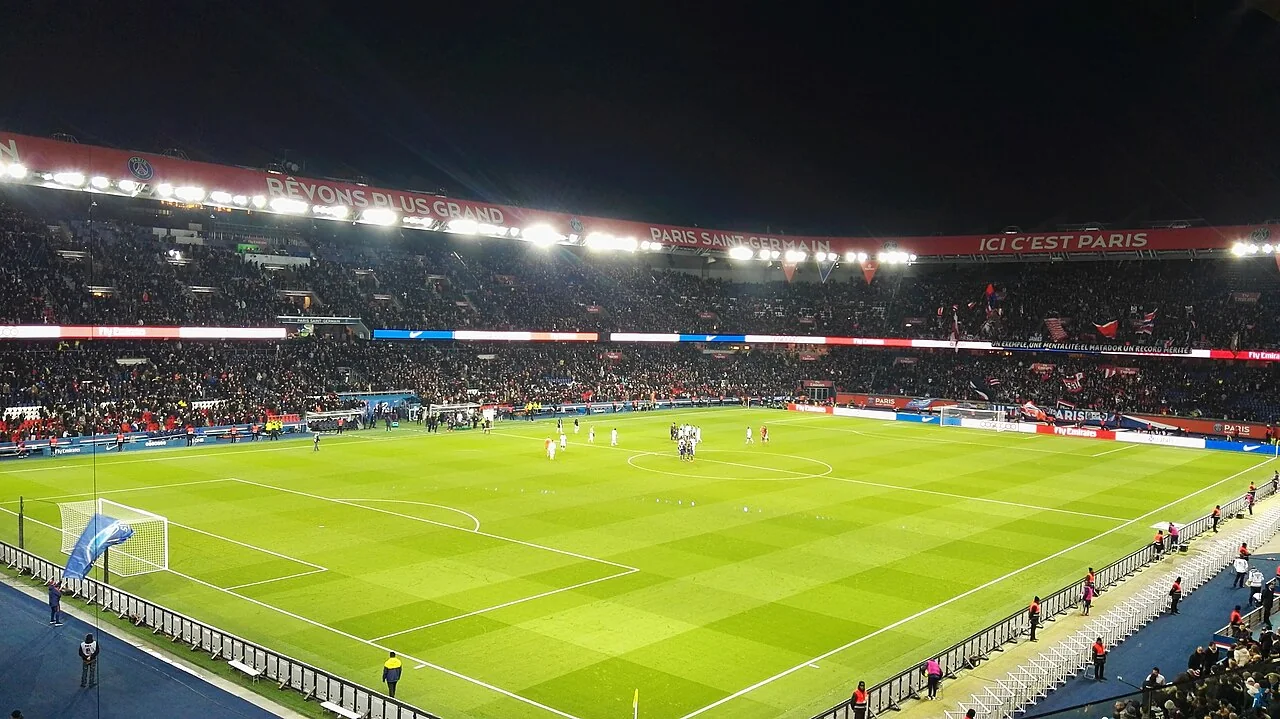
The LFP published the 2026/27 fixture calendar on 10 June 2026, before the season began on 21 August. The calendar takes the season through the final round on 29 May 2027. These dates let you identify a likely home weekend and start comparing transport. Later television scheduling assigns a precise day and hour to matches in a round. The league's programming guide says that such announcements normally arrive around a month ahead, but that is a usual pattern rather than a promise for every game.
For a real example, the league announced the precise television schedule for rounds six, seven and eight on 1 September 2026. Its listing places fixtures across Friday, Saturday and Sunday, with different kickoff hours. A match initially described as taking place over an October weekend therefore needs a second check after that round is programmed. The host club's calendar is a useful cross-check because it also connects the exact fixture to ticketing.
When booking a flight or train, convert the official kickoff into your own time zone only after the day and hour are confirmed. Do not build an itinerary around a search-result card that may still show a provisional date. If you must book early, a flexible arrival and a refundable hotel can be worth more than a small saving on a fixed reservation. Recheck the LFP and host club again shortly before departure, especially if your match sits at the edge of the weekend.
Derbies, cup commitments and late changes
High-demand rivalries require two separate plans: a chance of getting a seat and a trip that survives a timetable change. The league's season announcement highlights marquee fixtures, but its dates remain subject to programming constraints. A derby can also have restricted sale phases or tighter conditions, so joining a random resale queue after arranging travel is a weak plan. Watch the home club's official sale announcement as soon as you select the fixture.
European and domestic cup commitments complicate the calendar. In its rounds six to eight programming, the LFP explains why some games were placed differently around Thursday UEFA participation and Champions League dates. It has also adjusted fixtures late in a previous season after European results. These examples show why a ticket purchase and a nonrefundable travel booking deserve different levels of certainty; they do not predict that your chosen match will move.
Use a short final check before every payment: is the team you support the host or the visitor; is it a Ligue 1 fixture; has the exact kickoff been assigned; and does the club ticket page show the same opponent and stadium? Save the official confirmation rather than relying on memory. That habit prevents a surprisingly common mistake: buying the correct club's ticket for the wrong date or competition.
Plan entry, transport and the matchday experience
The ticket confirmation is the start of matchday planning, not the end. French grounds differ in gate layout, local transport and the way fans display a ticket. After purchase, find the host club's current practical-information page and match notice. Use the stand and gate printed on your ticket to plan an arrival route. A general map result can be useful for orientation, but it cannot tell you whether a particular entrance or road will be open for your game.
Seat location and accessibility
Check the seat and section before paying, especially when buying several tickets. Two seats in the same stand may be in different rows or even different access zones; a stadium diagram is more informative than a category label alone. PSG's Parc des Princes guide maps its stands to individual gates and marks the accessible and away-fan entrances. This is a Paris-specific example of why the gate matters. It does not describe the layout in Marseille, Lens or another city.
If you need step-free access, a wheelchair space, companion seating or audio description, contact the host club before buying an ordinary seat. Ask about the exact match, not just the stadium. Olympique de Marseille's supporter accessibility page describes designated drop-off arrangements and audio description at the Vélodrome, alongside its own eligibility rules. The right route may involve a specialist ticket office or supporting documentation. An inexpensive standard seat is no bargain if its access does not meet your needs.
Families and groups should also look at the ticket's section and conditions. An away allocation, a home ultras stand and a hospitality area offer very different experiences. Do not infer from the club crest that every listing is suitable for your party. If you are unsure whether children can enter a particular section or whether adjacent seats are guaranteed, resolve that question with the club's ticket office while tickets remain available.
Arrival, identity checks and local transport
Plan to arrive with time for a security queue and the walk from transit to your gate. At PSG, the club's ticket FAQ says public gates open two hours before kickoff and advises a downloaded or printed ticket and identity document. That is a useful Paris example, not a universal Ligue 1 entry rule. For a named ticket, check that the attendee's name and identification meet the host club's current conditions. Marseille's 2026/27 terms explain how named-ticket checks can apply.
Transport is just as local. PSG lists Metro lines 9 and 10 for the Parc des Princes and warns that security checkpoints restrict movement around the ground on matchdays. Lens has a 2026/27 stadium shuttle linked to a club-app QR code. That service can be convenient if it fits your route, but it is not available for every Ligue 1 stadium. Check the last train, shuttle return and any street closures before assuming that a late kickoff leaves an easy journey home.
Finally, review the host club's prohibited-item and bag rules shortly before the match. Lens' practical guide has described digital ticketing, security filtering and bag restrictions for its own home games. Conditions can change by season and event. Carrying a charged phone and a saved ticket, knowing your entry gate, and allowing time for checks make the matchday easier than any generic promise of fast admission.
A practical purchase checklist
The best ticket route is a short series of checks, made in the right order. First, identify the exact Ligue 1 fixture: date or round, home club, away club and stadium. Use the league calendar to confirm the pairing. Second, reach the ticket office from the home club's own website or official app and read the sale notice for that fixture. If public seats are unavailable, check whether the club itself names an authorized resale channel, as PSG does with Ticketplace. Avoid a copied QR image or a seller who cannot show that the ticket can be transferred under club rules.
Third, verify the exact stand, number and location of seats, and whether the listing is a home ticket, away allocation or hospitality product. Fourth, read any membership, age, named-ticket or accessibility conditions before payment. Fifth, compare the full checkout charge, including any service fee, with your trip budget. These steps take longer than clicking the first search result, but they address the main ways fans end up with the wrong seat or an ineligible ticket.
Sixth, read the host club's cancellation, date-change and transfer terms before you book nonrefundable travel. Marseille's 2026/27 single-ticket conditions are a useful example: they distinguish ticket remedies for a changed match from the cost of hotels and transport, which the club does not reimburse. Its rules also limit transfers outside an authorized club platform. Another club's terms may differ, so apply the policy attached to your own order rather than a general travel-site promise.
Seventh, save the original order confirmation and the ticket in the format the club instructs. A forwarded screenshot is a poor substitute for an officially issued or transferred ticket; some mobile codes can admit only the first scan. Keep the purchase email, your account access and any named-ticket details together. In the days before the game, recheck the confirmed kickoff, the host's matchday notice and your route to the correct gate. Lens' shuttle instructions and PSG's gate and Metro guide show how different those final details can be.
After those checks, the ticket should be a clear contract for a particular seat at a particular match, and the journey should be planned around the latest official time. That is the practical standard to use whether the destination is Paris, Marseille, Lens or another Ligue 1 city.
A good ticket purchase leaves little to guess: you know the host, the seat, the total cost and the rules that apply if plans change. Check the final kickoff and local entry instructions once more as matchday approaches, then give yourself time to enjoy the ground and the game.
Cover photograph: Giam / Wikimedia Commons, CC BY 2.0; converted to WebP.

Loading comments…