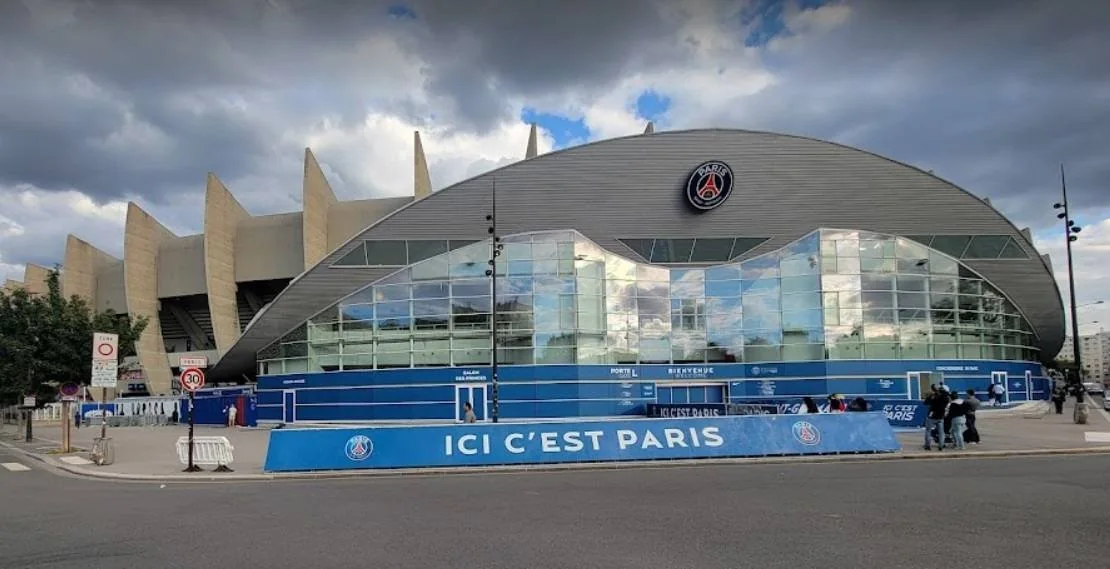
The 2026/27 Ligue 1 season brings together 18 clubs, from defending champion Paris Saint-Germain to promoted Troyes and Le Mans. This guide names every team, places them on the French football map and explains what their different starting points mean for a supporter. For changing scores, dates and positions, use the live pages linked throughout.
Which clubs are in Ligue 1 in 2026/27?
Ligue 1 McDonald’s has 18 clubs in 2026/27. The simplest way to understand the field is to separate a fixed season membership list from the changing league table. Clubs do not enter or leave the division when their position moves on a Saturday evening; promotion and relegation establish the field before the campaign, and the table then records what those clubs earn on the pitch. The league’s published opening-round fixtures provide a useful cross-check of every participant. They also establish the season’s frame: the first weekend began on 21 August 2026, while the final matchday is scheduled for 29 May 2027.
The 18-club field
In alphabetical order, the clubs are Angers SCO, AJ Auxerre, Stade Brestois 29, Le Havre AC, Le Mans FC, RC Lens, FC Lorient, LOSC Lille, Olympique Lyonnais, Olympique de Marseille, AS Monaco, OGC Nice, Paris FC, Paris Saint-Germain, Stade Rennais FC, RC Strasbourg Alsace, Toulouse FC and ESTAC Troyes. This list follows the league’s club-by-club preseason announcement and its match calendar. Names such as “Lille” and “LOSC,” or “PSG” and “Paris Saint-Germain,” refer to the same participant; a search result containing both forms has not discovered an extra team.
For a fan arriving from another league, the number 18 matters. Each club has 17 opponents and normally meets each one home and away, making a 34-match league season. That structure means a single surprise result can change an early table sharply, especially in August and September, but it is a small part of the eventual campaign. The live 2026/27 standings are the right place for today’s order, points and goal difference. This guide is for the more durable questions: who belongs in the division, where their football is rooted, and what to watch as the matches accumulate.
The club names also show the breadth of the competition. There are two separate Paris-based sides, a powerful concentration of clubs across northern and eastern France, major Mediterranean and Rhône valley teams, and representation along the Atlantic coast. Those are more than map pins. An away match can involve very different travel, crowd and climatic conditions, while supporters planning a trip should first check the host stadium and confirmed kickoff rather than assuming every “Paris” or “Olympique” fixture is interchangeable.
The promoted sides and the clubs that left
ESTAC Troyes and Le Mans FC are the promoted clubs in this edition. The league confirmed both promotions after the 2025/26 Ligue 2 season. Their arrival is a practical reason to avoid recycling a 2025/26 team list as a current one. A historical table can still tell you how last season ended; it cannot tell you who plays in the top flight this season without accounting for movement between divisions.
The two promoted stories are not identical. Troyes returned after three seasons outside the top tier, according to the league’s promotion-race coverage. Le Mans came back after 16 years and followed promotion from the third tier with another promotion from Ligue 2. The league’s Le Mans preview records a second-place Ligue 2 finish with 62 points and only four defeats in 34 matches. That is evidence of a strong lower-division campaign, not a guarantee of identical results against a new set of opponents. The useful early question is how each newcomer handles longer spells without the ball and how often it turns competitive performances into points.
For everyone else, membership does not imply a fixed role. A club with a familiar name can change coaching approach, squad balance and expectations from one year to the next. The opening weeks are best read as fresh evidence, not as confirmation of a reputation. Check the full season fixture list, then compare opponents and home or away setting before drawing conclusions from a short run of results.
A football map of France, not just a list of names
A list of 18 clubs is more useful when it also tells you where the games happen. Ligue 1 takes a supporter from Atlantic ports to the Mediterranean, from the capital to the eastern border. That spread shapes an ordinary season: the same away team may face a short regional trip one weekend and a long cross-country journey the next. Geography alone never determines a result, but it can explain why a fixture feels like a local occasion to one set of supporters and a major trip to another.
Paris, the north and the east
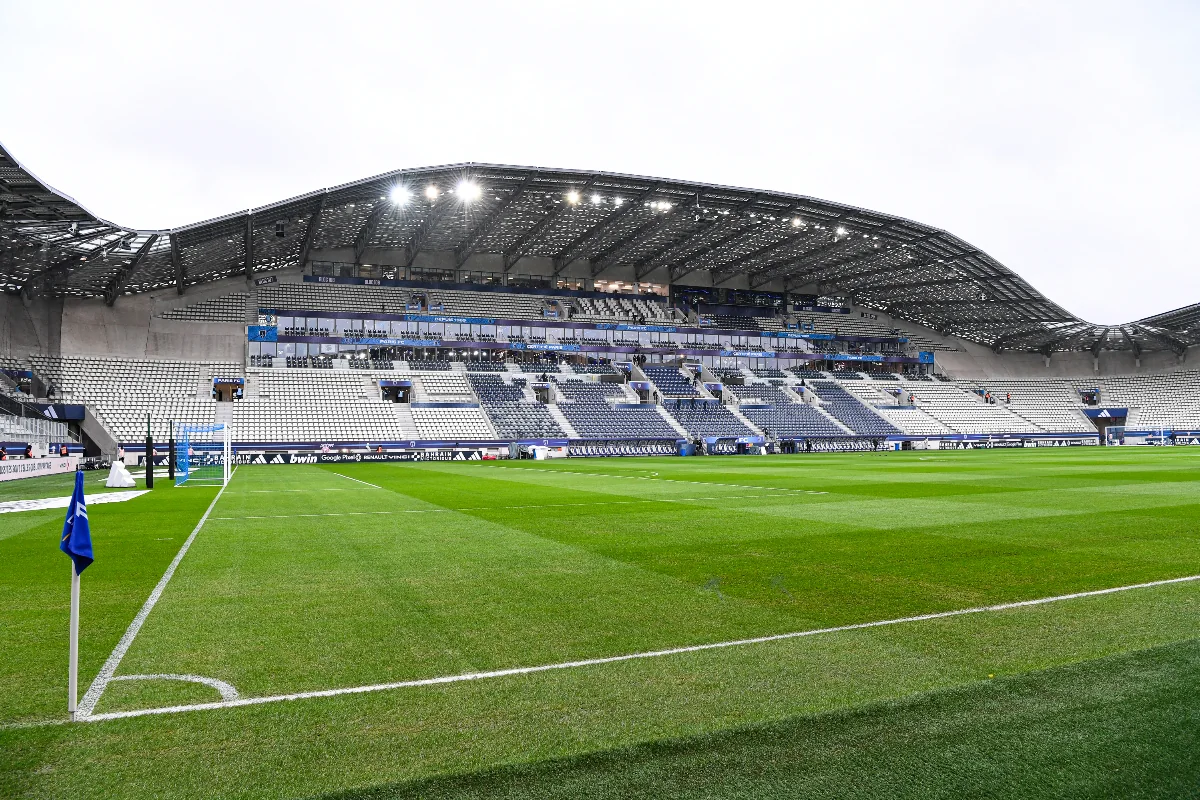
Paris Saint-Germain and Paris FC make the capital a particularly easy place to misunderstand from a distance. They are different clubs with different ticket offices, home sections and histories. The stadiums are remarkably close: the league’s Paris derby feature places PSG’s Parc des Princes and Paris FC’s Stade Jean-Bouin across Boulevard Murat from one another. That physical proximity makes the fixture a genuine city encounter, yet a ticket sold by one club does not grant entry to the other’s home match. Always confirm which side hosts before arranging travel.
Paris FC also brings a recent top-flight story of its own. The league’s 2026/27 preview says it finished 11th in 2025/26 after returning to Ligue 1, and that Stade Jean-Bouin remains its home. That is a different competitive starting point from PSG’s championship defence. A map showing two Paris markers can make them appear equivalent; the sporting context is not equivalent, and each club’s current fixtures and table position should be checked separately.
North of the capital, Le Havre’s Channel coast setting contrasts with the inland matchdays at Lens and Lille. Lens and Lille are especially useful names for a new fan to locate because northern fixtures can carry strong local identity even when neither side is challenging for the title. Moving east, Strasbourg sits near France’s border with Germany, while Troyes and Auxerre occupy a different stretch of the eastern and central map. Le Mans lies west of Paris. These bearings help a travelling supporter think about which matches might pair naturally on a trip, but they do not replace the actual date and venue published on the fixture list.
The Atlantic coast, Rhône valley and Mediterranean
Three clubs give Brittany and its nearby Atlantic football culture a prominent place in this season: Brest, Lorient and Rennes. The region’s rivalries are not an abstract map exercise. The league called Brest’s February 2026 meeting with Lorient a Breton derby and described Rennes against Brest in April in the same terms. These fixtures can matter for pride even when the clubs have different league objectives. For a neutral fan, that gives an extra reason to watch; for a visiting fan, it is a reason to plan earlier and check host-club ticket rules.
Farther south and east, Lyon anchors the Rhône valley. Marseille, Nice and Monaco provide a Mediterranean sequence of very different venues and club identities. Toulouse sits to the southwest, while Angers is farther up the Loire corridor. A supporter searching “French football clubs” might expect every famous city to appear in the top flight every season, but league membership changes. A travel itinerary built around a nostalgic club list can fail if that club is currently in another division. Use the season-specific 18-club field above, then confirm each venue against the match page.
The map also helps explain why a single blanket claim about home advantage is too crude. A regional derby can be a short away journey with a vocal visiting section. A trip across the country can require very different preparation. But neither the distance nor a club’s latitude tells you its form, injuries or tactical approach. The most helpful sequence is to locate the fixture, check the confirmed kickoff in your own time zone, then look at recent results and the table. Geography provides the setting; performances provide the evidence for a football judgment.
What makes the 2026/27 field interesting
The names on a fixture sheet are only a starting point. For a useful picture of the league, combine each club’s most recent completed season with what its current matches actually show. That avoids two opposite mistakes: declaring the title decided because the defending champion is strong, or announcing a new order after one striking early result. Ligue 1 has enough established institutions, ambitious middle-tier projects and new arrivals to make both ends of the table worth following.
The established title and European contenders
Paris Saint-Germain begin with the clearest recent evidence. The league’s 2025/26 title report confirms a 14th French league crown and a fifth consecutive championship. That makes PSG the reference point for every challenger. It does not hand them points in 2026/27: each opponent still has two league meetings to create problems, and European and domestic schedules can alter how a club manages its squad. A fan should watch whether PSG continue collecting points when performances are merely adequate, because a champion’s ability to win imperfect matches often separates it from a talented challenger.
Lens and Lille bring different evidence to the discussion. The league’s podium review records Lens as the 2025/26 runner-up and Lille in third. Lille’s new-season preview gives a more precise baseline: 61 points, a top-three finish, and Champions League football ahead. That combination is promising but demanding. A side playing important midweek matches has less recovery time before some league weekends. The relevant question is whether its depth and defensive reliability hold across both settings, not whether a third-place finish last May automatically repeats itself.
Olympique de Marseille, Monaco and Lyon have the history, support and expectations that make their results closely watched, but current strength should be tested through the fixture sequence rather than brand alone. The official calendar announcement highlights early meetings involving Marseille, Monaco, Lille and PSG. Those direct games are valuable because they show how a team performs against a plausible competitor, though a single head-to-head result is still only one part of a 34-match campaign.
Ambitious challengers and distinct club identities
The next band cannot be reduced to a single generic “mid-table” label. Rennes and Strasbourg may be judged by whether they sustain European contention; Brest, Toulouse, Nice and other clubs will have their own benchmarks based on recent results and squad development. A fair comparison looks at the quality of opponents, where games were played and whether strong results came in a short burst or across several matchdays. A victory at home against a struggling side tells a different story from a run of away points against the league’s stronger teams.
Paris FC illustrates why season context matters. Its official league preview says its first top-flight year in decades ended in 11th place in 2025/26, comfortably clear of the relegation play-off position. Once survival is secured, the next season can be evaluated against a different standard: building consistency and turning home performances into a credible platform. That is a more informative question than simply asking whether Paris FC can match its famous neighbour.
Fans can follow these changing ambitions without fixing each club into a permanent tier. Check the recent results alongside the table. A team that loses to a contender after a close match may be developing better than a league position suggests. Conversely, a run against the bottom of the table might flatter a club before a harder sequence arrives. The schedule is part of the evidence.
Newcomers facing the top-flight test
For Troyes and Le Mans, the immediate question is adaptation. Le Mans’ official preview describes a remarkable rise through consecutive promotions and a 2025/26 Ligue 2 record of 62 points with only four defeats. That should command respect. It should also be read in the right context: Ligue 1 opponents can press, defend and punish mistakes in different ways, so last year’s lower-division total is a baseline for the club’s progress, not a forecast of this year’s points.
Both promoted sides made competitive opening statements. The league’s first-week report records Le Mans drawing 2–2 with Brest and Troyes drawing 0–0 with Paris FC. Each point mattered, but neither draw settles what happens over 34 matches. The useful signs to track are whether they create chances against different styles of opposition, protect leads, and earn points away from home. Those patterns emerge over weeks. They are more valuable to a fan than an instant “safe” or “doomed” label attached to a newly promoted club.
How to use fixtures, results and the table to follow any club
Once you know the 18 clubs, the most useful next step is to follow one team through a sequence rather than reading the table in isolation. Start with the season schedule and identify its next opponent, venue and matchday. Then look at the team’s recent results. Finally, use the standings to understand what those games have meant in points. This order gives a result context: winning away against a direct rival is different from winning at home against a side at the bottom of the table, even though both bring the same three points.
The calendar gives a reason to think in blocks. The league’s 2026/27 announcement sets out 34 matchdays, a winter pause after matchday 14, and simultaneous fixtures in the last two rounds. A September league position is therefore provisional by design. As winter approaches, a club may have played several stronger opponents already while another has a difficult run still to come. A fan comparing them should ask not just “who has more points?” but “who have they played, where, and what is next?”
For an immediate answer on a matchday, use the today page. It displays fixtures and available scores in the selected time zone; if there is no game on that date, the next matches are more useful than a generic statement that the league is “live.” The results page takes over after full time. It keeps a finished match separate from a preview, which matters when a postponed or rescheduled fixture makes an old fixture list misleading. If a result looks surprising, check the opponent and home/away setting before treating it as a turning point.
For travel or television planning, treat the published round as a framework and verify the latest kickoff. A weekend fixture initially identified by matchday can receive a more precise slot later; cup commitments and other scheduling decisions can also affect plans. The calendar tool lets you subscribe or download fixtures, but an exported file should still be checked when the match approaches. A calendar entry is a reminder, while the latest match page and host-club information are the authority for a journey or a ticket purchase.
Finally, look beyond a single ranking column. Overall points tell you who has earned the most so far; goal difference can help distinguish teams on equal points; home and away views expose different patterns. A side that is difficult to beat at home may still struggle on longer trips, while an away result against a stronger opponent can be more encouraging than a narrow home win over a weaker one. None of these measures describes the whole season after only a few matchdays. They become more informative when you revisit them regularly and compare like with like.
That approach turns a broad search for “Ligue 1 teams” into a useful weekly routine. Know the current 18, follow the next fixture, read the completed result, and then place both in the table. The clubs and regions give the league character; the match sequence shows how their 2026/27 stories actually develop.
The best way to enjoy the field is to let both geography and evidence guide you. Pick a club or a rivalry, check where the game is played, then follow how the result changes the season. The 18 names are fixed for 2026/27; their stories are still being written.
Loading comments…