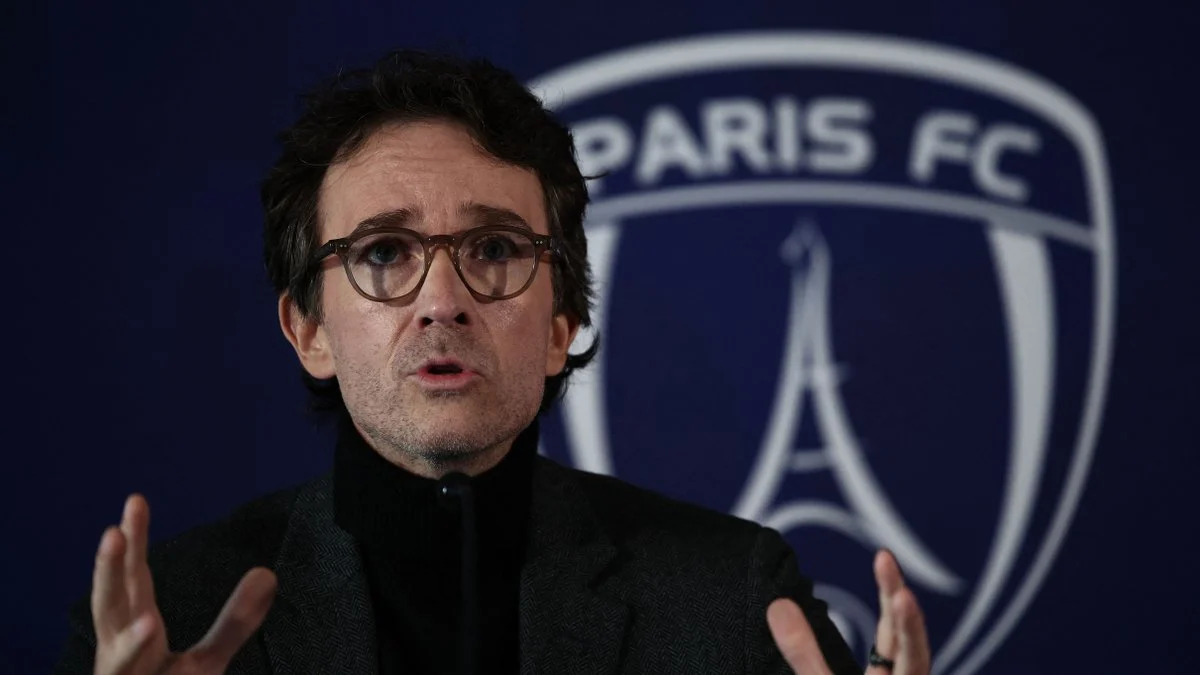
Paris FC’s ownership project is led by the Arnault family through Agache Sport, alongside minority partner Red Bull. Pierre Ferracci’s presidency and Jürgen Klopp’s global Red Bull role are separate from owning the club or coaching its first team. This guide explains the completed ownership announcement and the sporting responsibilities, checked on 14 October 2026.
Shareholders, the president and the coach have different jobs
The Arnault family’s investment sits through Agache Sport
The phrase “the Arnault family owns Paris FC” is useful shorthand for the majority project, but the shareholding statement names a company: Agache Sport. The distinction becomes important when a reader tries to turn a family's public wealth into a football spending figure. Owning a stake establishes an interest in the club. It does not disclose the amount available for the next transfer window or the cost of running the first team.
Antoine Arnault represents the family in the club project. Paris FC's July 2026 coach announcement identifies him explicitly as the family's representative. It connects that ownership role with a sporting objective: establishing the club durably in Ligue 1 and progressing in its football and league position. That is a stated direction, not an announcement of a specific trophy or guaranteed place.
For supporters, a useful ownership question is whether the plan remains coherent across decisions. Bringing in a coach who works with younger players, investing in training facilities and allowing time for development can fit together. Signing players whose requirements conflict with that approach can make the same resources less effective. The size of the shareholder's reputation does not settle how well those decisions connect.
Pierre Ferracci and the football staff run distinct responsibilities
Pierre Ferracci remained president when the 2024 transaction closed, and the club continued to identify him in that role in later announcements. The arrangement retained a club leader while changing the majority shareholding. It does not make him the sole owner, and it does not make the majority shareholder the person responsible for every daily football instruction.
A September 2025 reorganisation announcement provides a concrete example of the work being distributed. It announced Jean-Marc Gallot for the general management position, with the appointment subject to board approval at that point, and Alexandre Battut for the financial role. Those are different functions from selecting a starting team or conducting a training session. The dated announcement shows the organisational plan without making its approval condition disappear.
Paris FC then appointed Liam Rosenior as men's first-team head coach on 7 July 2026, with a contract through June 2028. The same official statement identifies Marco Neppe as sporting director. The public roles are therefore clear enough to avoid a common mistake: Jürgen Klopp's association with Red Bull does not make him Paris FC's head coach.
The football significance is that a recruitment plan and a coaching plan have to meet. A sporting director can help shape the squad, while the coach must make its combinations work against different opponents. If a team wants to progress through young-player development, opportunities and expectations have to be managed together. A talented signing who does not fit the role needed can create a problem that a famous shareholder cannot solve simply by appearing in the stands.
These distinctions make public announcements easier to read. A shareholder statement answers who holds capital; a leadership announcement answers who has an organisational role; a coach appointment answers who prepares the men's team. Paris FC's project connects all three, but the evidence for one should not be used as proof of another.
Why Jürgen Klopp is connected to Paris FC
Red Bull brings a football network and strategic advice
Red Bull's place in Paris FC is both a minority investment and a connection to a wider football organisation. That is why questions about the club often include Jürgen Klopp even though he is not its head coach. His work is connected to Red Bull's football network, rather than a separate majority ownership of Paris FC.
The potential value of that relationship is practical. Recruitment, coaching development and the identification of younger players require expertise as well as resources. An organisation with experience across several clubs can offer another perspective on those decisions. That does not mean every player will arrive through the network, or that a player suitable for one club is automatically suitable for Paris FC.
Consider a young attacker identified in another league. The relevant football questions include whether he can handle the speed of Ligue 1, where he would play in the coach's structure and what opportunities the existing squad can offer. A network can help identify the candidate and assess his development. The local club still needs a coherent reason to recruit him rather than merely a famous connection.
The same applies to coaching ideas. Intensity can be an ambition, but a team needs the physical preparation and coordinated decisions to sustain it. A forward pressing alone creates a different situation from several teammates closing the available passes together. The sporting benefit depends on how advice becomes daily work, not on the shareholder's logo beside the pitch.
Klopp’s global role is different from coaching the team
Red Bull's own account identifies Klopp as Head of Global Soccer, a role he began in January 2025. It describes a strategic, multi-club responsibility involving development and a long-term vision. His first presentation in that role took place at Hangar-7 in Salzburg, a different setting from a Paris FC matchday press conference.
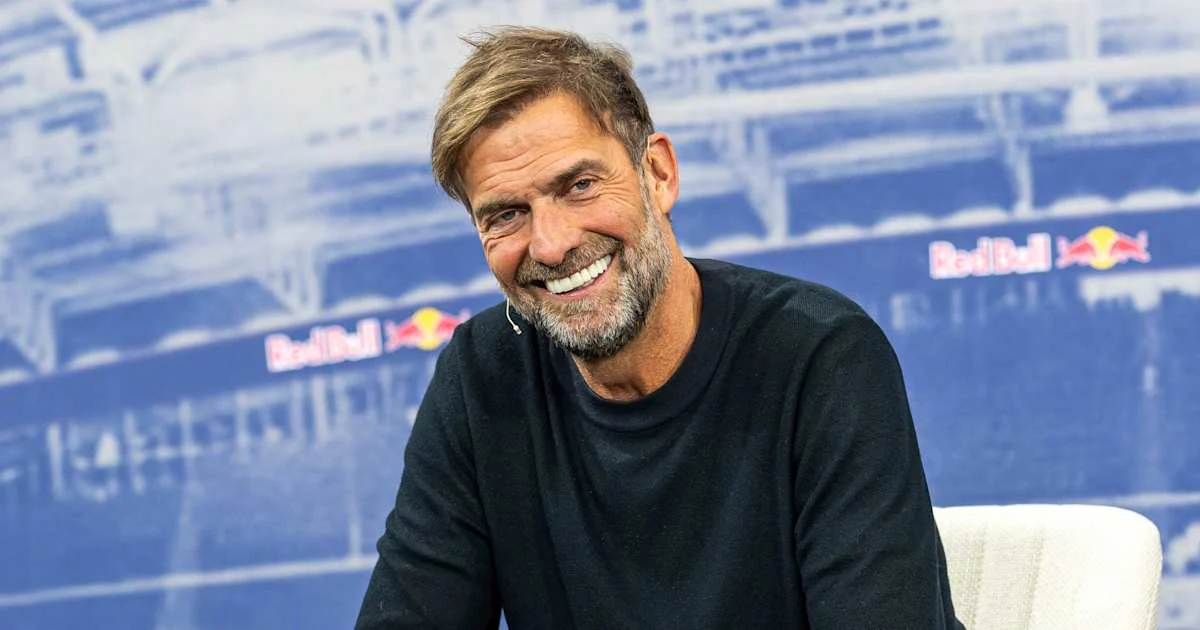
The account also distinguishes this work from the repeated cycle of preparing one team for matches every few days. Klopp discussed learning from the clubs and helping people develop, while recognising that an idea cannot simply be copied into different football cultures unchanged. That supplies a more accurate description than assuming every connected club is now coached in his image.
Paris FC's first-team coaching position is separately documented by its July 2026 Rosenior appointment. The contrast is important for a supporter reading a photograph of Klopp at a match or a report about his advice. Attendance, interest and a strategic role do not establish that he selected the XI, conducted the week's sessions or replaced the appointed coach.
Keep that distinction when assessing the project. Klopp's experience can be relevant to the network supporting Paris FC; Rosenior and the local staff have the immediate responsibility of making the men's team function. Treating the two jobs as the same exaggerates what a global appointment promises and makes it harder to judge the club's actual football decisions.
What the investment changes for the football project
The ownership story has football meaning when it becomes a set of tangible choices. Paris FC's promotion after a 1–1 draw at Martigues in May 2025 was one such sporting milestone. The club's match account explains how a point, combined with Metz also drawing, secured the place in Ligue 1. The transaction did not replace the need for a team to earn that result.
Talent development and infrastructure need time to produce results
The planned expansion at Orly supplies a more concrete example than a headline about billionaire spending. In its training-centre project announcement, Paris FC describes an additional eight hectares and five new training pitches, with the intention of bringing the men's and women's professional teams and training centres together on one site. The announcement describes a project and its intended outcome; it should not be mistaken for proof that every element has been completed.
There is a practical football argument for this kind of investment. More suitable training space can make it easier to coordinate team preparation and player development. Bringing groups together can help staff follow a young player's progress and manage transitions towards senior football. The outcome still depends on coaching, opportunities and the individual player's adaptation. A new pitch does not itself create a first-team graduate.
The Orly plan also involves regional and local public partners. The club identifies the Île-de-France region, Val-de-Marne authorities and neighbouring municipalities among the participants. That matters when interpreting the ownership story: the project is not described as one individual privately funding every part of it. It links club ambition with facilities and a territory in which football development already takes place.
Young-player recruitment is similarly different from immediate first-team recruitment. An academy prospect may need several years of development, while a player signed to help the next league match has a different requirement. A coherent club has to decide how those timelines meet. If every short-term result triggers a change of direction, the value of a longer-term training plan can become difficult to realise.
The spectator setting changed too. The February 2025 Jean-Bouin agreement made it Paris FC's home stadium from 2025/26 until at least 2029, while Stade Français remained the resident club and main user. This was a shared-use arrangement, not an announcement that the football owners had bought the stadium.
For supporters, facilities and a suitable home venue can improve the conditions around the team and the experience of attending. They do not remove the competitive test on the pitch. Promotion, establishing the club in Ligue 1, developing players and attracting regular spectators require related but different work. The Ligue 1 ticket guide helps with the practical part of a visit; the football project has to give people a reason to keep returning.
Judge the project by club resources and sporting progress
Paris FC's owners attract attention because of the scale of the businesses and football experience associated with them. That is understandable, but it creates a common shortcut: treating family wealth as if it were money already available in the club's account. The ownership percentages do not disclose a transfer budget, annual revenue or a wage commitment. Those would need their own evidence.
Even a large football investment involves choices between different timescales. A transfer fee can bring a player into the next squad; continuing wages and support staff affect the club across seasons; facilities are intended to improve the environment over a longer period. The question is how the choices fit the team's needs. Spending on a position already well covered can be less useful than addressing a weakness that repeatedly costs points.
For that reason, a comparison with PSG should begin with actual football conditions rather than the wealth of individuals linked to the two clubs. PSG's recent achievements do not become Paris FC's expected immediate outcome simply because both have prominent owners. Paris FC's own July 2026 appointment announcement describes a project of durable Ligue 1 establishment and year-on-year progress. That provides a more relevant stated benchmark than an invented promise of an instant title challenge.
The public decisions offer several practical tests. Does the first-team squad fit the coach's stated approach? Are younger players developing into useful senior options rather than remaining names in an announcement? Do facilities and staff support the work the club says it wants to do? These questions connect the investment, governance and football sections of this guide without reducing success to the reputation of a single person.
Results still matter. A team that wants to establish itself in Ligue 1 needs points across different opponents and different parts of a season. The current league table shows where that work stands; the results page helps explain the sequence behind it. A single impressive win or disappointing defeat should be considered within that larger record, rather than treated as a complete verdict on the ownership.
Changes to the capital deserve the same precision. A proposed transaction, a newspaper's expected future percentage and a club's completed announcement are different kinds of information. Keep the 2024 ownership table attached to its date until a newer completed structure is confirmed. Doing so preserves a clear answer to the original question without presenting a plan as an accomplished fact.
Paris FC's project brings together an Arnault-family majority investment, a minority Red Bull partnership, established club leadership and appointed football staff. Klopp's connection belongs to the global football support around it. What those relationships ultimately achieve will be measured through the club's development, the team's performances and the decisions that connect one to the other.
Loading comments…