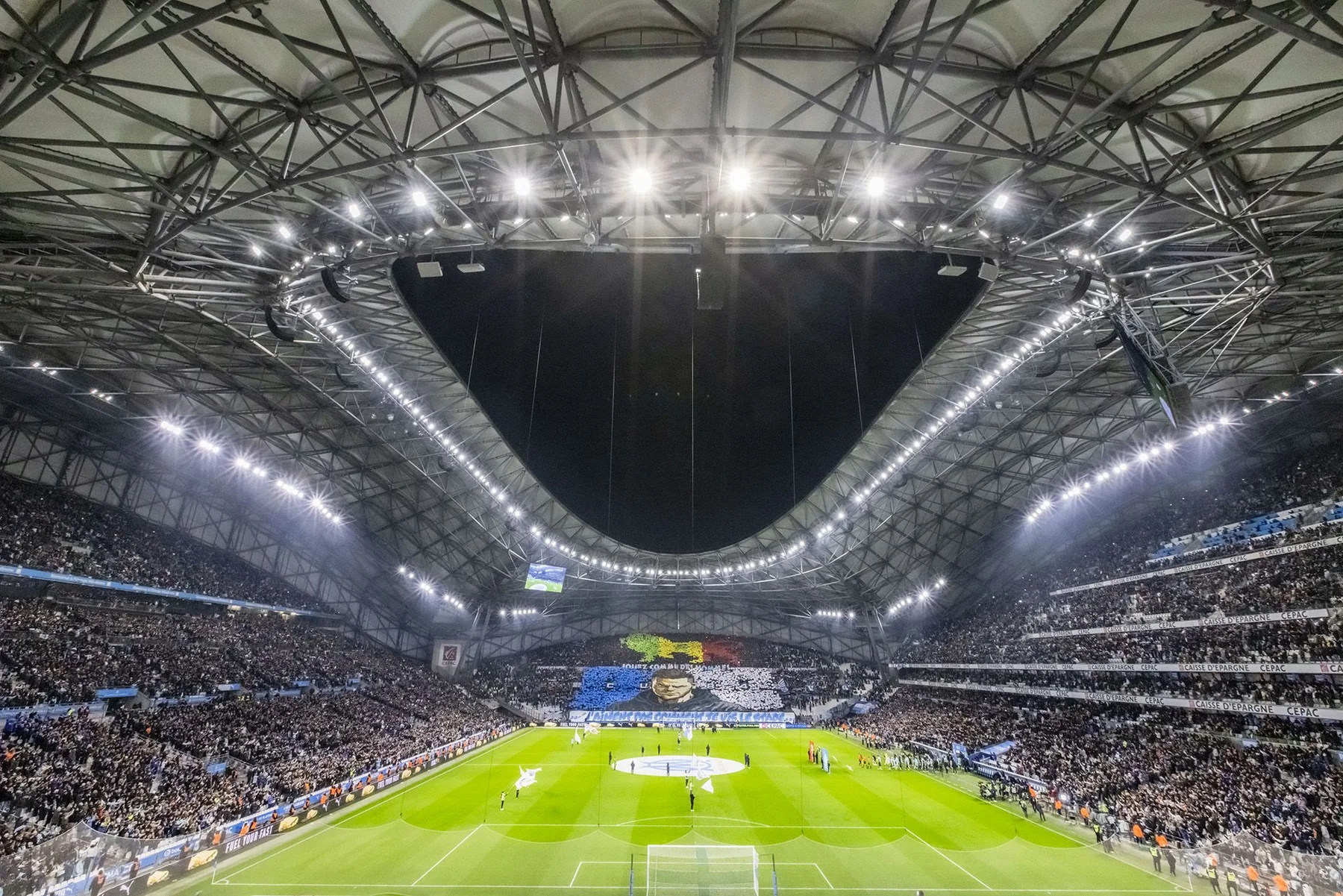
PSG supporters face a travel ban for the Sunday, 20 September 2026, away match at Marseille because French authorities assessed a serious public-order risk. A national order restricts PSG supporter travel from ?le-de-France to Marseille on matchday, and a separate local order restricts stadium access and movement in parts of Marseille. The Collectif Ultras Paris has challenged the restrictions, but an announced challenge was not a verified reversal as of 18 September. The Classique itself remained scheduled for 20:45 Paris time at the V?lodrome.
What the September 20 restriction actually covers
Paris Saint-Germain's visit to Olympique de Marseille is scheduled for Sunday, 20 September 2026, at 20:45 local time in France. The PSG match page lists the Ligue 1 round-five fixture at the CEPAC Vélodrome. The match is going ahead in the published schedule, but the authorities have placed restrictions on PSG supporters traveling to and attending it. The central point for a fan is that there are two related measures: a national order about travel from the Paris region, and a local order about access in Marseille. Neither is simply a club decision about how many away tickets to sell.
The national order on travel from Île-de-France
A 16 September order from France's interior minister, published in the Journal officiel on 17 September, bars individual and organized travel by PSG supporters from municipalities in Île-de-France to Marseille for the whole of Sunday, from midnight to midnight. Its wording includes people who present themselves as PSG supporters or behave as such, and it covers travel by any means. A separate L'Équipe report reproduces the operative scope. This is why the story is described as an away-supporter travel ban, not merely an empty away section decided by the clubs.
The geography is easy to misstate. The national text describes journeys between the Île-de-France region and Marseille by people identified as PSG supporters. It does not declare that everyone who lives in Paris is prohibited from entering Marseille, nor does it state a nationwide ban on every person who has ever followed PSG. But it also does not say that traveling independently, rather than with an organized group, makes a PSG supporter exempt. A fan should read the current order itself and not rely on a headline that turns a defined measure into either an unlimited city closure or a harmless ticket-allocation issue.
The order was issued in advance of a match with a known kickoff, not in response to an incident at the 20 September fixture, which had not yet taken place at this article's 18 September cutoff. The relevant time window applies to the calendar day of the game in France. Someone making travel plans from another time zone should use French local time when checking it. A later court decision could alter the position, but an announced challenge is not itself a suspension of the order.
The separate Marseille stadium and city-center restrictions
The ministerial text also refers to a 9 September order from the Bouches-du-Rhône police prefect. That local measure restricts people presenting or behaving as PSG supporters from entering the Vélodrome and from circulating or remaining in designated parts of central Marseille and around the stadium on matchday. The two orders answer different practical questions. The national order concerns travel from the Paris region; the local one concerns access in Marseille. Reporting on the local notice gives a longer window, from 08:00 Sunday to 02:00 Monday, and lists the 1st, 2nd, 6th, 7th and 8th arrondissements. That finer zone detail should be confirmed against the current prefectural notice before anyone travels, because the original local document was not available through this research session.
These layers matter especially to somebody holding a ticket. Buying a seat is a transaction with a seller or club; it is not a legal exception written into either reported restriction. A third-party listing or a general admission ticket cannot be treated as proof that a PSG supporter may enter the stadium under the current local order. Equally, the restrictions do not say the match itself is behind closed doors. Marseille supporters and other eligible spectators are a different issue. The precise question is whether a person covered by these orders may travel to and access the fixture, and the current public answer is that the orders prohibit the relevant PSG supporter travel and stadium access.
Several early reports use different dates for preliminary local measures. The published ministerial text identifies the local order it relies on as the one dated 9 September; that is the date used here. If a supporter sees an older article mentioning an August notice, the safe course is to check the operative texts and any later judicial update, not to infer that the newer national order never took effect. For this match, the distinction between a first report, a formal order and a court ruling is as important as the distinction between travel and stadium access.
Why authorities made the decision
The government has presented this as a preventive public-order measure. The 16 September order invokes Article L.332-16-1 of France's Sports Code, which provides a mechanism for restricting supporter travel when their presence at a sporting event is assessed as capable of causing serious public disorder. It then sets out the interior ministry's assessment of the particular Marseille–PSG fixture. This is a reason offered by the issuing authority, not a sporting sanction imposed by Ligue 1 after a breach during this match.
The order describes past security incidents associated with some Marseille home supporters and with some PSG away supporters. Its account includes clashes, projectiles, pyrotechnics, confrontations with police and attempted contact between opposing groups on various matchdays. It also stresses the long-running antagonism between supporters of the two clubs. L'Équipe's account confirms these main strands of the ministry's reasoning. The detail explains why the state is concerned about journeys, meeting points and the period around the game, rather than only what might happen inside the away stand once the match starts.
The text goes a step further: it argues that the local Vélodrome and city-zone restrictions, together with police deployment, would not be sufficient on their own. It cites other calls on security personnel that weekend. That helps explain why a national travel order was added to a local access order. If supporters cannot move from Île-de-France to Marseille for the game, the authorities reason that the chance of rival groups encountering one another on routes or around the stadium is reduced. Whether that is the least restrictive workable approach is precisely the sort of question a challenge can put before a court.
There is an important distinction between a risk assessment about an event and a judgment about an individual. The order's recitals discuss particular past incidents and behavior by subsets of supporters. They do not establish that every Paris fan planning a peaceful trip has done anything violent, or that every Marseille fan is dangerous. Yet the operative restriction addresses a class of PSG supporters rather than only named people with individual banning orders. That broad effect is part of the controversy: an innocent, organized supporter faces the same travel and stadium barrier as someone authorities view as more likely to cause trouble.
For football itself, the practical result is an unusual atmosphere for a rivalry that draws national attention. The away end cannot provide the same organized PSG presence if the orders remain in force. That does not predetermine the score or justify inventing a home-field advantage statistic; it does change what supporters see and hear at the Vélodrome. Marseille's squad and PSG's squad still play a round-five Ligue 1 fixture. The government is regulating who may make the journey and enter certain spaces around it, based on its account of public safety risk.
A reader may agree that police should act ahead of credible threats while still questioning whether repeated blanket restrictions have become the default. Both reactions can coexist because they address different tests. The government's case concerns the danger it says it must prevent on this specific day. The supporters' objection concerns proportionality, dialogue and whether safer arrangements could allow some away presence. The next section sets out what the main PSG supporters' group has actually argued and what was still unresolved when this article was prepared.
Why Paris supporters are challenging the ban
The Collectif Ultras Paris, the best-known organized PSG supporters' group, has objected to far more than missing a single Sunday fixture. According to its statement reported by Le Parisien, the group views this as an eleventh consecutive year of restrictions on its Marseille trips and says there has been no meaningful dialogue with successive prefectural authorities. CUP said it was asking its lawyer to take urgent action to contest the restrictions. Those are the group's assertions and intentions; they should not be rewritten as a court ruling in its favor.
The CUP complaint about repeated restrictions and dialogue
For an organized supporter, an away derby is a rare match in which the visitor can make its presence felt at a rival ground. The absence matters even when supporters can watch a broadcast: travel, songs, banners and the visible away section are part of how the fixture is experienced. CUP's core complaint is that a repeated blanket refusal can become a substitute for testing whether a supervised away arrangement could work. It says the state should engage with supporter representatives rather than default to the same prohibition every year. A fan need not dismiss safety concerns to see why that process would be frustrating after a decade.
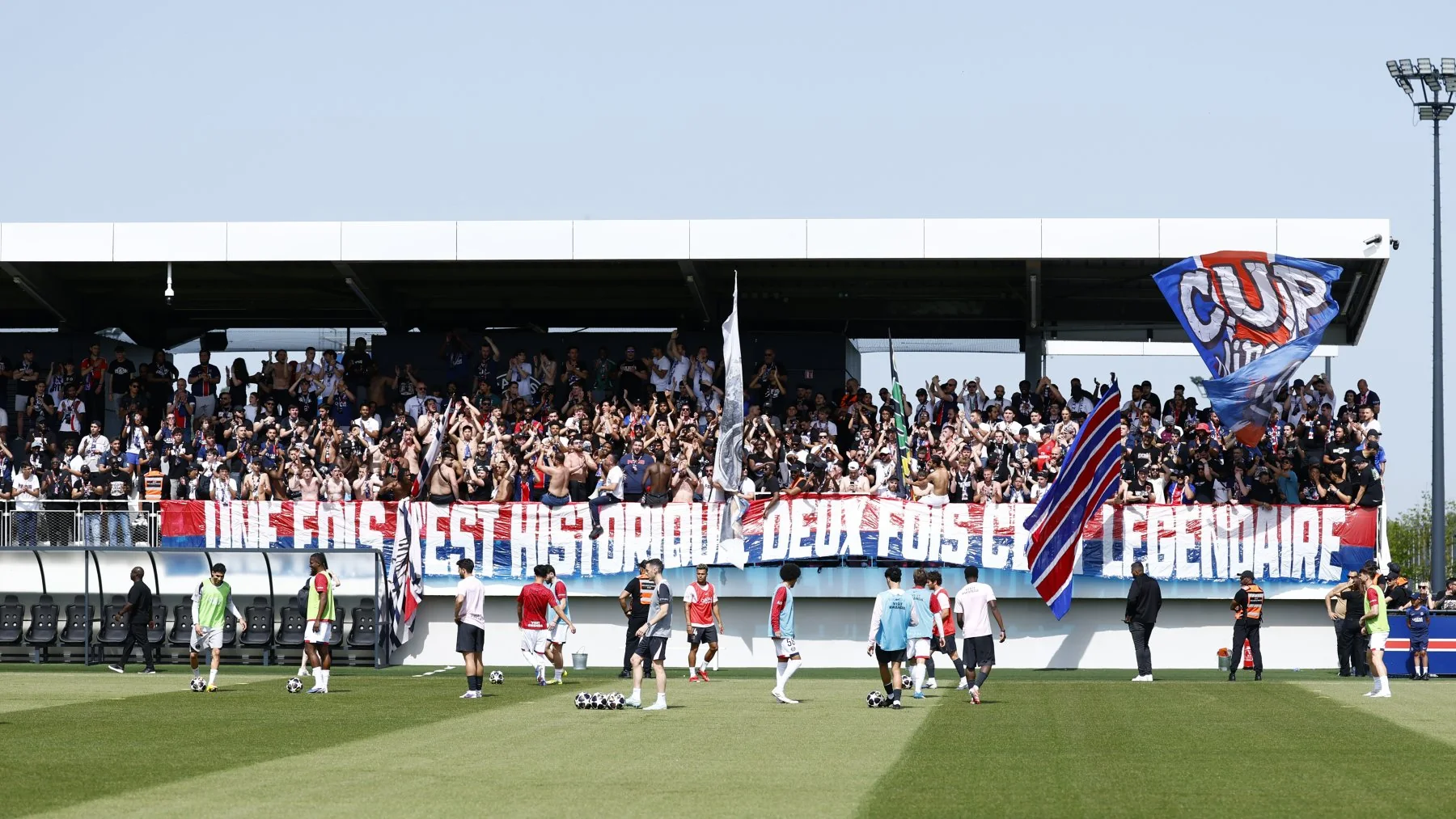
The comparison often cited is Paris FC's visit to Marseille on 6 September. It is a useful example only when described accurately. Paris FC's own supporter bulletin said up to 100 members of recognized groups could use the visiting sector on an organized, supervised bus trip. Independent individual supporters could not use that sector. Thus Paris FC supporters were permitted to attend under tight conditions, not given unrestricted access. This suggests that a managed away presence was possible for one Paris club that month; it does not prove the PSG fixture presents an identical risk to police or that the same arrangement must legally be offered.
That distinction is central to a fair debate. The government's order focuses on the history of OM–PSG antagonism and its assessment of risks on routes and near the stadium. CUP focuses on the cost to ordinary supporters of treating the whole group as a potential public-order problem. The Paris FC example creates a concrete question about alternatives, such as limited and supervised travel, but answering it requires evaluating the specific PSG–Marseille security assessment. A headline that says “Paris fans could go two weeks earlier” misses both the 100-person cap and the rivalry difference.
What the urgent legal challenge can and cannot establish yet
As reported by Foot Mercato, CUP has sought an urgent legal route in the days before the game. The Conseil d'État's public guide explains that urgent proceedings can produce temporary judicial measures on a short timetable; some rights-based applications are decided within 48 hours. That speed is important here because a decision delivered after kickoff would have little practical effect on this visit. But the guide also makes clear that emergency review has legal requirements. Asking a judge to intervene is not the same as satisfying those requirements.
A court could leave the orders in place, suspend a measure or require some other response within the scope of the case. The publicly available reporting checked on 18 September documented the challenge and the two restrictions, but did not establish a final outcome for this specific 20 September game. Until an authoritative decision is reported, the operative position remains the published restrictions. A prospective traveler should not book on an assumption that a judge will act in one direction, and a news update should say exactly which order was changed if a ruling appears.
The challenge does not depend on claiming all past incidents were imaginary. It asks, in effect, whether the current breadth and repetition of the response can be justified when fans who intend to travel peacefully are also excluded. Equally, allowing the group to bring a case does not mean a court has rejected the ministry's risk assessment. Those two statements are often blurred in fast-moving football coverage. They are different steps in a live dispute, with different consequences for the supporter who wants to know whether the away end will open on Sunday.
What a supporter should check before the Classique
For someone planning this weekend, the value of an explainer is a decision they can actually make. As of 18 September, the published restrictions are in force and no verified ruling reversing them had emerged in the sources checked for this article. That means a PSG supporter should treat travel to Marseille and entry to the Vélodrome as prohibited where the orders apply, even if a match listing still offers seats. A news headline about a legal challenge does not change those conditions. The following checks are designed to keep a fan's information current without guessing how officials would treat an individual case.
Match time, ticket source and the limits of a ticket
Confirm the event first. PSG and Olympique de Marseille list the derby for Sunday, 20 September, at 20:45 in France, at the Vélodrome. France is on Central European Summer Time at that date; an overseas reader should convert the kickoff correctly, but the orders' own dates and hours are expressed for France. Club calendars may change, so use the live match pages rather than an older screenshot when arranging a trip.
If you already paid for a seat or travel, identify the original seller and the exact terms attached to that order. An official club listing, a resale listing and a third-party package may have different customer-service channels. The host club's published ticket conditions are a starting point for tickets bought directly from OM; they do not automatically establish what a particular purchaser will be refunded for a supporter travel restriction. Ask the original seller about your order, available remedies and any deadlines. Keep the reply and purchase record together rather than assuming a social-media claim about refunds applies to every ticket.
A ticket also answers a different question from the legal orders. It may be valid admission for a person who is permitted to attend, but it does not override the current PSG supporter stadium restriction. Nor does a seat offer on OM's calendar mean the visiting end is available to supporters covered by the orders. The existing Ligue 1 ticket guide explains normal purchasing and planning; this event adds a match-specific restriction that must be checked separately before making the journey.
How to follow a late change or court ruling
The hierarchy of updates is straightforward. First, check the Journal officiel record for the ministerial order and the Bouches-du-Rhône prefecture for the local access notice. Next, look for an official court decision or reliable reporting that identifies its date and exactly which order it affects. Then recheck club and host-stadium supporter information for any ticketing or assembly arrangements. If the national travel order were suspended but a local stadium order remained, that would not be equivalent to blanket permission for an away section to open.
Speed is the difficulty: an urgent case may develop between an article's publication and the Sunday kickoff. The Conseil d'État explains that emergency proceedings can produce provisional decisions quickly, but the existence of a case should not be confused with its outcome. If a report says CUP “has appealed,” check whether it also says the judge granted relief. If it says “ban lifted,” look for the written decision and for any surviving prefectural restriction. This is the difference between keeping up with a live dispute and making a costly travel decision from an incomplete headline.
Anyone affected by the restrictions should seek a current answer from the original ticket provider, the club and the official authorities rather than try to interpret the order from the color of a scarf or a ticket category. The law's wording about people presenting or behaving as PSG supporters cannot be reduced to a universal personal test here. For fans simply following the match, the Ligue 1 fixture page remains the appropriate place to confirm kickoff and result; this article explains why the expected away support may be absent.
The dispute is about both matchday safety and the cost of keeping organized away supporters out year after year. For this specific fixture, the published orders supply the immediate answer. Anyone affected should check official orders, a verified court update and their original ticket provider before committing to travel; general fixture pages and ticket listings do not settle supporter access.
Loading comments…