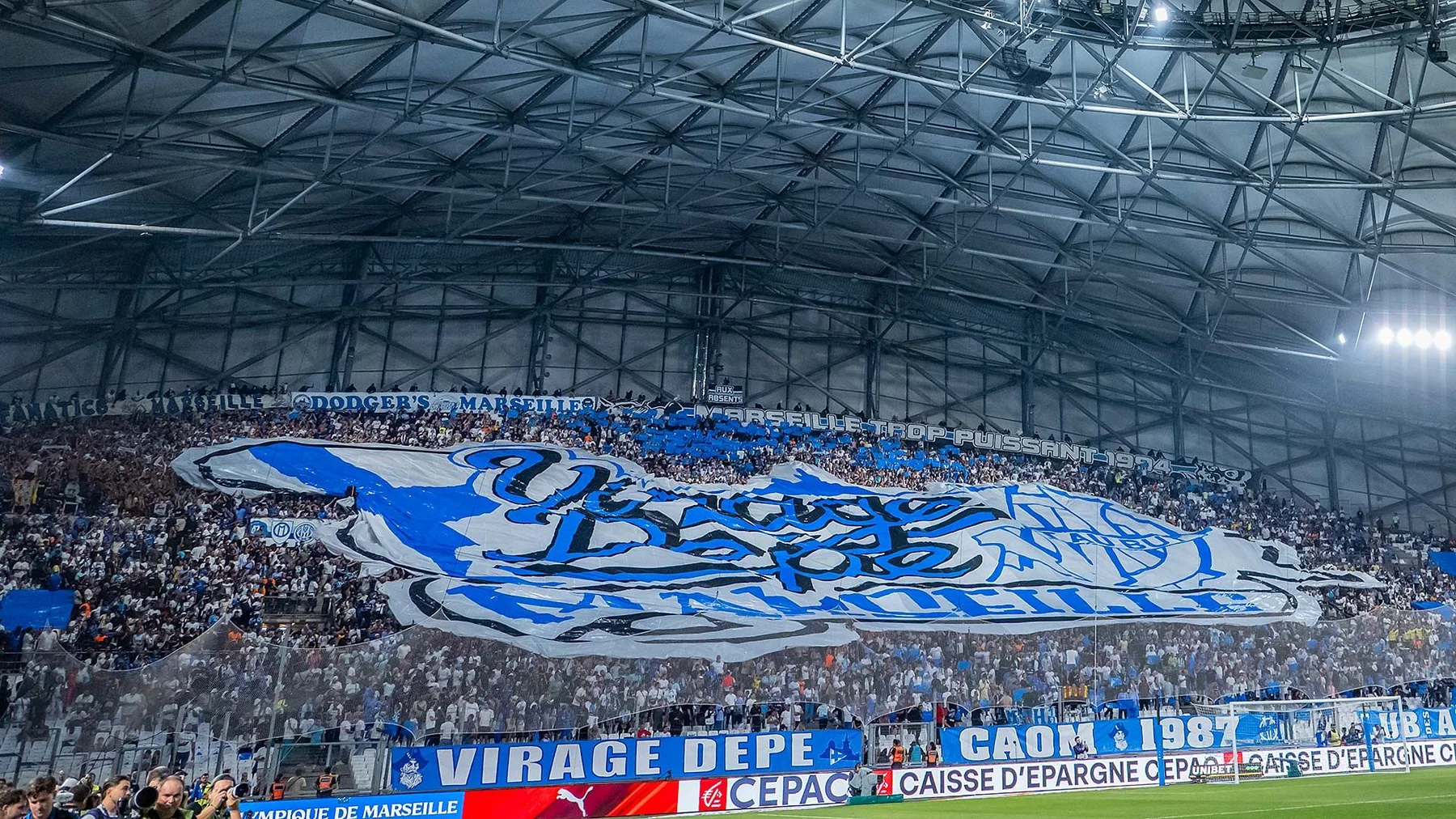
Sections of Marseille's support are protesting Frank McCourt because early-season defeats and restricted squad rebuilding have made the distance between his original Champions Project and the club's present direction feel unacceptable. The banners displayed during the September 20, 2026 meeting with PSG were about ownership responsibility over a decade, as well as a poor start under Bruno Genesio.
The financial pressure has substance, including documented UEFA sanctions. The claim that Marseille is destined for Ligue 2 is a warning voiced by protesters, not an established outcome. This account separates the matchday message, the ownership record and the football problems the club needs to address, with facts checked to October 1, 2026.
What happened at the Marseille–PSG protest?
Marseille supporters displayed banners attacking Frank McCourt at the Vélodrome on September 20, 2026, when OM hosted Paris Saint-Germain. The message contrasted the ambition announced at the beginning of his ownership with the direction supporters feared the club was taking: 2016: Champions Project. 2026: Ligue 2 Project? McCourt Out.
beIN's report of the protest explains the deliberate reversal of the original branding.
The chronology matters. GOAL described banners before and during the match, so the demonstration cannot be explained solely as an angry response to the final whistle. PSG subsequently won 2–1, a result confirmed by the official match centre. The defeat sharpened an argument that was already visible in the stands.
Le Classique gives such a protest particular exposure. A banner during an ordinary home fixture can express dissatisfaction; the same message during Marseille's meeting with PSG reaches the audience following France's most conspicuous club rivalry. That does not establish a coordinated media strategy by the protesters. It does explain why the ownership question became part of the wider conversation around the result rather than remaining a local complaint.
Why the banner targeted the owner
The dates on the banner identify its central accusation: a gap between a long-term promise and the supporters' present experience. An individual missed chance can be discussed as a player's mistake. A losing spell can raise questions about a coach. A comparison covering ten years asks a different question: who has responsibility for the club's sporting direction, the people chosen to lead it and the resources available to them?
That interpretation should not become a claim that every Marseille fan wants precisely the same solution. Displayed banners are evidence of a visible protest by sections of the crowd, not a referendum on ownership. Some supporters may prioritise results, others recruitment or clearer communication. The explicit demand for McCourt's departure belongs to the protest message; it does not prove that a replacement owner is available or that a sale is being negotiated.
It also helps to separate the two supporter stories surrounding this fixture. Restrictions on visiting PSG fans concerned matchday security, while the banners concerned Marseille's own leadership. Our guide to the PSG supporter travel ban covers that distinct issue. Combining them would obscure what the ownership protest actually asked the club to answer.
The Champions Project created a lasting expectation
The ownership change was completed on October 17, 2016, according to Marseille's official account of the McCourt era. The name Champions Project set an ambitious benchmark. It invited supporters to think beyond avoiding another disappointing season and towards a club that could compete consistently near the top. That is the background to the banner's choice of dates: protesters were evaluating a decade of direction, rather than asking whether one transfer window had been successful.
A fair assessment must acknowledge the high points. McCourt Global's account highlights the Europa League final in the second season of its ownership and Champions League returns in 2020, 2022 and 2025. Those achievements matter. Reaching a European final creates memories and establishes that a team can navigate a demanding competition. Qualification for the Champions League is also a meaningful sporting outcome, not merely a marketing line.
But a qualification and a lasting place among the leading clubs are different standards. Supporters judging an ambitious project can reasonably ask whether an improvement survives the departure of a coach, whether recruitment serves more than one season and whether a setback leaves the next team with a workable foundation. A project built around occasional recoveries is experienced differently from one in which strong seasons become the normal expectation. This distinction explains how genuine achievements and genuine frustration can coexist.
There is a concrete example of disrupted continuity in the club's own history. OM describes four managers during 2023/24: Marcelino, Jacques Abardonado, Gennaro Gattuso and Jean-Louis Gasset. That does not establish the reason for every departure, nor make the owner personally responsible for every selection. It does illustrate why the stability question has substance. A squad working through different coaches may need to adapt its pressing, defensive positioning and attacking combinations repeatedly before a settled identity develops.
The trophy reference point stretches back beyond the takeover. OM's honours list records its 2010 league title and League Cup victories ending in 2012. Supporters can therefore compare the language of renewal with a long wait for another major trophy. Still, the earlier drought cannot be attributed entirely to an owner who arrived in 2016.
The strongest version of the criticism is consequently about sustained outcomes. An owner can point to moments of progress; supporters can ask why those moments have not produced a more resilient team. Merely counting money spent would not resolve that argument. The relevant sporting question is whether the decisions made with available resources give successive Marseille teams a better chance of competing, recovering and improving.
The financial argument is about choices as well as money
Discussion of the protest quickly becomes a discussion of money: how much an owner can contribute, how much the club can spend and whether supporters should accept a period of restraint. These are related questions, but they do not have identical answers. The difference matters because a demand for investment can otherwise be answered with a claim about regulations without addressing how Marseille arrived at its present sporting position.
Personal wealth does not establish the club's budget
An estimate of an owner's personal fortune is not a statement of the football club's available budget. Assets, cash supplied to a club, recurring football revenues and spending permitted under competition rules measure different things. The point is not that an owner has no choices. It is that a headline about wealth does not establish which choices are immediately available, or demonstrate that a particular transfer would satisfy the club's obligations.
UEFA's financial sustainability framework distinguishes paying obligations, meeting football earnings requirements and controlling squad costs. Its explanation gives a permanent squad-cost ceiling of 70% from 2025/26, covering player and coach wages, transfers and agent fees against club revenue. These controls help explain why an owner's willingness to fund a club and the ability to keep expanding a playing squad are different issues.
The criticism is also about the transition between policies. In Football Club de Marseille's September 30 discussion, journalist Nicolas Filhol argued that McCourt should accept responsibility for the leadership choices made under his ownership and questioned a sudden reduction in contributions. That is an attributed argument about accountability, rather than an official declaration of the budget. It highlights why supporters may accept the need for discipline while still challenging the speed and sporting consequences of a change.
Why a constrained transfer window matters on the pitch
There is direct evidence that the regulatory pressure is real. UEFA's June 17, 2026 decision states that Marseille missed its football earnings target. It imposed a €6 million fine and a restriction on registering new players on UEFA List A for 2026/27, plus a separate €4 million squad-cost fine. It also set a conditional exclusion from the next UEFA club competition for which Marseille would otherwise qualify in the following three seasons; the club can avoid that exclusion by meeting the 2026/27 earnings target. The statement expressly considered the collapse in French domestic broadcasting revenues.
The registration wording is significant. A restriction on UEFA List A is not, by itself, evidence of a blanket prohibition on domestic transfers. Likewise, a conditional future European exclusion is not the same as an immediate ban from every competition. Separately, beIN reported that financial constraints left OM without new summer signings. That reporting describes the squad-building outcome; UEFA's announcement establishes the specific European sanction.
For a coach, restricted rebuilding can mean fewer ways to change a match: a different type of forward, an alternative midfield balance or a fresh defender when fatigue reduces concentration. These are general sporting consequences, not proof that any one unavailable signing would have reversed the PSG result. Recruitment should be judged by roles the team needs, rather than the number of arrivals alone. Supporters' concern becomes more precise when it asks whether financial adjustment preserves enough options to compete while the club repairs its position.
Genesio's problem and the fear of a relegation fight
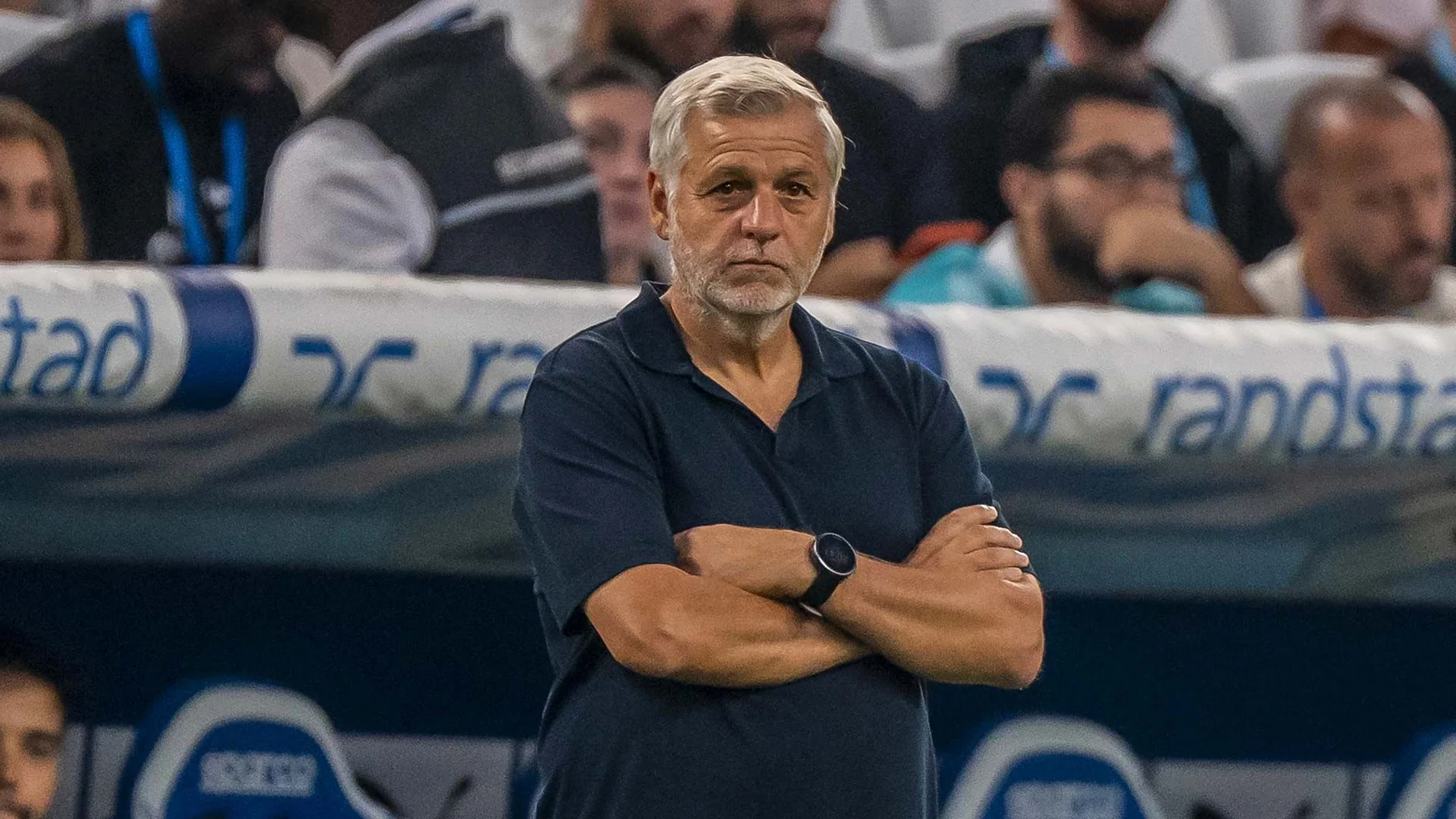
Bruno Genesio has the immediate job of improving results with the players available. That responsibility should be considered alongside the ownership debate, rather than used to cancel it. A coach can improve decisions, combinations and defensive organisation. He cannot reopen a completed transfer window simply because the mood around the club has become more urgent. Equally, recruitment constraints do not make every avoidable mistake on the pitch inevitable.
What the PSG defeat actually showed
The official match record provides a more useful starting point than the final score alone. The teams were level at half-time. Neal Maupay missed a chance supplied by Amine Gouiri in the 38th minute. Ferran Torres entered in the 59th minute and scored seven minutes later. Angel Gomes equalised in the 72nd minute, before Marquinhos restored PSG's lead in the 74th. Timothy Weah then received a second yellow card in the 77th minute.
Those events reveal several different problems to solve. The first-half opportunity shows that a team can create a route into a game without converting it. The equaliser demonstrates that Marseille could respond after falling behind. The immediate concession then raises the separate issue of protecting a favourable change in momentum. Treating the evening as ninety minutes of hopelessness would erase the moments from which a coach could build; treating a close scoreline as evidence that everything is nearly fixed would overlook how quickly the draw disappeared.
Marquinhos scored after Jeffrey de Lange had saved his initial attempt. A rebound winner makes the second action in a defensive sequence significant: making the first save does not finish the job if an opponent reaches the loose ball. The practical coaching question is how players react around the goal when the first contest has already been lost. The event record supports that question without establishing which individual was given a particular marking instruction.
The dismissal also changes the meaning of the final stage. Chasing an equaliser with ten players asks the remaining team to cover space while committing bodies forward. It can reduce the coach's flexibility and increase the consequences of each decision. Yet the winning goal came before the red card, so the dismissal cannot explain the entire defeat. That distinction keeps the discussion focused on what happened instead of allowing one dramatic moment to absorb every other weakness.
Why the Ligue 2 slogan is a warning, not a forecast
beIN's September 21 report described the PSG defeat as Marseille's fifth successive loss across all competitions. That is a serious sequence, but the competition qualifier matters: a European defeat contributes to a losing run without directly removing Ligue 1 points. A supporter can reasonably feel alarmed by repeated losses while recognising that the streak and the domestic standings answer different questions.
The protest slogan names the outcome supporters fear. It does not establish that Marseille will be relegated, nor record a decision to send the club down. The LFP's 2026/27 calendar announcement places the final league round on May 29, 2027, and specifies a subsequent play-off between Ligue 1's 16th-placed team and the Ligue 2 play-off winner. An early-season position therefore has to be read within a much longer competition.
The useful question is whether the reasons for the losing run persist against different opponents and in different match states. Does Marseille convert chances when the game is level? Can it defend after scoring? Does discipline allow the coach to use his full team late on? Improvement in those areas would give supporters reasons for confidence grounded in football. Another slogan, or a reassuring assessment of the club's size, would not substitute for that evidence.
What would answer supporters' concerns?
The protest demands accountability, but there is no single result that can settle every issue it raises. Winning the next match would help Genesio and his players immediately. It would not explain the long-term funding model or turn a limited squad into a deeper one. Equally, announcing a new commercial partnership would not demonstrate that the defence can protect an equaliser. Different responsibilities need different evidence of progress.
The demand for a change of owner also needs to be kept separate from a change of ownership. McCourt Global continues to describe its stewardship of Marseille. The banner itself supplies no buyer, transaction terms or timetable. Supporters are free to press for a sale, but a reader should look for a confirmed announcement before treating takeover discussion as a solution already in motion.
Judge the next steps against a clear sporting plan
A useful response from the club would explain how the immediate sporting objective fits its financial obligations. That means setting a realistic expectation for the current squad, identifying which areas need strengthening and making clear who is responsible for decisions. Supporters do not need disclosure of every confidential negotiation to understand the direction. They do need a consistent explanation when the language of ambition is followed by decisions that appear to narrow the coach's options.
Recruitment priorities should be expressed through football needs. If the team is struggling to finish chances, the question is whether its attacking combinations improve and whether future recruitment provides a useful alternative. If it concedes soon after scoring, defensive organisation and concentration deserve attention alongside transfer spending. Buying a recognisable player without addressing the actual weakness can create a brief sense of movement while leaving the same problem on the pitch.
Financial progress has an identifiable test as well. UEFA has set a 2026/27 football earnings target, so compliance is something the club must ultimately demonstrate. A promising interview cannot replace that obligation. At the same time, meeting a financial target should be explained in relation to the team's ability to compete. Supporters can ask how a recovery plan avoids recurring emergencies without assuming that unlimited spending would automatically produce stability.
For the next games, judge improvement against the opponent and the state of the match. A stronger rival away from home may require a different plan from an opponent Marseille expects to challenge at the Vélodrome. Points earned while protecting a lead and points earned after recovering from behind offer different evidence about resilience. A short sequence across those situations is more informative than using the emotional weight of one Classique to label every subsequent performance.
Use the Ligue 1 fixture list to follow Marseille's next opponents, and the 2026/27 standings to check whether better performances translate into a better position. For leadership decisions and official club updates, follow OM's announcements. The central issue remains the connection between decisions and outcomes: supporters want reasons to believe that the club has a direction it can sustain, and that setbacks will lead to correction rather than another restart.
Loading comments…