Updated 20 October 2026. Rennes’s 2026/27 squad brings together Samba in goal, a changed defensive group, several experienced midfield combinations and a varied attack around Lepaul. Here are the current players, their positions and the roles that connect the team.
Samba and the Rennes defence after a summer of changes
Rennes's current squad needs to be read after the summer changes, rather than reconstructed from familiar names of previous seasons. The defensive group now includes Charlie Cresswell and Bryan Reynolds alongside Anthony Rouault, Quentin Merlin and the other players listed by the club. Brice Samba remains the main reference behind them. Those names provide the starting point for understanding the 2026/27 team, while the particular combination selected determines how Rennes shares its defensive work.
There is an equally important correction on the bench. Franck Haise was appointed on 18 February 2026. A search result still associating the current squad with Habib Beye belongs to an earlier stage of the club's story. Haise's appointment also reconnected him with Samba after their previous work at Lens, but that history does not mean every element of the Lens side can simply be transferred to this Rennes group.
Samba, number 30, joined Rennes in January 2025 and is left-footed. Nicolas Lemaître and Kilian Belazzoug complete the listed goalkeeping group. For supporters, Samba's position is more than a name at the bottom of a formation graphic. When the defenders spread to receive possession, the goalkeeper supplies a return route; when the team loses the ball, he has to assess the depth behind them. The same connection is being used in opposite directions.
A goalkeeper's preferred foot can also affect the angle of the first pass. A left-footed receiver may find one side easier to access with an open body position, while an opponent can try to direct the press the other way. That is a detail to consider when watching Samba with the central defenders, not proof of an automatic advantage. The spacing of the receivers and the pressure on the ball still determine whether the available pass is useful.
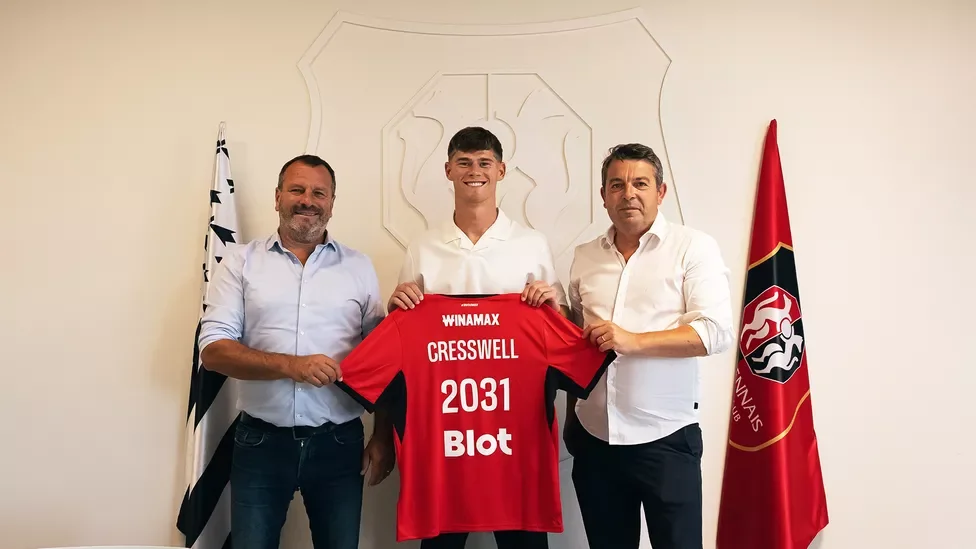
Cresswell, number 4, arrived in August. His official profile identifies a tall, right-footed defender; Rouault, number 24, has been with the club since February 2025. Their different arrival dates matter to the group's development: an established teammate and a new addition may know the same defensive principles while still learning each other's decisions under pressure. Partnership involves recognising when the other player will challenge, cover or hold position.
Abdelhamid Aït Boudlal and Gonçalo Oliveira add central defensive options. The full defensive directory also includes Merlin, Przemysław Frankowski, Mahamadou Nagida and Reynolds. This is a set of different resources rather than eight interchangeable defenders. A change in the middle affects the immediate protection of the penalty area; a change on a flank can alter the height at which Rennes gains possession and how easily it supports the nearest winger.
Merlin, number 26, is left-footed, while Reynolds, number 14, provides a right-footed profile on the opposite side. When one advances, the nearest central defender and midfielder have to decide how to protect the channel. If a winger stays outside, the full-back may offer support underneath; if the winger moves inside, the defender can become the team's source of width. Their attacking contribution cannot be separated from the cover that makes it possible.
The official squad page also identifies who should be excluded from an immediate Rennes selection discussion. Jérémy Jacquet and Lilian Brassier appear among transferred players, while Alidu Seidu is listed on loan. Their previous Rennes involvement does not make them present alternatives. Using the dated current directory avoids the particularly misleading habit of mixing the strongest names from several different seasons into one imagined squad.
The recent 4–3 defeat at Paris FC provides a result to investigate, rather than a complete verdict on every defender. Rennes conceded the winner deep in added time, according to the club's match summary. That puts concentration and team protection at the end of that particular contest into focus, but it does not establish a season-long explanation by itself. Use the Rennes fixtures and results to compare actual selections across opponents. The defensive group offers choices; judging them requires knowing which players were together and what the match asked them to do.
How Rongier, Camara and Thomasson organise the middle
Rongier, number 21, and Camara, number 45, both joined Rennes during the summer of 2025. Thomasson, number 28, arrived in May 2026. Those different timelines matter: two midfielders had already spent a season adapting to the club before a new senior option joined them. The question is how their responsibilities complement one another, rather than which name should win a competition for an imaginary single midfield place.
Rongier can provide a central reference when possession moves between the defenders and the players further forward. Camara gives the group another experienced central option. In a combination containing both, the important issue is spacing: when one approaches the ball, the other needs to offer either a forward outlet or protection behind the attack. Two midfielders making the same movement can leave a side with numerical strength but few useful passing angles.
Thomasson's arrival announcement emphasised an experienced midfielder coming from Lens, with the capacity to sustain considerable running. Rennes already has a concrete example of his contribution: he scored the only goal against Marseille on 11 September. That does not turn him into a permanent second striker. It shows how a midfielder can become the decisive arriving player while the forwards occupy the attention of the defence.
The significance is collective. If Thomasson moves towards the penalty area, somebody must preserve the route back through midfield and anticipate a clearance. If he stays closer to Rongier or Camara, Rennes may gain a safer passing sequence but lose a runner beyond the ball. Haise's choice therefore concerns the balance of movements as much as the number of midfielders. The same three names can create different attacking possibilities depending on their distances from one another.
Cissé and Szymański add different central options
Cissé, number 6, is a homegrown midfielder, with the club identifying a tall, right-footed profile. His development gives Rennes a central option from its own pathway alongside the recruited senior players. Height alone cannot define his job: the relevant questions are where he receives, whether he can turn towards the attack and how his movement supports the midfielder nearest him.
Szymański, number 17, arrived in January 2026 as an attacking creator. His left foot offers a different receiving and passing angle from the right-footed central players. If he operates higher, he can provide a connection behind the striker; if he comes towards midfield, another attacker must occupy the space he leaves. Those are complementary possibilities, rather than proof that he and Cissé perform an identical task because both appear under “midfielders.”
Where Blas fits between midfield and attack
Blas, number 10, is another left-footed option and has been at Rennes since July 2023. His position belongs to the connection between the central group and the attack. A creative receiver can drift towards the flank to combine, remain between lines or arrive nearer the forward. The selection around him determines which space is available and who supplies width if he moves inside.
This is why a squad list can contain Rongier, Camara, Thomasson, Cissé, Szymański and Blas without making them six versions of the same midfielder. Henrick Do Marcolino adds another developing option. Rennes can change the blend of support, forward movement and creative receiving according to the match. The useful reading is to identify which job a change adds and which job a teammate must absorb, especially when the full-backs are already contributing beyond midfield.
The forwards around Lepaul: width, support and alternatives
Rennes has several different attacking profiles around Lepaul, and the broad “attacker” heading hides some important distinctions. Mousa Al-Tamari, Arnaud Nordin, Issa Soumaré, Eliezer Mayenda and Boulaye Dia do not all need to receive in the same central space to influence a match. The squad's value lies partly in distributing the jobs: somebody stretches the pitch, somebody supports possession and somebody occupies the dangerous area when the ball arrives.
Al-Tamari, number 11, is the left-footed Jordan international who joined in February 2025. His position can connect a wide starting point with movement towards goal. When he moves inside, a full-back can provide the outside lane; when he holds width, an advanced midfielder can receive closer to the striker. The important issue is that the two players should create different options rather than stand in the same passing route.
Nordin, number 70, joined during February 2026, while Soumaré, number 90, is a June addition. Their presence lets Rennes change personnel around the central attacker without necessarily changing the entire midfield. A fresh wide option can influence how the opposing full-back defends, which in turn changes the room available to Blas or Szymański inside. An attacking substitution therefore has consequences beyond the touchline where the new player first appears.
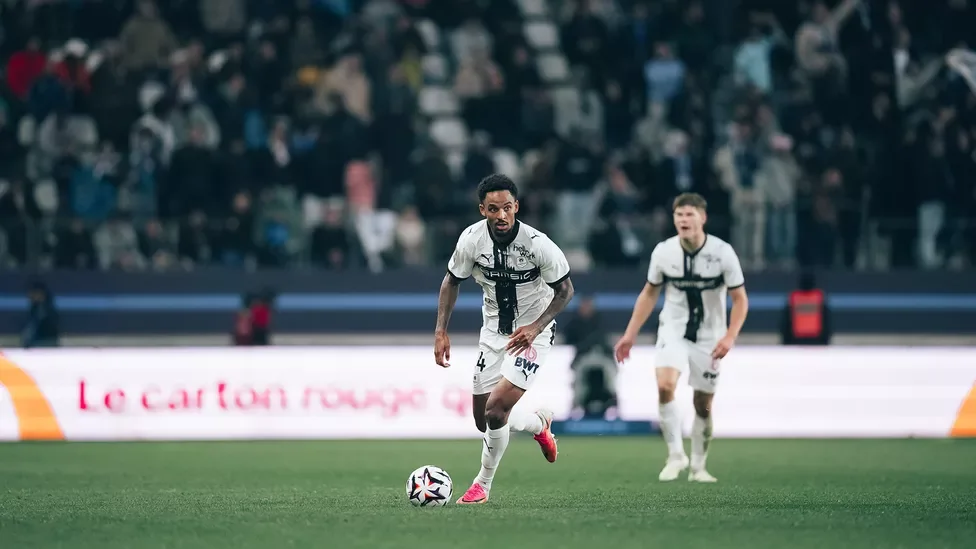
Ayanda Sishuba and academy attacker Elias Quiñonez extend that group. Their inclusion in the directory identifies a development pathway and additional profiles, not a promise of equal senior responsibility. Quiñonez is listed with number 35 and the club's homegrown marker. That matters when reading a long squad list: established attacking alternatives and developing players belong to the same club, but the coach may use them at very different stages of a match or season.
The recent Paris FC game illustrates why chance creation needs to be read across those categories. The opposing club's account describes Trapp denying Blas, Reynolds and Al-Tamari at different moments. An attacking midfielder, a defender advancing from the flank and a listed forward all reached threatening positions. That does not establish a sustainable scoring rate from one game; it shows that the side's route to goal is broader than the name of its main striker.
Lepaul, Dia and the other central-forward options
Lepaul, number 9, joined in August 2025 and remains the clearest central attacking reference for a reader learning this team. His role involves more than waiting for the ball. A central forward occupies defenders, gives teammates a destination for passes and has to judge when to come short without emptying the penalty area. The players supplying him need to know whether he is offering a link or preparing to attack behind the line.
The official Paris FC match summary records a very specific kind of output: Lepaul scored three penalties in the 4–3 defeat. That is decisive finishing under repeated pressure, but it must not be presented as three open-play attacks finished by the same player. Penalties measure a particular execution task; creating chances against an organised defence is a broader team process.
The result also limits what the hat-trick can prove about the squad. Three converted penalties kept Rennes returning to the contest, yet the team still lost. The forwards' contribution and the collective result are connected without being identical. A squad guide should recognise Lepaul's importance while keeping room for the midfield support, wide movement and defensive protection that determine whether his goals are sufficient.
Dia, number 22, arrived in September and adds another senior attacking option. His official profile identifies a right-footed Senegal international. The selection question is how he fits with Lepaul and the creators: a second forward can provide another target or a runner beyond the first, but using two centrally may require a different distribution of width and midfield support. The benefit needs to be weighed against which job another player stops performing.
Mayenda, number 12, brings a left-footed option after his July arrival. That offers a different profile from the right-footed central forwards. Preferred foot can influence the angle of a first touch, the direction of a run and which side of a defender is most attractive to attack. It does not determine the outcome by itself, but it can help explain why the coach chooses a particular combination against a particular opponent.
A second attacker can also change how Rennes presses after losing possession. If the forward nearest the ball closes one passing route, a teammate needs to anticipate the next option rather than making the same chase. The central midfielders then decide whether to advance behind that pressure or preserve the space in front of the defenders. Dia, Mayenda or another supporting attacker affects this sequence even before receiving an attacking pass.
There are membership boundaries here too. Breel Embolo is in the club's transferred list and Yassir Zabiri is listed on loan, so neither should be added to a current Rennes bench simply because an older search result recalls his time at the club. The actual group offers enough distinct choices without combining players from different transfer windows into a fictional full-strength attack.
For Lepaul's individual background, the existing Lepaul profile provides the separate career guide. The squad question is how he fits with those around him: Al-Tamari and the other wide options, the creative midfielders, and alternative central forwards such as Dia and Mayenda. Those relationships give Rennes several ways to build an attack, while the current match squad and the Ligue 1 table supply the availability and competitive context for the next selection.
Loading comments…