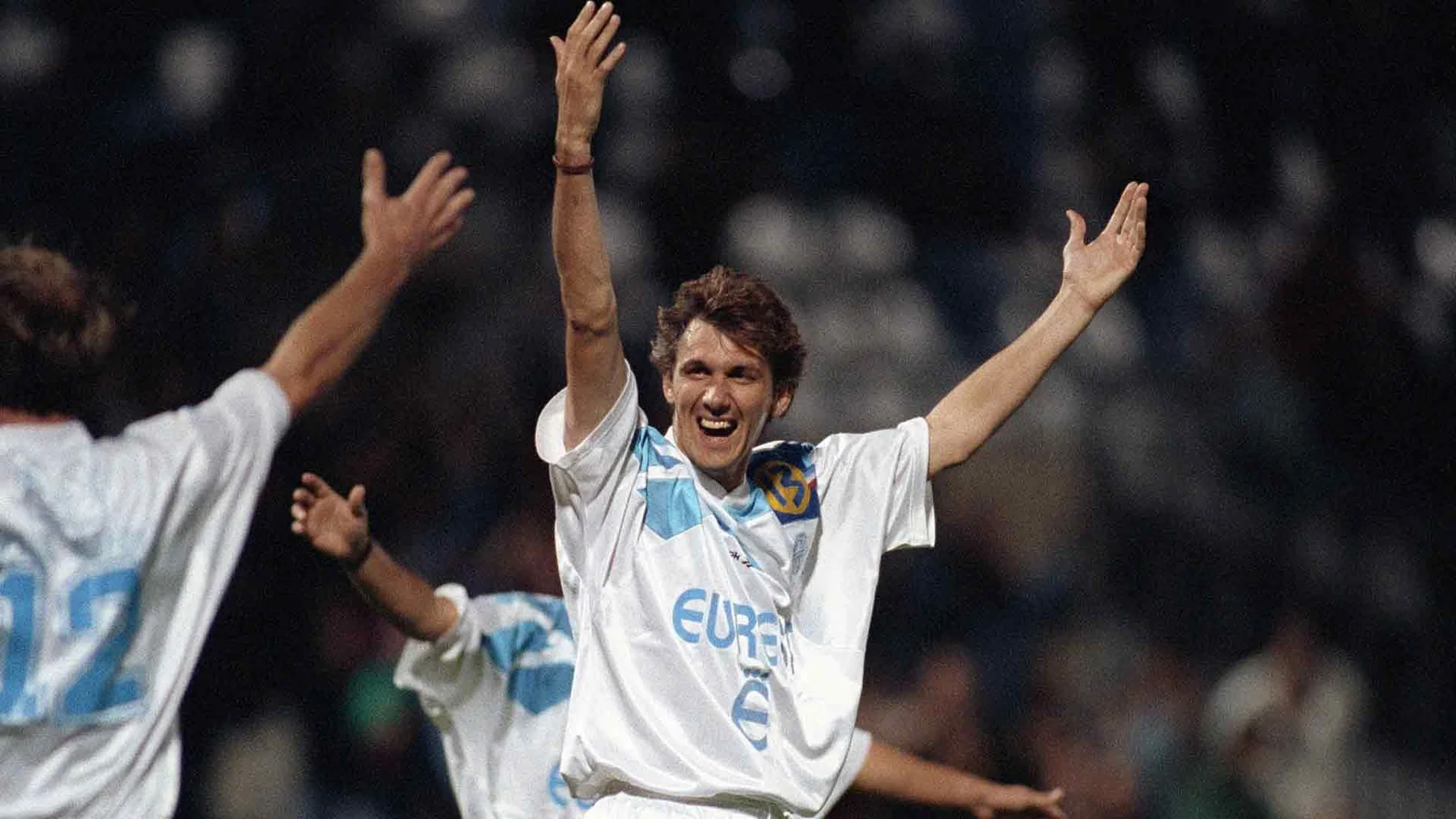
Marseille won the 1993 UEFA Champions League final by beating AC Milan 1–0 in Munich on 26 May, with Basile Boli scoring the only goal. The European title remains in UEFA’s honours record. The subsequent Valenciennes affair cost OM its French league championship and brought other sanctions. This guide explains the route, actual final team and aftermath, separating each competition and decision.
What Marseille won on 26 May 1993
Olympique de Marseille beat AC Milan 1–0 at Munich's Olympiastadion on 26 May 1993. Basile Boli scored the winning goal, and Marseille became the first French club to win Europe's premier club competition. The achievement belongs to the 1992/93 season, even though the final itself took place in the calendar year 1993. That simple distinction explains why both dates appear in accurate accounts of the victory.
It was also the first final under the UEFA Champions League name. The new branding did not erase the history of the European Champion Clubs' Cup: Marseille's win belongs to the same competition lineage that had already produced decades of European champions. Saying that OM won the European Cup and saying that it won the Champions League in 1993 therefore refer to the same sporting achievement, rather than two separate trophies.
The official UEFA season archive still identifies Marseille as the winner. This matters because the aftermath of that season is often compressed into a misleading statement that the club lost its title. Marseille lost its French league championship and faced serious consequences; its recorded European championship is a different entry in the historical record.
For supporters encountering the story through a short clip, the goal can make the victory appear like a single isolated moment. The full achievement involved a qualifying route, a decisive group stage and a final against a formidable opponent. Boli supplied the score that separated the teams in Munich, but the team had to reach that match and keep Milan from equalising. Understanding the path makes the image of the trophy more meaningful.
The phrase associated with the win, “À jamais les premiers,” expresses the lasting importance of being first. It does not require the inaccurate claim that no other French club can ever win the competition. The INA's archival account shows how the result became a shared city event, with celebrations in Marseille and the team's return. The distinction between first and only is essential when reading anniversary material written at different dates.
Keep the competition names clear throughout the story. A domestic title records the outcome of the French league; a European title records the outcome of UEFA's competition. A ban from a future edition is another matter again. Those distinctions do not diminish the scandal that followed Munich. They allow the football achievement and the disciplinary consequences to be described precisely, so that neither replaces the other with an incomplete slogan.
The road to Munich was different from the modern Champions League
Reading the campaign through today's competition format produces the wrong picture. Marseille did not navigate a modern league phase followed by familiar knockout rounds, and there was no conventional quarter-final and semi-final sequence before Munich. The competition used preliminary knockout ties and then a small group stage whose winners reached the final. The structure made the final group position decisive.
Knockout ties before a decisive group
The DFB's season match archive records Marseille's early ties against Glentoran and Dinamo Bucharest. OM won 5–0 away and 3–0 at home against Glentoran. Against Dinamo, an away goalless draw was followed by a 2–0 home victory. These results show different ways of completing a two-leg task: one tie was effectively shaped by a large away win, while the next needed the home return to settle it.
The group then brought Rangers, Club Brugge and CSKA Moscow. Each opponent was faced home and away, so qualifying required navigating six fixtures with different conditions. That is a more demanding story than looking only at the eventual group's most spectacular scoreline. A large victory could help the overall record without removing the need to collect results elsewhere.
UEFA's historical account of the season contrasts Marseille's closely contested group with Milan's perfect group campaign against Göteborg, Porto and PSV. That contrast explains why beating Milan in the final carried such significance. It does not mean that group records determined the final in advance: qualification and a single deciding match are different sporting tests.
Rangers pushed Marseille to the last matchday
The two games against Rangers both finished level: 2–2 at Ibrox and 1–1 in Marseille. OM also drew 1–1 away to CSKA Moscow, before beating the same opponent 6–0 at home. Against Club Brugge, a 3–0 home win was followed by a much narrower 1–0 away victory on the final group matchday. Venue and return fixture matter here; the same pair of clubs did not automatically produce the same type of result.
UEFA records that Marseille's last win at Brugge coincided with Rangers being held by CSKA. The final separation was one point. That small margin gives the campaign its tension: Marseille's place in Munich was earned through a group competition that remained consequential until the end. The 6–0 score is memorable, but the final away victory was the result that completed the route.
For a modern fan, the most useful comparison is the pressure attached to each stage, rather than forcing old matches into present-day round names. The early ties rewarded completing an aggregate task. The group rewarded finishing ahead of direct rivals over several months. The final would ask the team to beat one opponent on one evening. Marseille succeeded at all three, and those different demands make the eventual trophy more than a one-match story.
The final squad and the moment that beat Milan
The final team should be distinguished from the larger squad that appeared during the season. Some memorable names in Marseille's wider history did not start in Munich, while Jean-Pierre Papin was on the opposite side. The match record is the best starting point when identifying who actually won the deciding game, rather than assembling a retrospective list of famous OM players.
The starting eleven and Raymond Goethals
UEFA's historical finals handbook records Fabien Barthez, Jocelyn Angloma, Éric Di Meco, Basile Boli, Marcel Desailly, Franck Sauzée, Jean-Jacques Eydelie, Alen Bokšić, Rudi Völler, Abedi Pelé and captain Didier Deschamps as Marseille's starting eleven. Raymond Goethals was the coach. This is a match-specific list, not a claim that those eleven started every European fixture that season.
The names also show why reducing the victory to its scorer is incomplete. A goalkeeper, defenders, midfielders and forwards all had tasks within the same result. Deschamps's captaincy belongs to that collective account; Völler and Bokšić supplied recognised attacking experience, while the team also included players who would become major figures in later European and international football. Their subsequent fame should not replace their actual participation in this final.
Marseille made two recorded substitutions: Jean-Philippe Durand replaced Angloma in the 62nd minute, and Jean-Christophe Thomas replaced Völler in the 79th. Milan brought Papin on for Roberto Donadoni in the 58th minute. Those details are useful when following archive footage or comparing the starting teams with the players visible late in the game. They do not, by themselves, prove the precise tactical intention behind each change.
Nor should a modern formation graphic be treated as the complete explanation of Goethals's team. A list of starting positions can organise names, but movements and responsibilities require match evidence. The firmly established facts are the personnel, the changes and the outcome. They already show that the victory depended on more than one player or one celebrated image.
Basile Boli’s header and the importance of the narrow score
Boli's header before half-time produced the only goal. UEFA's match record lists it in the 43rd minute. That timing gave Marseille an advantage with a substantial part of the final still to play; the lead had to survive the second half, rather than arriving as an immediately decisive last-minute event. The club's historical account identifies the header as the moment that put OM on top of Europe.
Milan's side included Franco Baresi, Paolo Maldini, Frank Rijkaard and Marco van Basten, with Papin entering from the bench. Naming those opponents explains the level of the fixture more concretely than describing it simply as a famous win. Milan had already completed a perfect group stage, but in Munich it did not find the equaliser needed to change the result.
A 1–0 final makes the relationship between scoring and preventing goals especially clear. Boli supplied the winning margin; preserving the clean sheet made it sufficient. That is an interpretation of the documented score, rather than a claim about unexamined possession statistics or a particular defensive scheme. For fans revisiting the match, the goal is the entry point. The remaining time and the players on both sides explain why it became a title-winning moment.
The scandal changed Marseille’s future, but not the European winner
The aftermath cannot be described accurately by saying only that Marseille won, or only that Marseille was punished. Both are part of the record. The important distinctions are the competition involved, the decision taken and when it took effect. Collapsing them into one event makes the final and the following seasons harder to understand.
The Valenciennes affair and the French title
The domestic match at the centre of the VA-OM affair was Valenciennes against Marseille on 20 May 1993, six days before the Munich final. OM won 1–0 through Bokšić. In its official historical account, the club describes Jacques Glassmann's report that approaches had been made to him and two other Valenciennes players to ease off during the game. A judicial investigation followed in June.
The French championship was withdrawn. The French federation's honours list records the 1992/93 title as unassigned. It should therefore not be added to Marseille's official league total or automatically credited to another club. The situation is different from an ordinary season in which one team simply finishes above another and the final table settles the championship.
That domestic affair is serious in its own right. Keeping it separate from the European winner does not minimise it or suggest that the surrounding controversy was imaginary. It establishes what the recorded decisions actually changed. Claims about other matches or other kinds of misconduct require their own evidence; they should not be inserted into the final's account as if they were the same established finding.
European exclusion and the later relegation
Marseille was excluded from the 1993/94 Champions League and did not take part in the European Super Cup or Intercontinental Cup. Those consequences prevented the club from receiving the usual opportunities associated with being European champion. They did not transfer the 1993 Champions League trophy to Milan: UEFA's winner archive continues to list Marseille for that season.
Relegation also belongs to the correct year. Marseille finished second in the 1993/94 French first division, but was then administratively relegated. It was not a sporting relegation caused by finishing among the bottom clubs, and it did not take effect immediately after the Munich final. The gap between a team's league performance and an administrative decision is essential to the account.
The next recovery was complicated too. OM finished first in the second division in 1994/95, but financial oversight prevented an immediate return. The club finally went back up after the 1995/96 season. The sequence illustrates why a punishment, a league finish and financial authorisation are different parts of football's competitive system. Winning enough matches does not necessarily settle every condition of participation.
For the domestic honours context, the Ligue 1 winners guide keeps the unassigned 1992/93 championship separate from recognised league titles. For the European final, the outcome remains Marseille 1–0 Milan. Reading both records together gives a fuller account than using either one to erase the other.
Why the 1993 team remains a reference point for Marseille fans
The legacy is partly the outcome and partly the shared experience surrounding it. Marseille had reached the European final in 1991 and lost to Red Star Belgrade on penalties after a goalless game. Two years later, it turned another final into a victory. For supporters, that progression gave Munich a meaning beyond adding one item to a trophy list: a previously missed opportunity had become an achievement.
The INA's anniversary feature connects the football with celebrations at the Vieux-Port and the team's return to the Vélodrome. That is why the story continues to be told across generations. Many supporters encountered it first through family memories, archive pictures or anniversary events rather than through watching the final live. The city setting helps explain how a match in Germany became part of Marseille's local identity.
The personnel provide another link. Boli's name is attached to the goal, Deschamps to the captaincy, Goethals to the coaching, and the other players to their roles in the same team. Remembering the starting eleven and the substitutes gives the achievement a fuller human shape. It also avoids retrospectively awarding participation to famous players who belonged to another season or, in Papin's case, played for the opponent that evening.
UEFA revisited the victory with Deschamps and Völler in 2012, when the Champions League final returned to Munich. The city link did not mean the same stadium: the 1993 final belonged to the Olympiastadion. Such details matter in football memory because similar names, places and anniversary photographs can otherwise blur distinct occasions.
Comparisons with later teams are most useful when they acknowledge different conditions. The 1993 route had its own group format and opponents; its final had its own squad and narrow deciding score. Modern participation rules, schedules and squad construction create other demands. None of that removes the earlier achievement, but it makes a simple claim that one era was automatically harder or better difficult to justify.
Fans following today's Marseille can use the current Ligue 1 schedule for the next match and return to the archives for the historical context. The two serve different purposes. A current lineup should answer who is playing now; the Munich record should answer who won then.
Marseille's 1993 European championship remains a recorded football victory with a complicated aftermath. Its enduring place in supporter culture comes from that full history: reaching the final, beating Milan, celebrating a French first and then living through the consequences of a domestic scandal. Keeping each part precise makes the story more compelling, and gives “first” its lasting meaning without simplifying everything that followed.
Loading comments…