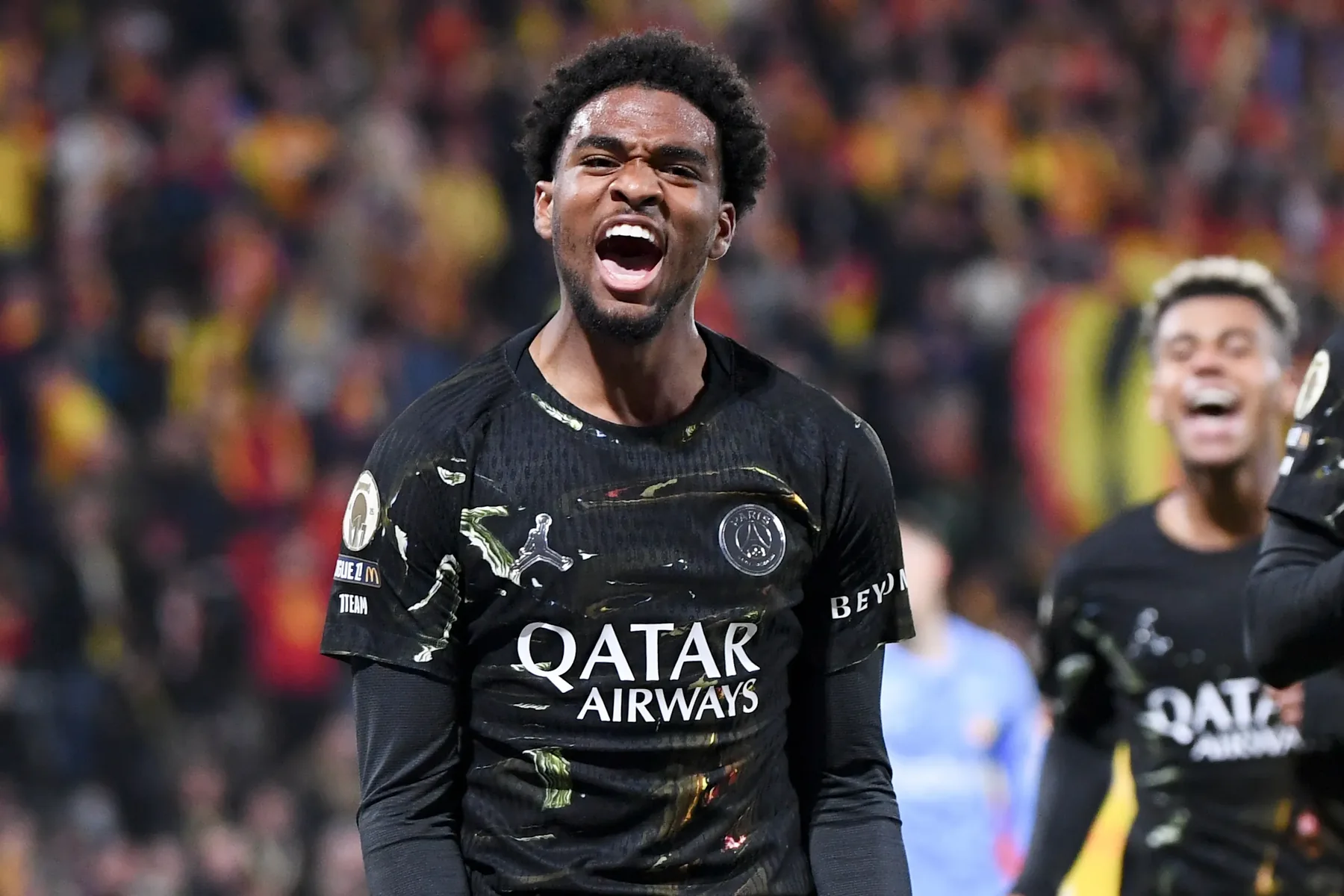
France's top men's football league is called Ligue 1 McDonald's because McDonald's became its title sponsor on 1 July 2024, succeeding Uber Eats. The agreement changed the competition's commercial name, while its clubs, results and historical records remain part of Ligue 1. This guide explains the timeline and helps you find the correct season when old and new names appear together.
How Ligue 1 became Ligue 1 McDonald's
The short answer is a naming-rights agreement. France's professional league authority, the LFP, announced that McDonald's would become the title partner of Ligue 1 on 1 July 2024 for three seasons. The official competition could therefore be styled Ligue 1 McDonald's from 2024/25. The familiar core name, Ligue 1, remains the useful way to identify the top division of French men's club football. The extra word identifies a commercial partner at a particular time.
This distinction matters when a supporter sees several apparently different league names in a search result. A fixture listed as Ligue 1 McDonald's in 2026 and a 2023 highlight labelled Ligue 1 Uber Eats belong to the same top-flight competition in different seasons. The title partner changed; the competition's history was not reset in 2024. A club's previous championship, a player's appearance record and a relegation season do not become part of a separate McDonald's league. Think of the full title as a dated label on the competition, then use the season to decide which matches or standings you are reading.
The Uber Eats era and the 2024 handover
McDonald's did not invent the sponsorship convention. The LFP's 2020 branding announcement said Uber Eats, already an official partner, became the league's title partner from 1 July that year. The resulting Ligue 1 Uber Eats name appeared across league branding and season material. An LFP renewal announcement confirmed the arrangement for 2022/23 and 2023/24. Those dates explain why old video clips, tables and articles may still carry the delivery brand long after the current league pages adopted the McDonald's name.
The 2024 handover was announced in March, ahead of its July start. The LFP announcement expressly thanked Uber Eats as the outgoing title sponsor and gave McDonald's the next three seasons. That is a useful chronology for a fan cross-checking an archive: 2023/24 still belongs to the Uber Eats branded period; 2024/25 begins the McDonald's branded period. A search engine may surface pages written before the change and pages updated after it, so the publication date alone does not identify the season being discussed. Check the season printed beside the result or table.
The wording also explains why a report from early 2024 can describe a coming name change while an August 2024 report treats it as complete. The commercial agreement was public months before it took effect. It is sensible to read those reports in their time context rather than assume one is contradicting the other. Season-specific match data remains the strongest clue to what happened on the pitch; a branded headline mainly tells you what the league called itself when the item was published.
What McDonald's actually sponsors
The sponsor attaches its name to the top-flight competition and its presentation. The LFP board minutes approving the agreement discuss naming and marketing rights, including visibility, digital uses and activations. They record a payment of €30 million per season over 2024/25 through 2026/27. That figure describes the rights deal in the minutes; it is not a payment made directly to each club and should not be confused with television income, prize money or transfer spending. It helps explain why naming rights are valuable to a league, while saying little by itself about a particular team's budget.
Title sponsorship is also different from a kit sponsor. McDonald's name is attached to the league brand, not automatically printed on every club shirt, and it does not make the restaurant chain a participant in a fixture. A match such as Marseille against Lyon remains a contest between those clubs; the league title is the umbrella under which it is played. This is especially helpful for international supporters accustomed to seeing domestic competitions marketed under different full names in different periods. The sport's identity and the commercial label overlap, but they answer different questions.
Finally, the name is not a prediction about what comes after the stated three-season term. As of 18 September 2026, official current material still uses Ligue 1 McDonald's, but any future title arrangement needs a fresh LFP announcement. If you are checking a future season, start with the competition's official page and the season year rather than assume a sponsor continues indefinitely.
What the new name changes for football fans
On a fixture page, the change is most visible in the heading. The competition can be labelled Ligue 1 McDonald's, the sponsor can appear in graphics and promotions, and official material can use the full branded name. Those are meaningful presentation changes, but a supporter still needs the ordinary match details: which clubs meet, where, when and with what place in the table at stake. The official 2026/27 calendar release describes 34 matchdays, beginning in August 2026 and ending with the final round in May 2027. Its schedule is organized by clubs and matchdays, exactly as a league season must be.
A title sponsor is not the same as the competition organizer. The LFP manages the professional league and announces the league calendar. Clubs play the matches and accumulate points through their results. McDonald's obtains specified association and visibility through its agreement with the LFP. Keeping those roles separate prevents a misleading reading of headlines such as “McDonald's table” or “McDonald's results.” Those search phrases refer to the Ligue 1 table or results during the McDonald's sponsorship period; they are not a separate ranking of a fast-food chain.
Likewise, the sponsor name does not explain why a team leads the league. A six-point gap is produced by match outcomes and the competition's points system. It is not created by a marketing deal. If a team has a game in hand, if a fixture was postponed, or if two sides are tied on points, the questions to answer come from the season's match record and tie-break rules. The full brand name may be printed above the table, but it is the rows beneath it that determine the sporting story. When comparing clubs, look first at played matches, points and goal difference, then check the official tie-break procedure if positions are close.
The same principle applies to historical statistics. A tally of Ligue 1 titles spans many sponsor eras; it would be misleading to count only the seasons carrying one commercial name when judging a club's history. A player who scored in 2023/24 did so in Ligue 1, then branded Ligue 1 Uber Eats. A player who scored in 2025/26 did so in Ligue 1, then branded Ligue 1 McDonald's. Both contributions belong in a continuous top-flight record, while their seasons remain distinct. This is why serious season comparisons label the year first and add the commercial name only when it helps identify contemporary material.
There is a second practical limit to the name: it does not tell you how to watch a match. Audiovisual rights are separate arrangements, with broadcasters varying by country and season. Searching for “Ligue 1 McDonald's live” identifies the league but does not identify a legal stream in your location. A fan should check a current rights guide for their country and the specific match listing before paying for a service. The title partnership is evidence about branding, not proof that McDonald's distributes match video or tickets.
Do not use the sponsor handover as an explanation for every sporting change near 2024. The league had already moved to an 18-club format for 2023/24; that change belongs to a separate competition decision. The LFP media charter describes 34 rounds of nine matches in the 18-team format. A change in the number of clubs affects the number of fixtures and the maximum possible points; a change in naming partner affects what is printed on those fixtures. They happened in adjacent years, which makes them easy to conflate, but they have different causes and different consequences for a standings comparison.
For a supporter planning a weekend, the operational sequence is simple. Find the season, find your club, confirm the matchday and kickoff in the latest schedule, then check any subsequent change on the match page. The 2026/27 calendar is a better starting point for that task than an old sponsorship announcement. The branded name tells you that you have reached the right competition. The season and fixture data tell you whether you have reached the right match.
How to follow the league across changing sponsor names
The most reliable search key is a season, not a sponsor. A supporter looking for next weekend's Marseille match needs a current matchday; a supporter checking where Lille finished in 2020/21 needs a completed season. Searching only “Ligue 1 McDonald's table” can return live standings, an already completed McDonald's-era table, or commentary on the sponsorship itself. Add the season and the kind of information you need: fixtures, results, final table, club schedule or match report. That extra context is particularly useful when a result page is generated automatically and keeps the website's newest branding around old data.
There are three related but different questions that often get mixed together. A fixture tells you who is scheduled to play and when, subject to changes. A result tells you what happened in a completed match. A table combines results into club positions at a given point in time. If your question is “Did they play yesterday?”, begin with results; if it is “When do they play next?”, begin with fixtures. If it is “Can they still catch the leaders?”, begin with the table and then examine remaining fixtures. The sponsor name can be the same on all three pages, so it cannot resolve that distinction on its own.
Reading current fixtures, results and tables
For the ongoing 2026/27 campaign, use the season calendar to locate a matchday, then open today's matches when you need the immediate slate. The results archive answers a completed-match question, and the current table shows what those results mean for the ranking. Read the update time on a live page. Early in a season, teams may have played different numbers of games, so a position alone may exaggerate a gap. One club can move several places with a single win when points are tightly grouped.
The LFP's 2026/27 calendar release set the season from August 2026 to May 2027 and named its final matchday. That gives an authoritative frame, but a dated calendar announcement should not replace a current match page for exact kickoff details. Timing and television selections can alter individual listings. If you are arranging travel, check the club and competition fixture pages again close to the game. The sponsor name confirms the league, while the club and match identifiers help you avoid buying travel for the wrong fixture.
For standings, compare points with games played, then examine goal difference and remaining opponents. A team facing two away matches against direct rivals has a different short-term path from a team with two home games against clubs below it, even when both have the same points now. This analysis does not require a special “McDonald's table.” It requires the ordinary current table joined to the schedule. Commercial naming may help a search engine find the competition, but it adds no sporting metric.
Finding older Ligue 1 Uber Eats seasons
For seasons from 2020/21 through 2023/24, the Uber Eats title is a historically useful phrase. The LFP confirmed both the earlier title partnership and its renewal through 2023/24. A query such as “Ligue 1 Uber Eats 2022/23 final table” will often reach contemporary reports. Search “Ligue 1 2022/23 final table” as well, because statistics sites may omit the title sponsor entirely. Both can lead to the same season, but you should compare the club list and final matchday before using a number.
Be alert to modern website shells around old archives. The official league's historical result selector may still display today's McDonald's branding in its navigation while showing a 2023/24 season choice. That is a website design convention, not evidence that the 2023/24 competition was called Ligue 1 McDonald's. Use the season selector to identify the football record and the dated LFP announcement to identify the contemporary commercial title. This small distinction keeps old match reports accurate.
When comparing past and present tables, check the league size as well as the sponsor name. A club's point total over a 34-match, 18-club season cannot be read exactly like its total over a 38-match, 20-club season without accounting for the different number of opportunities to score points. For fans asking whether one campaign was “better,” points per game, goal difference per game and the strength of the opposition provide more context than the raw points column alone. Even those measures are only starting points; a title race, a relegation fight and a squad's European schedule shape the difficulty of each campaign.
The cleanest habit is to write the year beside every claim: “2023/24 Ligue 1” for the last Uber Eats titled season, “2024/25 Ligue 1” for the first McDonald's titled season, and “2026/27 Ligue 1” for the current one as of this guide's 18 September 2026 check. That wording stays understandable even when sponsorship eventually changes again. It also makes an answer useful to someone who is interested in football first and only encountered the commercial name through a search result.
For any Ligue 1 search, lead with the season and the football question. Use the sponsor name as a clue to the period, then verify fixtures, results or the final table on the season page. That keeps a 2023/24 Uber Eats result separate from a 2026/27 McDonald's fixture without splitting the history of French top-flight football.
Loading comments…