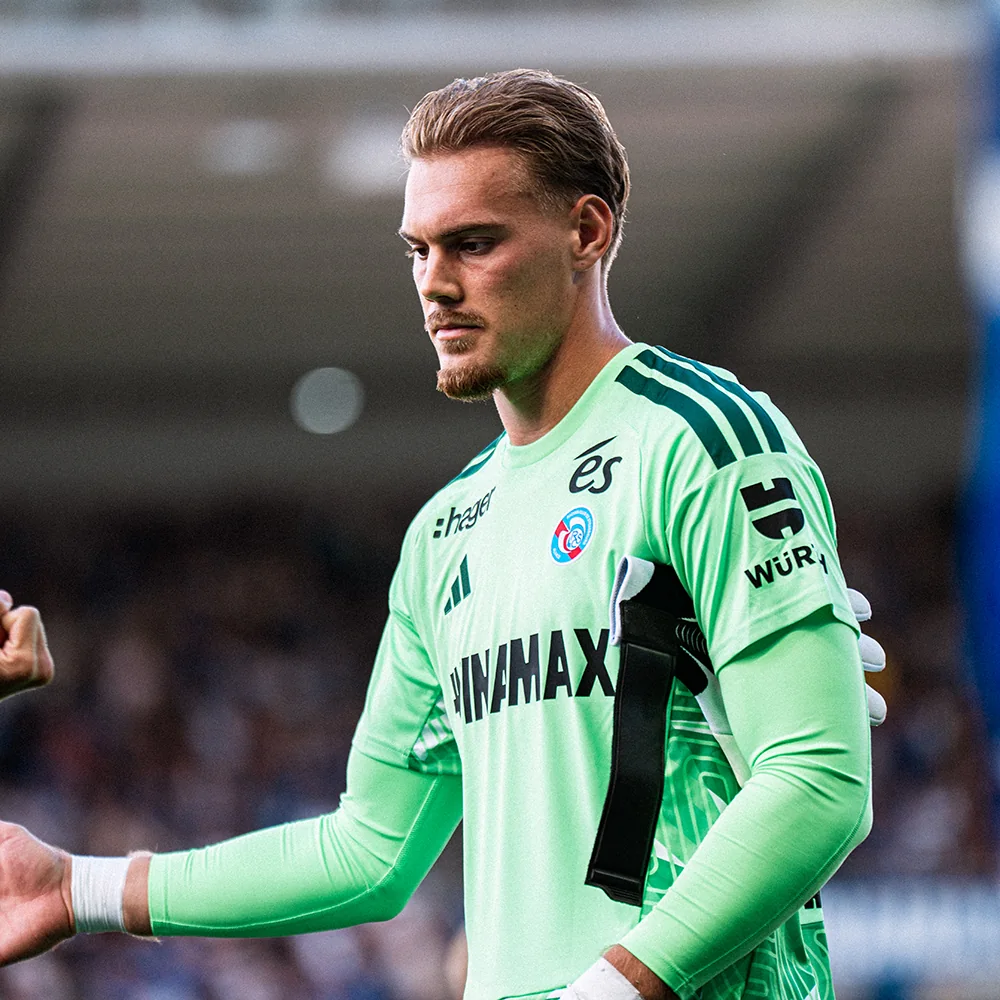
Updated 20 October 2026. Strasbourg’s current squad combines Jörgensen in goal, a changed defence, midfield choices around Reyna and Diop, and several different wide and central forwards. This guide identifies the players and explains how their positions and roles connect.
The current Strasbourg squad and why older lists are misleading
Strasbourg's 2026/27 squad is best understood as a set of new connections: Filip Jörgensen behind a changed defensive group, midfield choices around Giovanni Reyna and Demba Diop, and several different forwards competing to provide width and a central threat. Hugo Oliveira is the coach listed in the current official directory. Older pages built around earlier coaches or attacking combinations do not describe the October team accurately enough.
The directory divides the players into goalkeepers, defenders, midfielders and attackers. Jörgensen, Milosz Piekutowski and Gabriel Kerckaert are the named goalkeepers. Jeyland Mitchell, Ismaël Doukouré, Genesis Antwi and Mateo Del Blanco are among the defensive options. Reyna, Diop, Diogo Sousa and Dario Essugo provide different central profiles, while Samuel Amo-Ameyaw, Gessime Yassine, Jacobo Ortega and Conrad Harder help define the attacking choices. Each group needs to be read through the positions the selected players actually occupy.
A particularly useful comparison is the club's 25 August shirt-number announcement. It identifies many of the new arrivals and confirms Amo-Ameyaw's move to number 7. But it is a dated announcement, rather than a promise that every listed player will remain an immediate October option. Names such as Andrew Omobamidele and Mathis Amougou appear there while being absent from the current main directory. An old shirt number should not be enough to put somebody into a projected match squad.
The same care applies in the opposite direction. A player still present in the official directory is a squad member, but that fact alone does not establish medical availability, match fitness or a starting place. Joaquín Panichelli is an important example to consider separately in the attacking discussion. A club's football resources include players at different stages of preparation, recovery and development; treating all of them as equally ready creates a misleading picture of the coach's choices.
There are also useful differences between the position headings. Nanasi is listed in midfield, while Yassine appears among the attackers. Their movement can still bring them into similar areas during a match. An attacking midfielder may hold a wide position; a winger may come inside to receive. The category identifies a broad role, but the relationship with the full-back, central midfielder and striker explains what the player can contribute in a particular phase.
This guide therefore follows the current official group and uses dated football examples to explain the connections within it. It does not combine the most familiar names from several transfer windows into one imagined eleven. The Strasbourg fixtures and results supply the opponent and match context, while the next squad announcement settles immediate availability. The roles below explain the options Oliveira has to work with as of 20 October 2026.
Jörgensen and the defensive combinations in front of him
Jörgensen, number 1, brings experience with Villarreal and Chelsea to the Strasbourg goalkeeping group. The official profile identifies a right-footed goalkeeper with Danish international experience. For supporters learning the new side, he is a reference behind a defence containing several players still developing their senior careers. His decisions about depth and distribution affect what the defenders ahead of him can attempt.
There is already a dated example of his influence: the club's account of the September draw with Monaco highlighted important saves, and supporters voted him their man of the match. That is a specific club and fan assessment of one performance, rather than an objective ranking of every goalkeeper in the league. It nevertheless helps explain why his contribution can be important even when Strasbourg does not win.
The centre-back options
Mitchell, number 4, has experience with Feyenoord and Sturm Graz after beginning his senior career in Costa Rica. Doukouré, number 6, represents a longer Strasbourg connection, having arrived from Valenciennes in January 2022. The two pathways bring different forms of experience to the same defensive department: knowledge developed within the club and knowledge brought from other football environments.
Høgsberg, number 24, came through Nordsjælland, while Karim Coulibaly, number 31, adds a left-footed profile with Werder Bremen experience. Preferred foot is a useful detail in a central partnership. It can alter how easily a defender opens towards the touchline or finds a midfielder inside, although the pressure on the ball and the receiver's movement remain more important than the label alone.
The 17 October PSG team sheet paired Mitchell with Coulibaly centrally. That gives a concrete example of a combination used in competition. It should not be turned into a permanent hierarchy excluding Doukouré or Høgsberg. The choice can depend on the available players, the opposing attack and the type of passing connection the coach wants from the back.
Antwi, Del Blanco and the wide defensive roles
Antwi, number 16, is a right-footed defender with Chelsea experience; Del Blanco, number 15, brings a left-footed profile developed at Unión in Argentina. The October PSG selection used Antwi and Oso on the outside. Those names explain the current wide defensive choices more accurately than an older list assuming that every familiar full-back from the previous season remains available.
The position asks for two connected judgements. In possession, the wide defender must decide whether to advance beyond the winger or remain available behind him. After possession changes, he has to recover without leaving the centre-back isolated against a runner. Antwi's relationship with the player ahead of him and Oso's distance from the nearest midfielder therefore shape the defence as much as a single tackle or cross.
The PSG match also provides a limit on easy conclusions: Strasbourg led before conceding three late goals. A late change in the score can involve the pressure applied by the opponent, substitutions and the distances between units, rather than one defender's isolated mistake. The squad guide identifies the players who share those responsibilities. Assessing the performance means putting that actual combination back into the match situation that tested it.
Reyna, Diop, Sousa and Essugo connect the central game
The midfield group contains several different routes into senior football. Reyna's background includes Dortmund, Nottingham Forest and Mönchengladbach; Diop developed through Diambars and Zulte Waregem; Sousa brings experience from Vitória Guimarães; Essugo came through Sporting and has also played for Las Palmas and Chelsea. Those careers give Strasbourg different resources, but their value to the current side depends on how the selected players share the central responsibilities.
Reyna, number 10, is a right-footed United States international. His role can connect a deeper passing sequence to the attacking players ahead of him. A receiver between opposing lines gives the central midfielders a destination for a forward pass, while a move towards the ball can provide an extra outlet under pressure. Those choices affect whether the striker remains supplied or becomes isolated beyond the midfield.
His goal in the October PSG match gives a concrete example of an attacking contribution from that department. The team sheet placed him with Essugo and Diop in the central group, rather than treating him as the centre-forward. A midfielder can still arrive in a decisive position when the movement ahead of him changes the defensive shape. That is why the nominal formation is a starting description, not a complete map of where the players can influence the game.
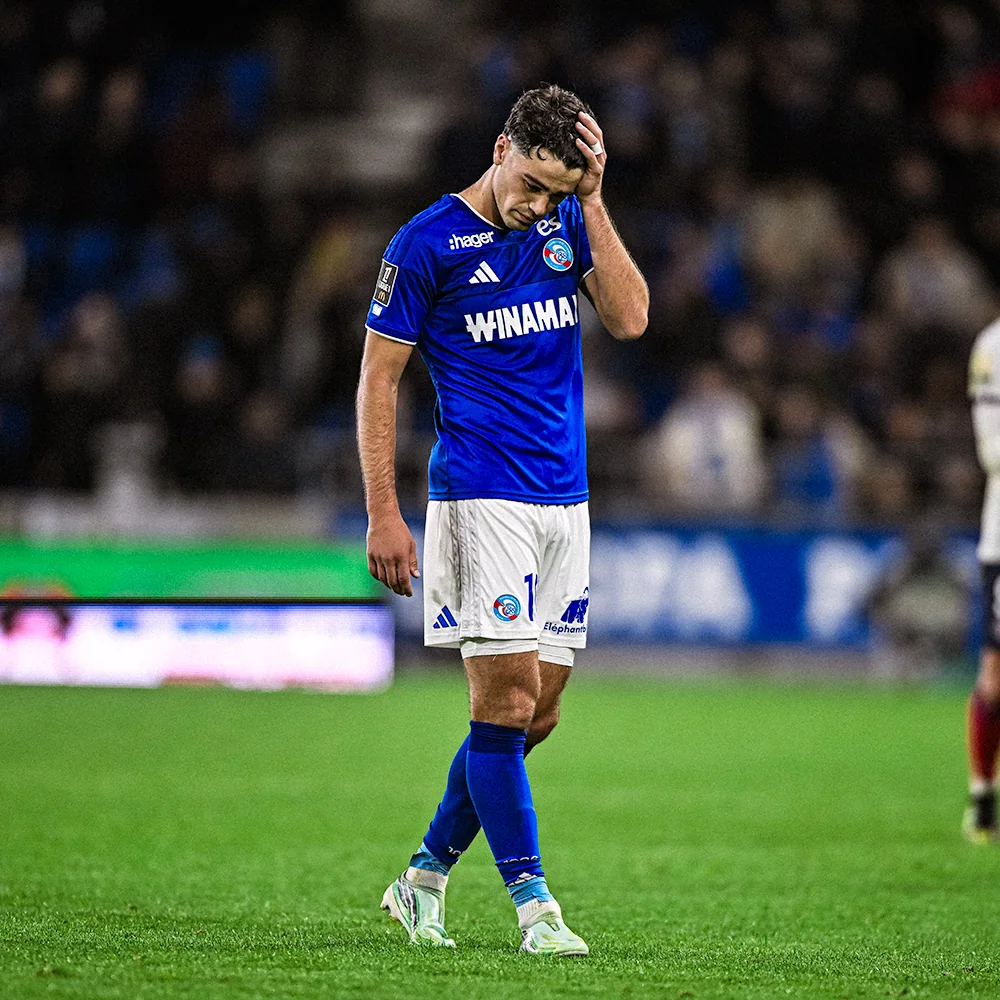
Diop, number 21, is described by the club as a central midfielder with passing quality and vision. His development at Diambars and experience in Belgium offer context for that profile. For Strasbourg, the practical question is how he receives from the defenders and connects to the next player. A clean first pass out of defence becomes less useful if the receiver has no support once an opponent closes him down.
That makes the distances around Diop important. If Reyna stays beyond the nearest opposing midfielder, he can provide a forward option; if Essugo remains available alongside or behind the ball, Strasbourg can retain a safer return route. The side needs both possibilities. A central player attempting to turn under pressure is being supported by teammates who create alternatives before he decides which pass to play.
Essugo, number 14, brings a right-footed profile and experience across Portuguese, Spanish and English football. His selection with Diop can help distribute the work around a more advanced receiver. The central pair must consider who presses the next opponent, who protects the route towards the centre-backs and who stays available when the attack returns the ball. Those tasks cannot all be performed by one player chasing every situation.
Sousa, number 23, adds a left-footed option. That can change the angle through which Strasbourg progresses possession, especially when the opposing press tries to close one side. A left-footed receiver may open a different passing route with his first touch, but the benefit depends on a teammate occupying a useful position. Preferred foot supplies an option; it does not make a successful midfield combination automatic.
Nanasi, currently number 11, provides another attacking midfield profile after his development at Malmö. The club biography recalls a player already accustomed to influencing goals before arriving in France. In this group, his movement can connect central and wider positions. If he comes inside, a teammate must preserve width; if he stays outside, Reyna or another central receiver can have more space between the lines.
El Mourabet, number 29, brings a left-footed profile and a local development pathway. He replaced Diop in the PSG match, giving a dated example of the central alternatives being used during competition. A change in that position can refresh the support around the ball without necessarily adding another forward, which matters when the team is trying to preserve its distances as well as create chances.
Kellyman, number 26, is another left-footed midfield option, with experience at Aston Villa and Cardiff. Alongside the other developing players in the directory, he broadens the possible combinations. The useful assessment remains specific: which player supplies a deeper outlet, which one can receive beyond the first pressure and which one supports the striker? Reyna, Diop, Sousa and Essugo provide different parts of that answer, while the surrounding options let Oliveira alter the balance.
Yassine and the forwards: width, movement and the number-nine role
Yassine, number 80, supplies a left-footed attacking profile developed through football in southern France and senior experience at Dunkerque. His route into the Strasbourg side helps explain a player already accustomed to competitive football beyond the academy environment. For this team, the useful question is how his movement from a wide position connects with the striker and the central receivers behind him.
When he holds width, an opponent has to consider the space between the full-back and centre-back. When he moves inside, Strasbourg needs somebody outside him to keep the pitch stretched. The October PSG game supplied an actual example of the connection: Harder found Yassine before an effort was saved. A central forward's pass and a winger's movement brought the two roles together, rather than leaving one permanently supplying crosses to the other.
Amo-Ameyaw, number 7, offers another left-footed wide option after his Southampton development. He replaced Fábio Baldé during that match. Shortly afterwards, the PSG account described him moving through the centre and releasing Harder for a shot. That sequence gives a more useful picture than an inflexible winger label: starting wide does not prevent an attacker carrying the ball inside when the available space changes.
Baldé, number 19, brings a right-footed profile with Hamburg experience. The directory places him in midfield, while his individual profile identifies an attacker. The difference is a reminder that broad categories overlap. In a match, the important questions are whether he receives outside or inside the opposing full-back and which teammate supports the space he leaves. Those relationships are more precise than forcing every wide player into one permanent category.
Ortega, Harder and Panichelli are different questions
Ortega, number 30, is a tall, right-footed forward with Real Madrid Castilla experience. Harder, number 40, adds a left-footed Danish option whose career includes Nordsjælland, Sporting and Leipzig. Harder started centrally against PSG and Ortega replaced him late on. That is a dated example of how the coach used the central alternatives, rather than proof of an unchanging ranking between them.
The left-footed and right-footed profiles can influence which channel a forward finds comfortable to attack and how he protects the ball before the next pass. They can also affect the angle of a finish after a cutback. The surrounding players still matter: a striker coming towards midfield needs a runner beyond him, while one remaining high needs somebody able to play the forward pass. Changing the centre-forward therefore changes the tasks around him as well as the name nearest goal.
Panichelli, number 9, belongs in the squad's longer view, but his availability must be kept separate. Ligue 1's April report documented his absence after an injury with Argentina. PSG's 17 October match coverage still listed him among Strasbourg's injured players. Neither source supplies a basis here for promising a return date.
That distinction prevents two misleading readings. His number and earlier achievements do not make him an immediate starting option; his absence does not erase his place in the club's attacking resources. Ortega and Harder concern the combinations actually used in the recent match, while Panichelli also raises a recovery question. A useful squad guide needs to make those different situations visible instead of placing every forward into the same queue.
Sékou Mara and Deivid Washington are additional central attacking names in the directory, with development through Bordeaux and Southampton in Mara's case and Santos and Chelsea in Washington's. Martial Godo supplies another attacking profile after experience at Fulham and Wigan. The same October PSG coverage listed Washington and Godo as injured, alongside Nanasi, Doukouré and Panichelli. These are dated availability observations, not declarations about every subsequent fixture.
The available combinations still give Strasbourg several routes forward: Yassine or Amo-Ameyaw moving from width, Reyna receiving centrally and a selected striker occupying or leaving the centre-backs. The balance depends on those movements being complementary. Too many players approaching the ball can remove the threat behind the defence; too many running away from it can leave the midfield without a playable target.
For the next match, use the actual squad announcement alongside the current Ligue 1 table and Strasbourg's fixture page. The current team contains different stages of senior development and several distinct attacking profiles. Recognising who can supply width, a central link and the finishing position explains the selection more usefully than an eleven assembled from reputation or an outdated season list.
Loading comments…