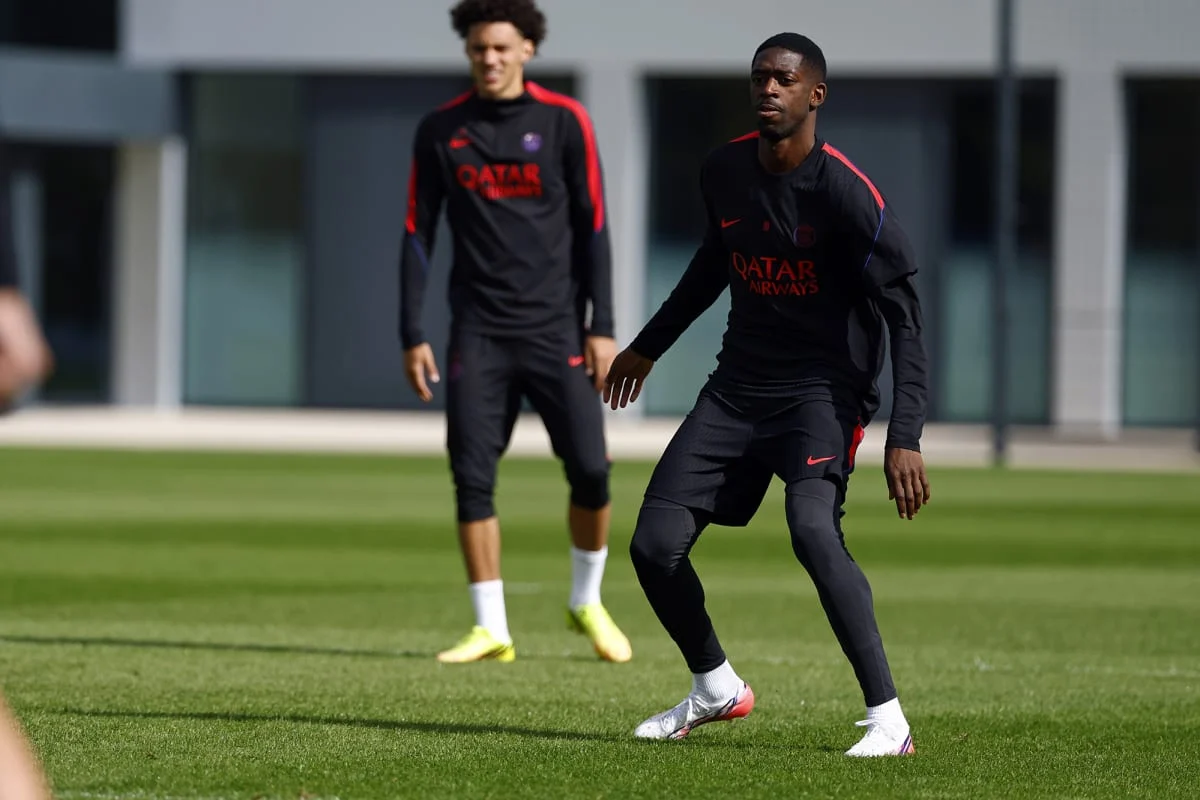
PSG’s official 2026/27 men’s first-team page lists 24 players as checked on 14 October 2026. Ferran Torres wears number 9, Maghnes Akliouche 11, Lucas Digne 12 and Mika Godts 22. The reference below explains the full group and the football roles behind the names. It is a season squad guide: a confirmed starting XI belongs to an individual match.
The PSG first-team list for 2026/27
The table follows PSG's own 2026/27 men's squad page, checked on 14 October 2026. It contains three goalkeepers, eight defenders, seven midfielders and six forwards. The club groups players into these four broad categories; the distinctions within them are discussed below. This is a reference for identifying the players, rather than a list of eleven automatic starters.
| Club category | Number | Player |
|---|---|---|
| Goalkeeper | 16 | Alessandro Longoni |
| Goalkeeper | 30 | Lucas Chevalier |
| Goalkeeper | 39 | Matvey Safonov |
| Defender | 2 | Achraf Hakimi |
| Defender | 4 | Lucas Beraldo |
| Defender | 5 | Marquinhos |
| Defender | 6 | Illia Zabarnyi |
| Defender | 12 | Lucas Digne |
| Defender | 21 | Lucas Hernández |
| Defender | 25 | Nuno Mendes |
| Defender | 51 | Willian Pacho |
| Midfielder | 8 | Fabián Ruiz |
| Midfielder | 11 | Maghnes Akliouche |
| Midfielder | 17 | Vitinha |
| Midfielder | 24 | Senny Mayulu |
| Midfielder | 27 | Dro Fernández |
| Midfielder | 33 | Warren Zaïre-Emery |
| Midfielder | 87 | João Neves |
| Forward | 7 | Khvicha Kvaratskhelia |
| Forward | 9 | Ferran Torres |
| Forward | 10 | Ousmane Dembélé |
| Forward | 14 | Désiré Doué |
| Forward | 22 | Mika Godts |
| Forward | 47 | Quentin Ndjantou |
Names deserve as much care as numbers. PSG sometimes display Ferran Torres simply as Ferran, and Fabián Ruiz as Fabián. Those shortened forms do not identify additional players. Likewise, the forward called Kvaratskhelia and the midfielder called Vitinha are individual names on the same men's first-team list, rather than separate teams or competition entries. Using one consistent full-name reference makes it easier to follow commentary, a match report and the lettering on a shirt without losing track of who is being discussed.
There are three different questions behind most squad searches. Who belongs to the club's current first-team group? Who has been selected for a particular fixture? Who will actually start? A season squad answers the first question. A coach's selected group narrows the options for the second. The starting team answers the third, and may still change through substitutions, an injury during the warm-up or an alteration in formation. Treating those documents as interchangeable creates misleading lineup predictions.
Shirt numbers are useful identifiers, but they provide limited information about status. A high number does not mean a player is a reserve, and a traditional attacking number does not guarantee that its owner plays centrally. The current group makes that especially clear: João Neves wears 87, while Maghnes Akliouche is listed among the midfielders despite wearing 11. Their football responsibilities need to be understood through position and selection, not through a numerical hierarchy.
The table also gives a practical way to keep older material in perspective. A photograph, European match sheet or list from a previous season can be perfectly accurate for its own date and still differ from today's club display. Compare the season heading before comparing the names. For a supporter planning the next league game, the PSG fixture page supplies the opponent and schedule; this guide supplies the identities and selection questions to bring to that match.
Goalkeepers and defenders: selection starts with balance
Three goalkeepers, three different selection questions
Lucas Chevalier, Matvey Safonov and Alessandro Longoni occupy the goalkeeper places on the club list. Their presence gives PSG alternatives, but the order in a table cannot settle who plays the next game. Goalkeeper selection involves shot stopping, communication with the back line, decisions on crosses and the ability to give a pressured teammate a safe passing option. A supporter judging only a spectacular save misses several parts of the job.
Chevalier arrived on 8 August 2025 after establishing himself at Lille. His official biography records the 2024/25 Ligue 1 goalkeeper award and his contribution to penalty shootout wins against Tottenham and Marseille. Those are useful examples of performance under a particular kind of pressure. They do not make a shootout record a complete measure of his open-play goalkeeping, nor establish an unchanging hierarchy among the three current options.
Against a team pressing aggressively, the goalkeeper's first pass can determine whether PSG escape into midfield or concede another dangerous attack. Against an opponent sitting deep, a different test may dominate: remaining alert through a long period without a save, then dealing with a sudden counterattack. When discussing rotation, ask which problem the opponent creates and what the selected back line needs. The fixture supplies that context; a season list alone cannot.
Full-backs and centre-backs solve different problems
Hakimi and Nuno Mendes give the defensive group distinct right-sided and left-sided reference points. PSG describe Hakimi as an attack-minded right-back; his opening goal in the 2025 Champions League final against Inter is a concrete example of a defender contributing at the other end. Mendes is a left-footed left-back who developed at Sporting. Their broad roster category conceals how different their responsibilities are from a central defender's.
If a full-back advances, somebody must protect the space behind him. That can involve a midfielder moving across, a centre-back adjusting his position or the opposite full-back staying deeper. These are choices to watch for, rather than claims that PSG use one identical arrangement every week. An overlapping run is most useful when the ball carrier has both a forward option and protection against losing possession; otherwise an attacking advantage can become an exposed channel.
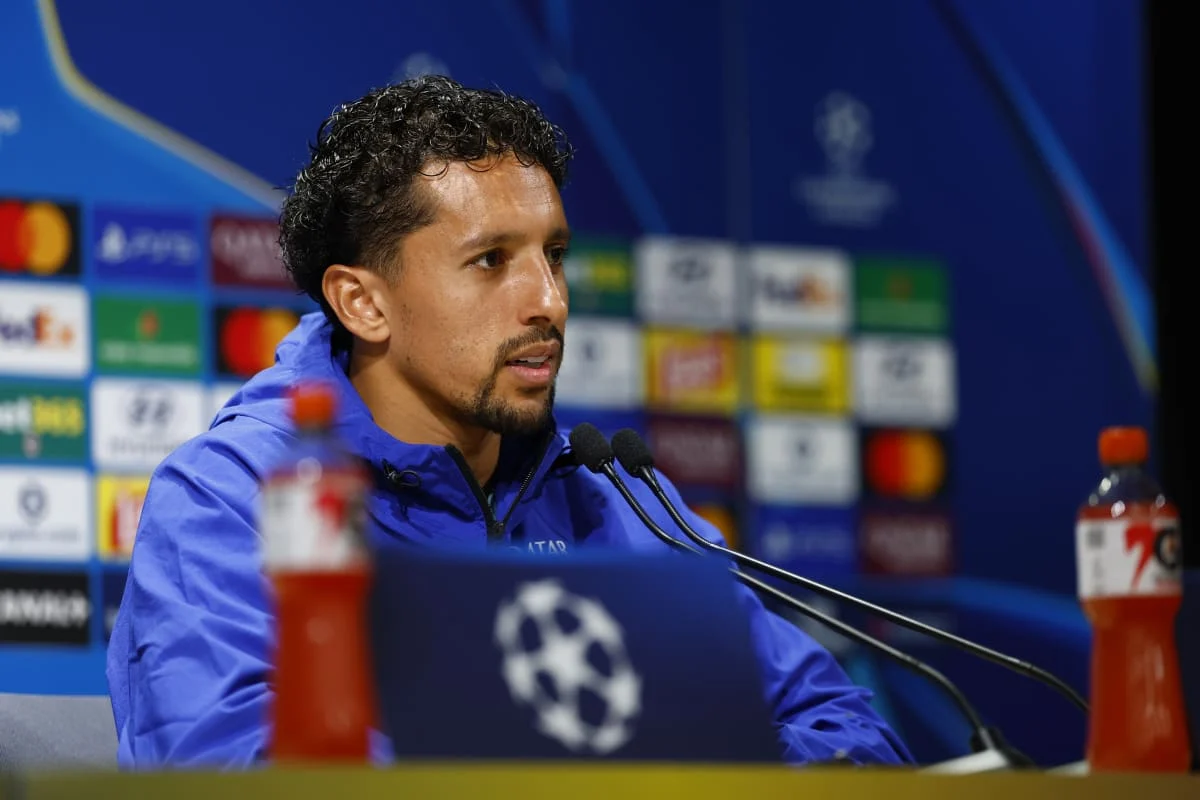
Marquinhos supplies a long-serving central reference. He joined PSG in 2013 and inherited the captaincy in 2020, according to his club biography. Beraldo, Zabarnyi, Hernández and Pacho provide other defensive options, with Digne completing the listed group. Choosing a partnership involves covering space together and coordinating with the goalkeeper, rather than simply placing two individually accomplished names beside one another.
The captain's pre-Bratislava remarks make the collective point explicit: conceding concerns the whole team. That matters when evaluating this squad. A striker's pressure on the first pass, a midfielder's recovery and a defender's final intervention belong to the same sequence. Blaming the final defender without examining that sequence can produce the wrong conclusion about a lineup change.
How the midfield names fit together
Vitinha and João Neves connect the team
Vitinha and João Neves offer familiar Portuguese reference points in the central group. PSG's Vitinha biography highlights his ability to retain the ball in tight spaces, while Neves's profile records his arrival after Euro 2024 and subsequent contribution to the club's European successes. Their shared nationality is an identifying detail; their relationship with the rest of the team is the more useful football question.
When one midfielder receives from a defender, another can create an angle that prevents the ball carrier being trapped against the touchline. If the opponent follows that second player, space may open for a forward dropping towards midfield. Watch the timing of those movements rather than merely counting completed passes. A short exchange that draws out a pressing opponent can be more consequential than several uncontested passes between defenders.
The defensive side of that relationship matters too. If a midfielder steps forward to challenge, the player behind him has to consider the next pass. Two players chasing the same receiver can leave a direct route towards goal. For fans comparing combinations, the important issue is whether the pair can support an attack while preserving a sensible structure when possession changes. Neither a squad category nor an individual goals total describes that balance.
Fabián Ruiz and Zaïre-Emery offer different routes forward
Fabián Ruiz is left-footed, which changes the angles available when he receives on one side of midfield. His goal in the 2024 Coupe de France final against Lyon is also a reminder that his contribution can extend beyond circulating possession. A midfielder approaching the box after the defenders have followed the forwards can give a team a different finishing option.
PSG describe Zaïre-Emery's development as a box-to-box midfielder. That term indicates involvement across phases rather than a requirement to run forward at every opportunity. The useful questions are where he begins a movement, whether a teammate covers behind it and whether the opponent's midfield can track the run. Replacing one midfielder with another may change those routes even when the published formation remains the same.
Akliouche, Mayulu and Dro add selection options
Akliouche, Mayulu and Dro Fernández complete the club's listed midfield group. Their inclusion makes it possible to discuss depth without inventing an order of preference. A coach choosing between combinations may need an extra receiver between the opposition's midfield and defence, a player who can support a wide attack, or fresh movement late in a match. Those are different selection needs, and one broad label cannot say who will meet every one of them.
Imagine PSG facing a narrow defensive block. Another player receiving in the half-space can make the opposing full-back choose between stepping inside and staying with a winger. Against an opponent pressing high, the more urgent requirement might be somebody who can receive under pressure without isolating the back line. These are scenarios for evaluating a selection, not a claim that a particular young player has already been assigned a permanent role.
That distinction also improves statistical comparisons. Assists may reward the final pass, while the movement that made it possible appears nowhere in the scoring summary. Look at minutes, position and the opponent before deciding which midfielder had the better match. The site's Ligue 1 statistics guide explains why the same headline number can describe different jobs.
The forwards give PSG several ways to attack
Dembélé, Kvaratskhelia and Doué bring different starting points
Dembélé's number 10 does not confine him to the role traditionally associated with that shirt. His official biography describes a two-footed dribbler whose development under Luis Enrique took him from an unpredictable winger towards a more complete forward. That progression helps explain why a lineup graphic is only the beginning of understanding his position. A central starting point can still lead to a wide combination or a movement back towards midfield.
When a forward drops away from the opposition's centre-backs, somebody else has to threaten the space he leaves. Otherwise the defence can step forward without worrying about a run behind. When the forward instead stays high, the team needs a reliable connection to reach him. A supporter following Dembélé can therefore look at the surrounding runs, not just the number of touches he has near goal. The same name can perform a different task within a different combination.
Kvaratskhelia joined PSG in January 2025 after his Napoli spell. His goal against Inter in the 2025 European final supplies a clear example of an attacking contribution beyond merely holding a wide position. Width can draw a defender out, but a player arriving inside at the right moment can also benefit from the space created elsewhere. Those actions are complementary, even when they happen within one attack.
Doué's club profile describes a versatile attacker and records his two goals and assist in that same final. The practical lesson is to evaluate how a player's choices fit the others around him. If two attackers move towards the ball simultaneously, a runner in behind becomes especially valuable. If both stay high, the midfield may need an additional receiver between the lines. Versatility expands the possible solutions without guaranteeing that every combination is equally effective.
Ferran, Godts and Ndjantou change the available combinations
Ferran Torres is a current PSG player, rather than a proposed transfer in this guide. His club profile gives 15 August 2026 as his signing date and number 9 as his shirt. Older Barcelona pages remain relevant to his previous career, but they cannot identify the club he represents after that move. This distinction matters whenever a season list is assembled from material published at different times.
His addition gives supporters another central attacking name to consider alongside Dembélé, while Godts and Ndjantou complete the club's six-player forward group. The sensible question is how a chosen trio occupies the pitch. A central runner, a player taking on a full-back and somebody receiving between lines can create different decisions for defenders. Simply choosing the three most familiar names leaves those relationships unexplained.
Substitutions should be read with the score and opponent in mind. Protecting a lead may require an attacker to help close a passing lane; chasing a goal may reward an additional movement into the box. Neither change proves that the substituted player has lost his place permanently. Over a season, the usefulness of these alternatives depends on whether PSG can change the problem they present to opponents while maintaining the defensive connections discussed earlier.
From a season squad to the next starting XI
Read the selected squad before predicting the lineup
A particularly useful example is PSG's selected group for the away Classique in 2026/27. It names Adam Mouak with number 80, although he is not among the 24 players displayed on the current first-team reference above. This is not a reason to rewrite one list as the other. It shows that a particular match group and a club's general first-team display serve different purposes.
The same announcement has a larger group than the eleven players who can start. Reading it establishes possible participants, not their places on the pitch. A prediction made before the confirmed team is still a prediction even when it uses entirely correct squad names. A selected player can remain on the bench, and a tactical adjustment can change the relationship between players without changing their names. The actual starting sheet is the document to use when the question is who starts a specific match.
Once the team is confirmed, look for three practical relationships. First, who provides width when an attacker moves inside? Second, who receives from the centre-backs when the opposition presses? Third, who protects the space behind an advancing player? These questions connect the goalkeeper, defensive, midfield and attacking sections of this guide. They also make a substitution easier to understand, because a change may alter one relationship rather than replacing an entire system.
Home and away context can affect the test. A visiting opponent at the Parc may choose to defend its box for long stretches, making patience and well-timed runs especially relevant. A side playing at home may press with greater ambition and ask PSG to escape quickly into open space. Neither pattern is automatic. The useful habit is to establish what the opponent is actually doing in that fixture before judging whether PSG need a different combination.
Follow the PSG schedule for the next opponent, then use the results page after the game to revisit the final score and available match detail. The league table adds the competitive situation: the same draw can mean something different to a title contender, a European challenger or a team trying to escape the bottom places.
This squad is therefore most useful as a set of connected options. The numbered reference identifies the current group; the role explanations show what a supporter can look for; the confirmed match team establishes the coach's decision on the day. Keep those steps in that order and a search for PSG players becomes a clearer understanding of the next game.
Loading comments…