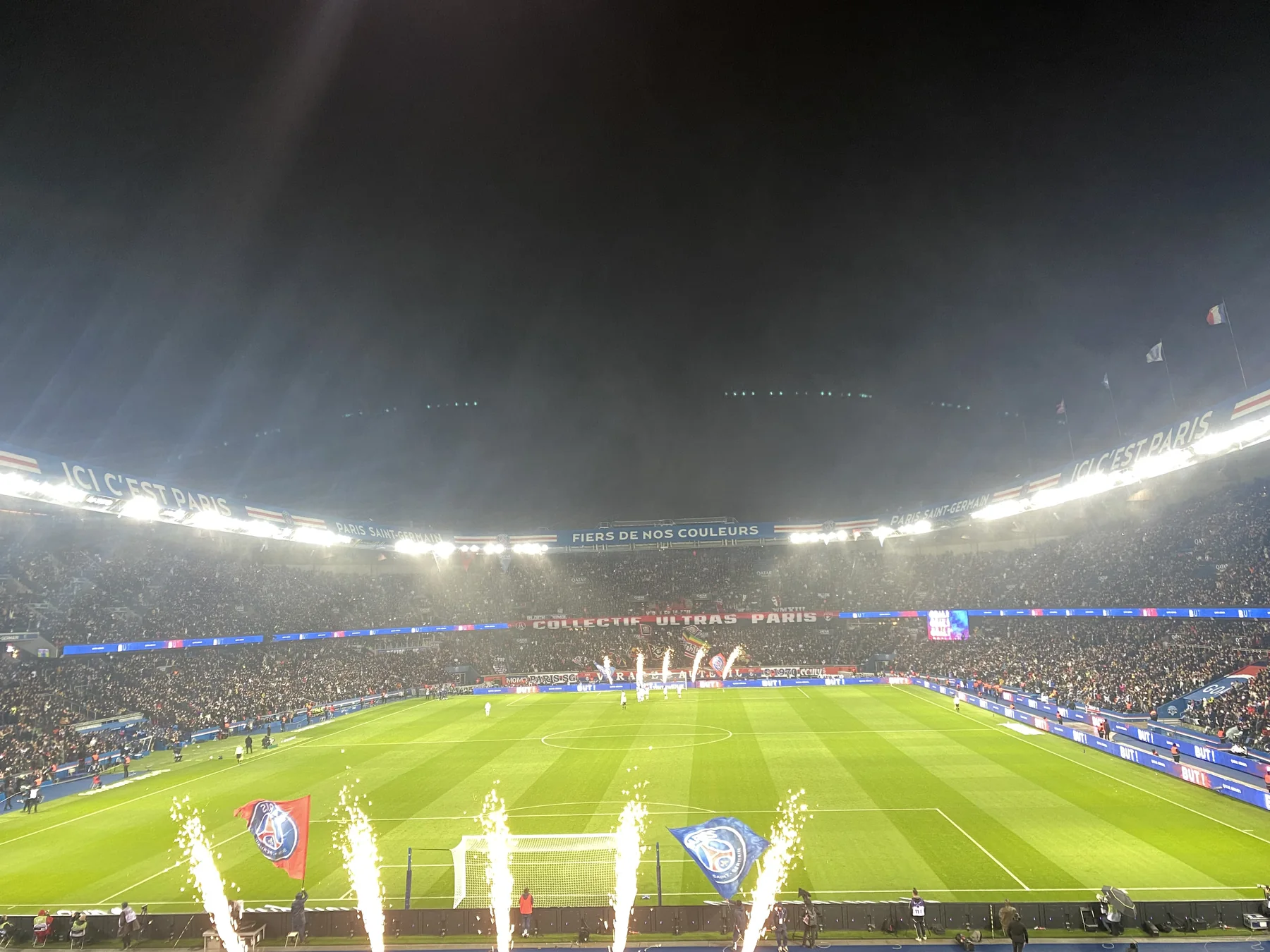
PSG?Rennes became a 2026/27 venue dispute because two different decisions followed one damaged pitch. The scheduled Paris home opener was played in Rennes on 23 August after the Parc des Princes was judged unsafe. On 28 August the LFP assigned the return fixture to Paris; Rennes challenged that move and later reports say it referred the matter to sports conciliators. As of 18 September 2026, the appeal process had not produced a publicly reported final answer. This guide separates the played match, the league decision and what fans should verify for March.
Why was the 23 August PSG–Rennes match played in Rennes?
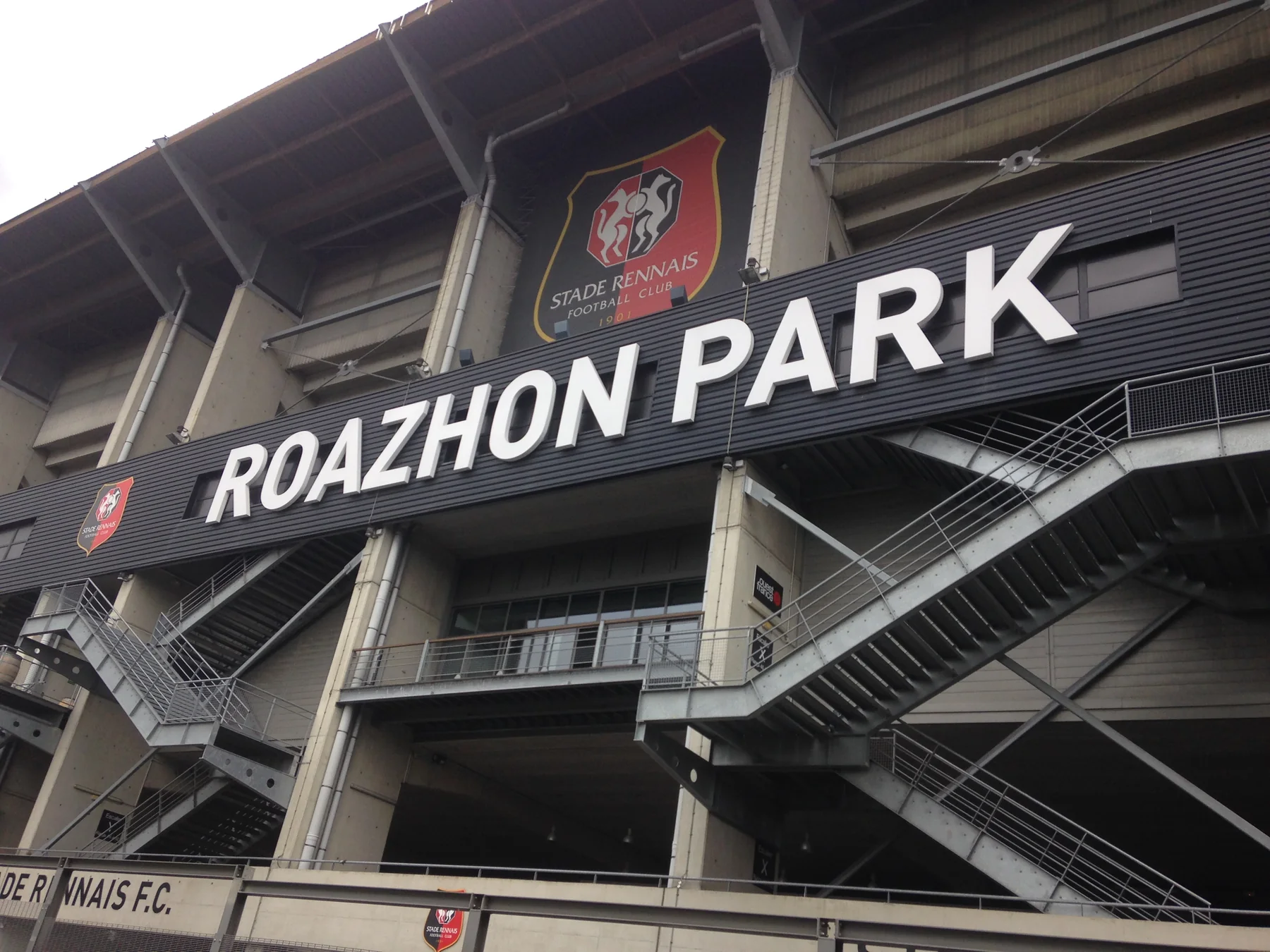
Paris Saint-Germain were originally due to begin their 2026/27 Ligue 1 campaign at the Parc des Princes against Stade Rennais on Sunday 23 August. Four days before kickoff, that became a match at Rennes' Roazhon Park instead. The change was a venue inversion: the clubs still played on the scheduled date and at the scheduled 20:45 local time, but Rennes hosted a fixture originally designated as PSG's home game. The distinction is central to the argument that followed. It did not merely move fans to another stand in Paris; it changed the city, organiser and home club for the opening meeting of the season.
Rennes' 19 August club statement says it was called before the LFP Competitions Committee and informed that the Parc des Princes pitch was unplayable. The league's own decision report gives the sequence: PSG notified the LFP on 17 August, specialists and a league delegate inspected the surface on the 19th, and the inspection found it could not protect players adequately. PSG could not organise the game in a fallback ground; Rennes provided the guarantees needed to host on the original date. PSG's own explanation attributes the surface's accelerated deterioration to successive summer heatwaves. The three accounts have different emphases but agree on the essential result: the Paris surface was not fit to host and Roazhon Park took the match.
Some outside accounts used a more specific explanation for what damaged the grass. The clubs' contemporaneous statements establish the unusable surface and PSG's heatwave account; they do not establish every claimed biological or maintenance cause. There is no need to settle an unverified turf diagnosis to understand the sporting decision. A professional match requires a playable surface. Once the original ground was ruled out with only days remaining, the organiser faced a choice between a late relocation and a postponed opening game. The competition committee chose the first route, preserving the broadcast and sporting date while transferring the stadium burden to Rennes.
That choice required much more than editing the fixture line. Rennes said it immediately had to mobilise the city, prefecture, usual public bodies and service providers to stage a marquee match. It announced public ticket sales for the following afternoon. PSG acknowledged inconvenience to people who had planned to attend at the Parc and said ticket holders would receive relevant arrangements. Rennes specifically mentioned supporters who had expected to travel to Paris. A supporter who booked a train or hotel for the original destination had a different problem from a fan in Rennes suddenly able to attend at home. The clubs recognised that disruption; neither announcement said that every third-party travel cost would automatically be reimbursed.
The match did go ahead at Roazhon Park. The Rennes match record shows a 2–2 draw: Rennes were two goals ahead at half-time and PSG recovered through two Ferran Torres goals. That result is a useful marker in the timeline, but it does not prove that switching grounds caused either the lead or the comeback. The played location is the important fact for the present dispute. By late August, the first of these two league meetings had been held in Rennes even though the original schedule assigned it to PSG. What to do with the reverse fixture became the next decision.
For fans reviewing old calendars, this explains why two documents can appear inconsistent. A pre-change fixture announcement may say Paris–Rennes at the Parc; a completed-match page may retain “Paris vs Rennes” in its address; the actual contest was staged in Brittany. Use the final club match record and venue announcement for the August event, then treat later return-game information as a separate question. An old ticket or search snippet for the first match cannot establish where the second will be played.
Why is Rennes challenging the reverse-fixture venue?
The first change solved an immediate problem in August. The second change raised a different question: should the return game, originally assigned to Rennes, also move? If the normal home-and-away order were simply reversed, the 23 August meeting in Brittany would be balanced by a March meeting in Paris. Rennes instead argues that accepting a late emergency switch for PSG's unplayable ground should not mean surrendering the home fixture it was originally due later in the season. That is the practical heart of the dispute, even though the precise legal arguments have not been published in full.
How the return match was assigned to Paris
On 28 August, five days after the 2–2 draw, Rennes announced that the LFP Competitions Committee had inverted the Round 23 Rennes–PSG match as well. Under that decision the fixture would be played at the Parc des Princes, rather than at Roazhon Park as initially scheduled. Rennes said it was waiting to receive the complete decision and reasons, and was already considering an approach to the CNOSF's conciliators. The announcement establishes the venue decision and the club's objection. It does not reproduce the committee's detailed reasoning or say an appeal had succeeded.
The LFP's own short communiqué confirms two separate actions: a €150,000 fine for PSG under its ground and fallback-stadium obligations, and the Round 23 return assigned to the Parc des Princes. It does not set out an extended explanation for the second action. Culture PSG reported that the league viewed the second switch as a matter of sporting equity: otherwise Rennes would play PSG twice at home and hold one more home match across the season than competitors normally do. Le Parisien reported that Rennes objected to losing the originally scheduled March home game after arranging the August fixture at very short notice. The reported arguments describe positions in a dispute, not a court's finding that one side is right.
The fine and the fixture location should be kept separate. A monetary sanction addresses PSG's inability to stage its assigned home match; it does not itself put the return game in Rennes or Paris. The league's reported sporting argument looks at the complete season's home/away balance. Rennes' reported argument looks at why the imbalance arose and who bore the operational costs of solving it. One can understand both principles without treating one as an automatic rule. The original August announcement did not publicly set out a binding condition that Rennes would keep its return home match, while the later club statement made clear Rennes opposed the committee's Paris assignment.
What the CNOSF filing does—and does not—settle
Rennes' 28 August wording was prospective: the club was considering conciliation. By 15–16 September, Le Parisien and Culture PSG reported it had actually referred the dispute to the Comité National Olympique et Sportif Français, or CNOSF. That is a meaningful procedural step: the venue question has not vanished because an official fixture listing currently shows Paris. It is also not a ruling in Rennes' favour. A filing starts a process of examining whether the parties can settle, and the public reports available on 18 September did not identify a final CNOSF recommendation or a later court decision.
The CNOSF explains that sports conciliation is meant to resolve disputes amicably before litigation. Its president first assesses whether a request can be heard. If the case proceeds, a conciliator gathers the parties and may help them reach an agreement. When they do not agree at the hearing, the conciliator can propose measures. The CNOSF says it aims, where possible, to notify a proposal within roughly a month of referral, while urgent cases can move faster. Those general steps do not tell us the exact date or result of this particular hearing.
It is tempting to call such a proposal “merely advisory,” but that oversimplifies the published procedure. The CNOSF says proposed measures apply and are treated as accepted if neither party formally objects within the stated period after notification. A party may object; in that event the contested decision regains force and court proceedings may follow under the applicable rules. None of these possibilities had happened publicly in this case as of 18 September. The fan-facing status is narrower: the LFP assigned the return to Paris, Rennes is contesting that assignment, and the public should watch for a dated official update rather than assume the challenge itself has moved the game back to Brittany.
This distinction also explains why a headline about an “appeal” can mislead. Some reports use that familiar word for Rennes' challenge, but the CNOSF stage is a conciliation process with its own admissibility review and proposed resolution. It is not the same event as a judge ordering a new venue. The exact wording of the league decision, Rennes' full submission and any later agreement matter to the legal outcome; those were not public in the material checked here. The article can therefore explain what each side wants without pretending to settle the dispute in advance.
What is the football and fairness issue behind two venue swaps?
At a glance, the league's answer looks tidy: if a planned PSG home game became a Rennes home game, move the planned Rennes home game to Paris. The teams then meet once in each city. Rennes' objection makes the case less tidy. The first change was forced by a ground PSG was responsible for presenting, and Rennes organised a high-profile match at short notice. The central question is whether balance across the season is the only fair remedy, or whether the circumstances of the first change should affect who keeps the return fixture. The public evidence explains the competing principles; it does not let an outside writer decide the legal merits.
The August match and the home-field question
The 2–2 at Roazhon Park is sometimes pulled into this debate because Rennes took a 2–0 first-half lead before PSG rescued a point. That sequence proves the game was competitive and that both teams faced a real contest at the replacement ground. It does not isolate the effect of the stadium from the quality of the teams, finishing, substitutions or the ordinary swing of a football match. Claiming the venue “gave” Rennes its two goals, or “cost” PSG a win, would be speculation unsupported by the match record. The venue issue is about the conditions in which teams were scheduled to compete, not a retrospective rewriting of a draw.
Playing at home can matter through a familiar pitch, crowd support, shorter travel and established matchday routines. Those are plausible football mechanisms rather than a measured causal advantage for this specific August fixture. Rennes' own account shows the cost side too: a home match granted with four days' notice still requires ticketing, security coordination and staff, and may not have the normal lead time for a club's largest visitors. The league's 19 August account says Rennes supplied guarantees to stage the match only after PSG could not provide a fallback venue. The home label therefore brought sporting opportunity and exceptional organisational work in the same week. It is possible to recognise both without assuming the one cancels the other.
The original 2026/27 league calendar assigned PSG–Rennes to opening weekend in Paris and Rennes–PSG to Matchday 23 in March 2027. It contains 34 rounds. With 18 clubs meeting each rival twice, the ordinary season gives each club 17 league home fixtures and 17 away fixtures. If both head-to-head meetings were held at Roazhon Park, Rennes would have 18 total home league games and PSG 16, assuming every other fixture stays as assigned. With the committee's return inversion, the pair plays once at each ground and the usual 17–17 totals are restored. This arithmetic helps explain the league's reported equity position. It does not by itself tell us how its regulations weigh the emergency that caused the imbalance.
Why the precedent matters beyond PSG and Rennes
A league cannot assess a venue switch as only a private favour between two clubs. Other teams compete against both PSG and Rennes across the same table. If one club obtained an extra home match, rivals could reasonably ask why their schedules were built on a different balance. Conversely, if a club that solved an opponent's last-minute stadium problem automatically loses its originally allocated return date, future emergency hosts may worry about accepting the task. That second concern is an inference from the incentives the clubs face, not an announced policy from the LFP. Both concerns make the decision more consequential than a calendar typo.
The official 28 August LFP notice fined PSG under Article 501.4 for ground and fallback obligations and assigned the return to the Parc. It did not publish a full explanation of how the commission balanced all equities. Culture PSG reported that sporting parity drove the return assignment. Rennes' own 28 August response shows the club was dissatisfied and awaited detailed reasons. A supporter can therefore say the league has issued a decision, PSG was sanctioned for the original failure, and Rennes is challenging the venue effect. It would be an overreach to claim the fine proves the second game must be in Rennes or the 17–17 count proves Rennes' challenge is baseless.
There is a calendar-shape issue as well as a season-total issue. Le Parisien reported Rennes' concern that moving Round 23 to Paris would cluster away fixtures in March. The club's currently displayed fixture list shows Le Mans away in the following league round. Consecutive trips can affect recovery, training patterns and supporters' travel, even when the season ends with equal home and away totals. Those are potential scheduling costs, not proof of a future result or of an irrevocable March programme. Until the venue dispute and match timings are settled, the sensible football reading is to keep the two concepts apart: fairness of total home games and fairness of how an emergency change was imposed.
How should supporters plan for the return match?
For anyone contemplating a March trip, the immediate danger is treating one fixture listing as if it settles a live venue dispute. The LFP's dated 28 August decision assigns the Round 23 match to the Parc des Princes. Rennes has challenged that decision. A club calendar may retain older information while legal and editorial updates move at different speeds. A published listing is therefore an important clue about what a seller or supporter may see, but it needs its publication date and status beside it.
Check the match venue and kickoff again before booking
On 18 September 2026, the two clubs' public calendars actually disagreed. PSG's fixture page showed Paris Saint-Germain–Rennes for Saturday 6 March 2027 at the Parc des Princes, marked to be confirmed. Rennes' own calendar still showed Rennes–PSG at Roazhon Park on that date and explicitly marked the date and time subject to change. The older league season announcement also placed Rennes at home in the original Round 23 schedule, but it predated the August decisions. None of those older or stale displays cancels the LFP's later formal decision. At the same time, the reported CNOSF referral means the disagreement may not be over.
The safest interpretation as of the stated date is specific: the governing committee has assigned Paris, PSG displays Paris, Rennes displays a conflicting older home listing, and the club's challenge is pending without a public final outcome. Treat 6 March as a provisional matchday marker, not an independently confirmed kickoff hour. The time shown on some calendars can reflect a placeholder, a time-zone conversion or later broadcaster scheduling. Before buying travel, recheck a dated LFP announcement and the organising club's match page for the final stadium, local kickoff, away-fan arrangements and ticket sale. Then compare those details with the current fixture schedule for any later change. A search-result snippet generated before 28 August is not the document to trust for a 2027 journey.
Handle tickets and travel through official channels
A ticket is tied to a particular organiser and event, not merely to two team names. If a supporter already has an offer, reservation or season-ticket expectation for the return fixture, check who issued it and exactly which stadium, stand and date appear in its terms. Contact that seller's box office about validity if the venue changes, transfer or exchange options, and its own refund process. Do the same separately for a train, hotel or flight; the football club's policy does not automatically govern a third-party booking. Keep order references and a dated copy of any revised match announcement. That evidence helps if an organiser later asks which version of the event you purchased.
The August switch shows why these checks are more than formality. Rennes said it needed to open a new ticket sale quickly, and PSG acknowledged that Parc des Princes ticket holders required fresh arrangements. Those August notices concerned the first match; they are not a published promise about tickets for a March game. A fan should not assume an old Paris ticket can be used in Rennes, or that a potential Rennes ticket is automatically transferable to Paris. If the return venue remains in dispute when travel offers appear, refundable or changeable bookings keep options open. That is a planning judgment, not a claim about a legal right to cancel without cost.
For a Rennes supporter, the difference could be a short trip across the city or a cross-country journey. For a PSG supporter, it changes whether the game is a home evening at the Parc or an away trip to Brittany. The exact away section, allocation and any public-safety restrictions require the relevant official match announcement; this article cannot predict them months ahead. Keep the questions in the right order: first where and when the governing organiser says the match will take place after the challenge, then whether a particular ticket is valid, then whether the transport booking is worth making. The 2–2 draw in August is already settled; the return venue is the part to verify afresh.
The sequence is clear even where the final remedy is not: an unsafe Paris pitch led to an August game at Roazhon Park, the teams drew 2?2, the league assigned the return to the Parc and fined PSG, and Rennes pursued conciliation. The return venue should be checked against a fresh, dated organiser announcement before a supporter treats the March calendar marker as a travel commitment.
Loading comments…