Paris FC and Paris Saint-Germain are separate clubs. Their histories joined in 1970 and split in 1972; today PSG plays at Parc des Princes while Paris FC’s men play at neighbouring Stade Jean-Bouin. The short distance between the grounds does not mean shared teams, ownership or tickets. This guide compares their origins, venues and football identities, then explains how to distinguish a league derby from a cup or women’s fixture. Details are checked as of 14 October 2026.
Paris FC and PSG are separate clubs with a shared beginning
Paris FC and Paris Saint-Germain are two independent football clubs. They have separate teams, sporting records and home-match arrangements. Paris FC is not PSG's reserve side, youth team or alternative name. Their relationship becomes confusing because their histories briefly joined at the creation of PSG, before a split sent them along different competitive paths.
The 1970 union and the 1972 split
Paris Football Club was founded in 1969 with the ambition of giving the capital a major football club. In 1970 it joined with Stade Saint-Germain, whose existing football structure gave the new project a place in the national competition. The resulting name was Paris Saint-Germain Football Club. The Paris FC history describes the union as a two-season chapter rather than a permanent disappearance of the Paris FC identity.
The separation came in 1972. Paris FC retained the professional team and its first-division position, while PSG kept its name and returned to the third division. PSG's account of the origins places the dispute within questions of municipal support, the club's name and its connection with Saint-Germain-en-Laye. It was more complicated than two neighbouring teams simply deciding to compete for the same supporters.
That background explains both parts of PSG's name. Paris supplied the capital project; Saint-Germain supplied the established football roots outside the city. The history does not make modern Paris FC a branch of PSG, just as the split does not remove Paris FC's contribution to the original union. Both clubs can refer to the common chapter while maintaining different identities today.
It is also useful to distinguish a football club's sporting story from the legal details of every association or professional company involved. The shared beginnings answer the familiar question of whether the clubs were once connected. They do not mean that current registrations, players or tickets can be treated as interchangeable. A supporter choosing a match must use the present club and team name.
Two different routes through French football
The roles reversed in 1974: PSG returned to the first division as Paris FC was relegated. The PSG association's chronology records that turning point. The modern contrast between a long-established elite club and a returning neighbour therefore grew from a history in which Paris FC had initially held the stronger division position.
Paris FC later rebuilt outside the top flight. Its official history describes a fourth-division restart after the Racing chapter in 1983, a return to Ligue 2 in 2015, and the opening of its Orly training centre in 2018. Promotion at the end of 2024/25 completed another stage of that development. The return is not adequately explained by one recent investor announcement: professional structures and football work had been accumulating over a longer period.
PSG's sustained top-flight presence gave it a different platform for building an international following. That contrast helps explain why the clubs attract different expectations in a derby. One is measured against established elite ambitions; the other has recently returned from a lengthy period elsewhere in the pyramid. It does not tell us the score of their next meeting, and it should not be used to dismiss the smaller club's own achievements.
For fans, the practical conclusion is straightforward: appreciate the shared origins, but follow two separate football stories. Their modern proximity is unusually visible because of the stadiums. Their identities are still shaped by the decades in which they were rarely direct league opponents, rather than by the distance between their current entrances alone.
Jean-Bouin and Parc des Princes are neighbours, not one stadium
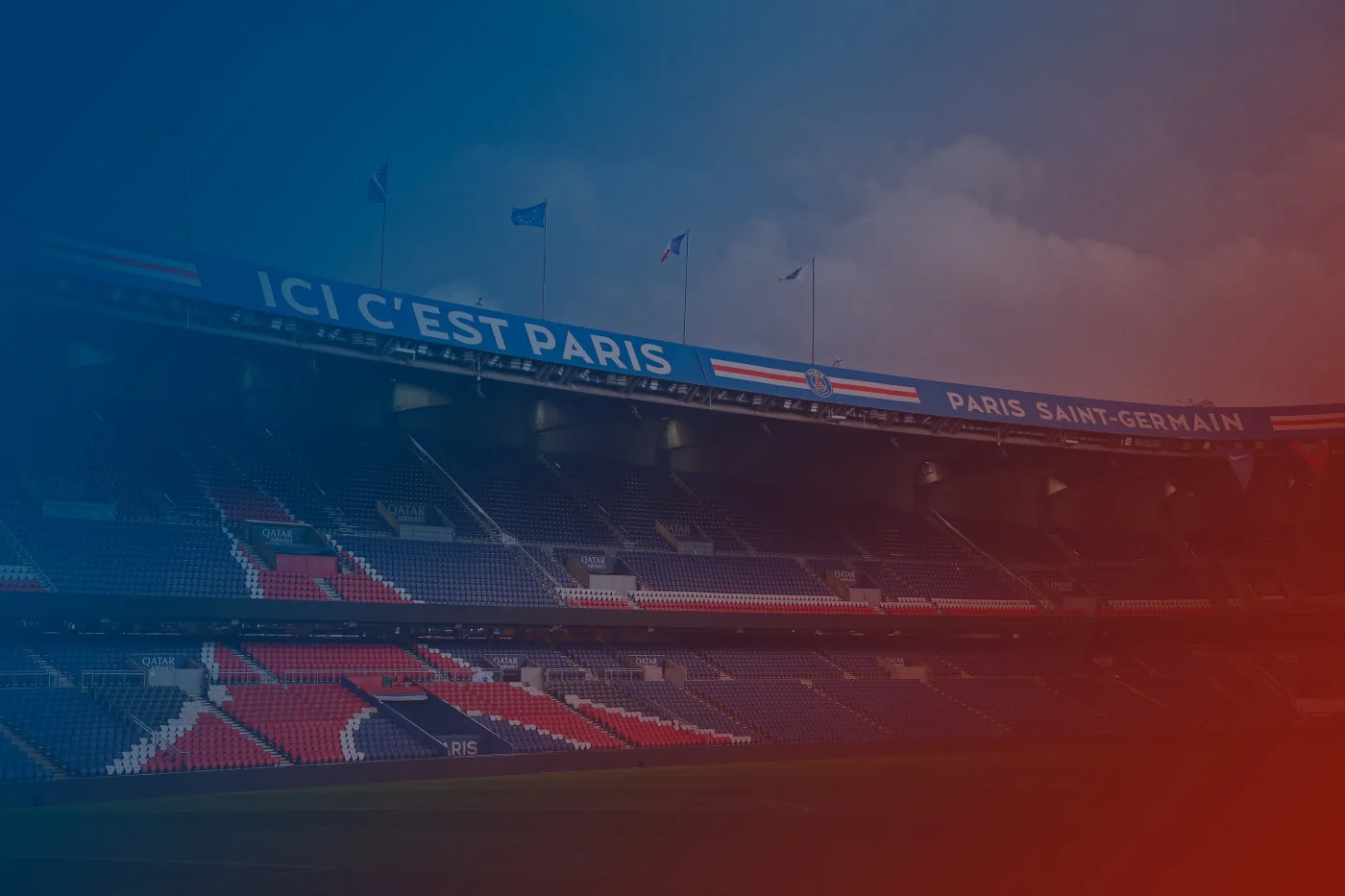
PSG plays its home matches at Parc des Princes. Paris FC's men's team moved to Stade Jean-Bouin for 2025/26. The grounds stand beside one another in western Paris, but they remain separate venues with different tickets, entrances and seating plans. Their proximity is striking precisely because it is not an arrangement in which two football clubs simply share one stadium.
Where each club plays its home matches
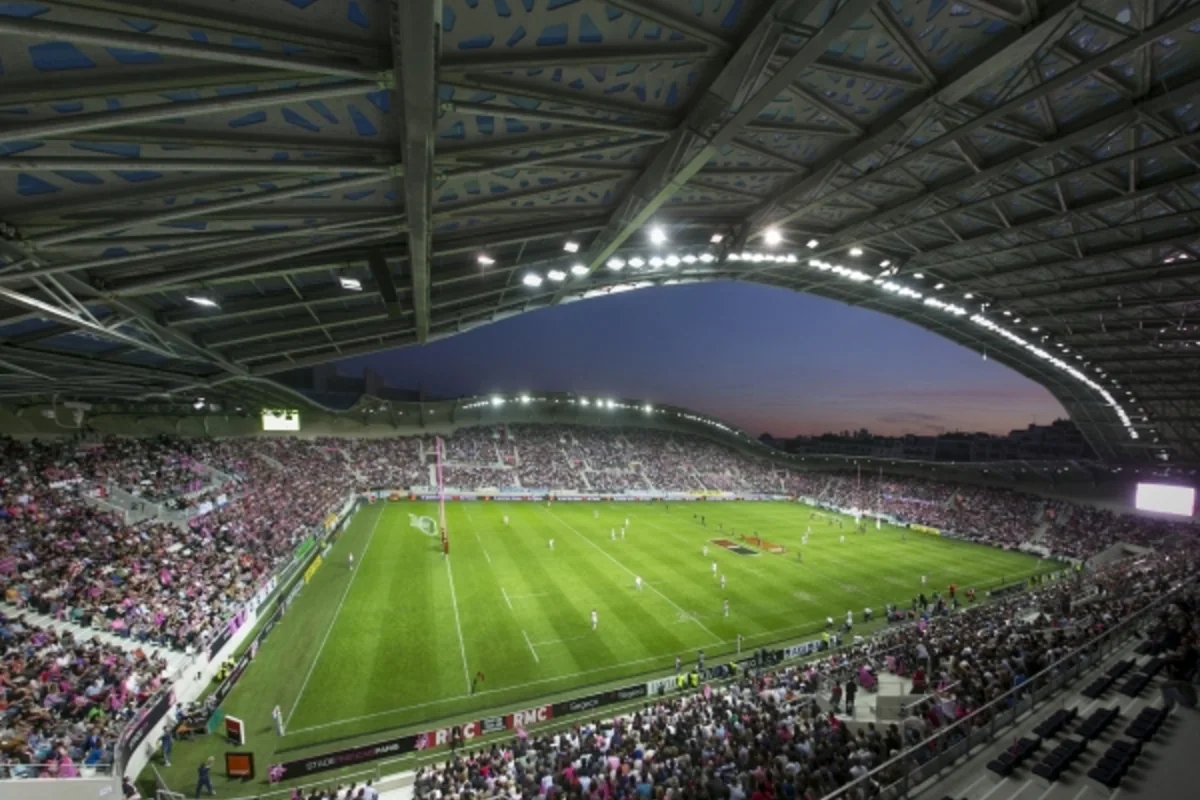
The Jean-Bouin agreement announced in February 2025 runs from the start of 2025/26 until at least 2029. Stade Français remains the resident rugby club and principal user. Paris FC therefore shares Jean-Bouin with a rugby organisation, not with PSG. Those are different sporting and operating relationships, even though all the venues and teams belong to the same broader city landscape.
Parc des Princes is the larger football setting. PSG's stadium presentation describes the replacement of 47,929 seats during renovations before Euro 2016, while the league's Jean-Bouin account places that ground at approximately 20,000 capacity. These numbers help explain the contrasting scale, but they are not a promise of tickets available for any particular match. Saleable seats depend on the event and arrangements.
Paris FC's older Charléty home still appears in searches, photographs and club material. The current access page separates the men's Jean-Bouin venue from the women's Charléty venue. A page that says “Paris FC stadium” without identifying the team can therefore send a supporter to the wrong place. The men's move did not mean every club activity or team relocated together.
Why stadium distance figures do not all mean the same thing
The two stadiums are separated by Rue Claude-Farrère. That is the useful geographical answer: they are neighbouring grounds, rather than two clubs at opposite ends of the capital. Precise numbers in headlines can still differ. A short gap between structures, a measurement between selected points and the route to a specific gate are different questions.
The City of Paris has described a 44-metre separation, while other stadium comparisons use a larger calculated distance. Without matching the starting points and method, those figures should not be treated as interchangeable promises. For an actual visit, the relevant distance is from your arrival point to the entrance printed on your ticket. Nearby roofs do not allow a supporter to walk through one stadium to reach the other.
What changes for a supporter visiting either ground
PSG's practical information gives the Parc's address as 24 Rue du Commandant Guilbaud and identifies Porte de Saint-Cloud on Métro line 9 as an access option. Paris FC's stadium guide provides Jean-Bouin's Avenue du Général Sarrail address and its own gate information. The shared neighbourhood makes planning convenient, but the final approach remains venue-specific.
Choose the correct gate before arriving, and read any fixture-specific instructions. Away allocations and security controls may direct supporters differently from the ordinary home crowd. A station that works for both grounds does not necessarily mean the same permitted route applies to every group. For accessible seating or assistance, use the relevant club's service rather than assuming neighbouring venues have identical facilities or procedures.
A stadium tour is also a different purchase from a match ticket. Seeing the Parc during a tour does not admit you to a PSG fixture, and a Jean-Bouin rugby ticket does not admit you to a Paris FC game. Checking the event, team and venue together turns an attractive piece of football geography into a visit that actually matches your plans.
Different ownership stories do not make the teams interchangeable
The clubs' modern investment stories are separate. Qatar Sports Investments is PSG's majority owner, while Paris FC's 2024 shareholding change brought the Arnault family's Agache Sport into a majority position with Red Bull participating alongside it. Those connections attract attention, but they do not merge the teams or create a common football organisation. The relationship remains one of two clubs sharing a city and a historical beginning.
PSG's investment announcement involving Kevin Durant illustrates the breadth of its activities. It identifies QSI as majority owner and describes minority investment alongside commercial, media, community and possible multisport collaboration. Those activities belong to a large football brand with interests beyond the next men's league fixture. They should not be confused with a new investor becoming the coach or choosing the starting eleven.
Paris FC's November 2024 announcement connected the new shareholders with ambitions for training centres and both first teams. Its place in the story is different: investment accompanied a club seeking to grow after years of reconstruction. That means the development question is not simply whether a famous family can afford expensive players, but how the club turns support into a durable sporting organisation.
A concrete example is the Orly training-centre expansion announced in December 2025. The project envisaged additional space and pitches, with professional men's and women's teams and training centres brought together on one site. It also involved regional and local public partners. That is a more specific indication of the club's development priorities than a comparison of the shareholders' personal fortunes.
An announced construction plan and a completed facility remain different things. The significance of the proposal lies in the kind of growth being pursued: preparation, training and organisation alongside recruitment. Supporters can assess those subjects through later club announcements rather than assuming that a headline investment instantly changes every condition faced by the first team.
The distinction is useful on the pitch as well. PSG's established elite platform and Paris FC's recent return to Ligue 1 create different expectations, but neither a wealth estimate nor a brand's reach supplies the result of a derby. Players still face opponents in a particular venue, competition and season. A club can have greater resources while needing to earn the match result, and a smaller club can produce a notable performance without acquiring the same long-term scale.
Shared player connections do not alter that independence. A footballer trained by one club may later play for another; that is part of a regional and national labour market, not proof that the destination is an unofficial reserve side. Following Paris FC on its own terms gives its academy and first-team work the attention they deserve, while following PSG separately keeps its different ambitions and achievements in view.
For a supporter comparing the clubs, ownership supplies background rather than an identity shortcut. The most useful comparison combines their historical routes, current sporting level and practical matchday experience. It leaves room for both clubs to grow without pretending that investment has erased the differences between them.
How to understand the Paris derby and choose the right match
A Paris derby is a meeting between local clubs, but the name does not identify a single recurring event with one result or one ticket. The same teams can meet in the league and a cup, and the clubs also have women's teams with their own competitions. To interpret a search result or choose a visit, start with the team, competition, date and venue.
The same opponent can mean a different competition
The January 2026 men's meetings provide a clear example. PSG won the Ligue 1 match 2–1 at Parc des Princes on 4 January. Paris FC's official report records goals from Désiré Doué and Ousmane Dembélé, with Willem Geubbels scoring Paris FC's penalty between them. The result counted toward the league campaign; it did not settle a cup tie.
Eight days later, Paris FC won 1–0 at the same stadium in the Coupe de France round of 32. PSG's cup match report identifies Jonathan Ikoné's 74th-minute goal as the decisive score. The consequence was elimination for PSG and progression for Paris FC. Anyone reading only “PSG vs Paris FC result” could therefore encounter two different winners from the same month.
The personnel differed too. Kevin Trapp started in goal for Paris FC in the league report, while Obed Nkambadio played in the cup victory. Doué and Dembélé, the league scorers, came from the bench in the later match. Those documented changes are a concrete reason to read a fixture-specific lineup rather than copy the previous derby team. They do not establish that one change alone caused the different result.
The two games also show why the larger club's resources do not make the outcome automatic. They are examples of actual competition, not a prediction that every future meeting will follow the same pattern. A league table and a knockout result answer different questions: one describes an accumulating season, the other settles who continues in that competition.
The women's derby has its own history. Paris FC's official club timeline includes its 2025 French Cup victory against PSG. That achievement belongs to the women's team, and must not be added to a men's head-to-head list. Checking the team category is especially important when an event listing uses a shortened club name without the full competition title.
Tickets, teams and kickoff times need separate checks
For PSG home matches, begin with the club's official ticketing service; for Paris FC, use its own ticket office. Paris FC also launched an official resale platform in August 2026. That provides a club-managed route for unused season-ticket seats. It does not guarantee that any particular derby seat is available, and transaction terms should be checked before buying.
Confirm that the ticket describes the correct event and stadium, then read the entry instructions attached to it. Neighbouring venues make a mistaken purchase geographically close but still unusable. Away arrangements can also differ from ordinary public sales, so follow the relevant visiting club's allocation information rather than assuming every advertised seat suits your group.
Finally, recheck the confirmed kickoff before booking travel. The PSG Ligue 1 fixture page and the today's matches page help with current league planning. Club information remains necessary for cup matches and other teams. Once those details are clear, the shared history and neighbouring stadiums become reasons to enjoy the derby, rather than sources of avoidable confusion.
Loading comments…