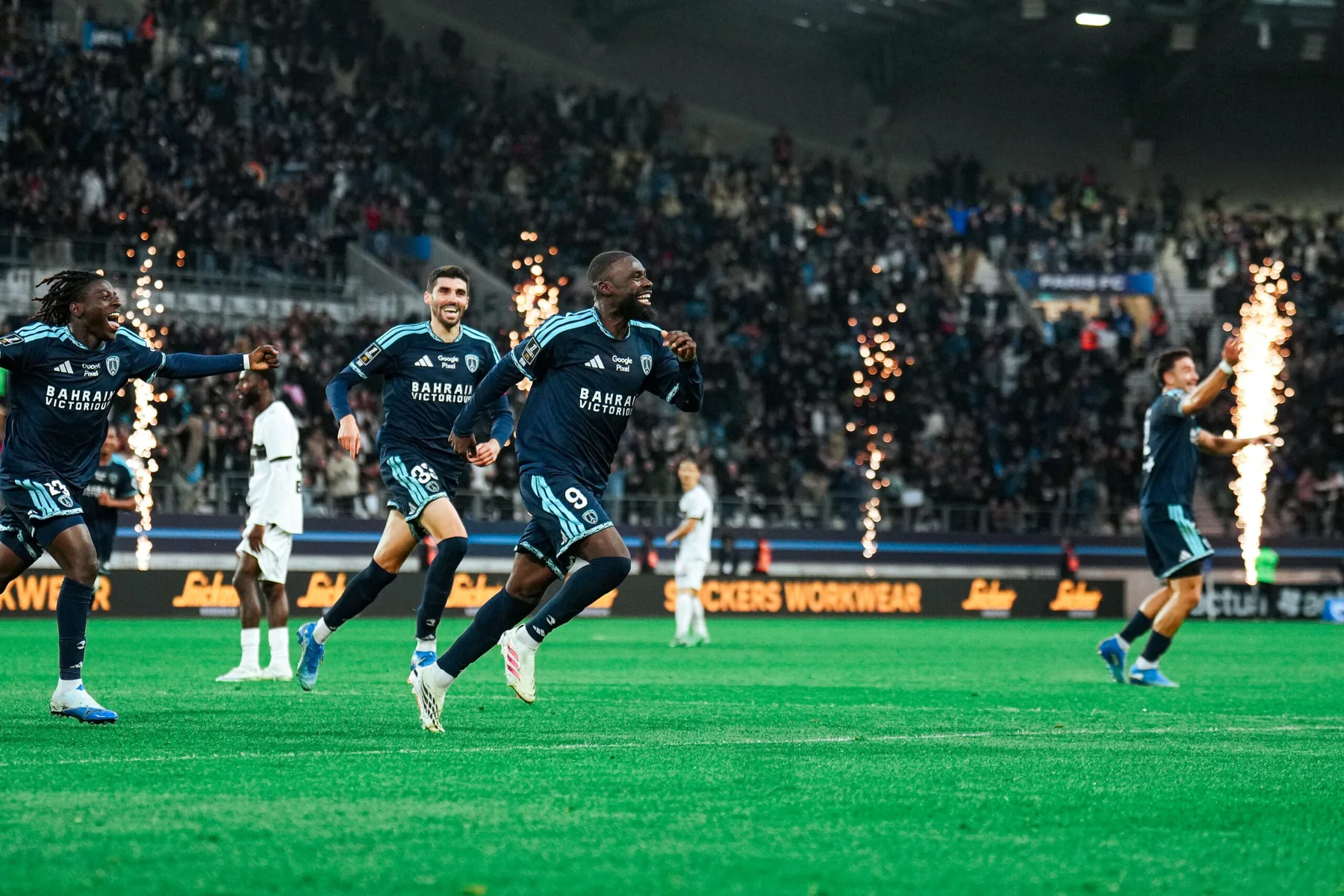
Updated 20 October 2026. Paris FC’s current squad combines Trapp’s experience, several defensive options and a midfield connecting Lees-Melou, Lopez and Kebbal to Sinayoko and the wide attackers. This guide explains the players, their positions and how the different roles fit together.
Trapp and the Paris FC defensive group under Rosenior
Paris FC's current men's squad has Liam Rosenior listed as coach, Kevin Trapp and Obed Nkambadio in goal, and a defensive group combining established senior experience with younger additions. The official players and staff page is the starting point for membership. The next step is to understand the different jobs behind those names, rather than assume that every player under a shared position heading offers the same solution.
The distinction is particularly useful for this team because third-party pages can mix older coaching information, player categories and current match statistics. A defender's place in the directory does not fix a formation for the entire season. Likewise, a midfielder appearing in a defensive role in one match should not automatically disappear from the midfield conversation. Rosenior's selected team and the opponent determine how those resources are arranged.
The goalkeepers and the centre-back choices
Trapp, number 1, returned to Paris in August 2025 after his earlier career with PSG and Eintracht Frankfurt. His experience includes Frankfurt's 2022 Europa League victory. That background gives Paris FC a senior goalkeeper accustomed to demanding matches, but the useful squad question is how he supports this defence: communicating behind the central players, offering a passing outlet and judging when to protect the space beyond them.
Nkambadio, number 16, represents a different route into the same position. He joined Paris FC in 2019 and signed his first professional contract in July 2021. The group therefore contains both a goalkeeper recruited with extensive experience elsewhere and one whose senior pathway developed at the club. Their coexistence should be understood through selection and development, without manufacturing a disagreement between them.
The 4–3 win over Rennes on 18 October also illustrates why the score alone is an incomplete goalkeeper assessment. The club's report describes Trapp making important saves despite conceding three penalties. Different forms of danger require different responses, and a penalty places the goalkeeper in a very different situation from a shot following an open-play attack. Calling the whole defensive performance good or poor from the number three would skip the context of the actual chances.
Coppola, number 42, is a particularly useful reference in the central group. Developed at Hellas Verona, he moved to Brighton before a January 2026 loan to Paris FC became a permanent deal in July. His official biography confirms that continuity, rather than leaving him in a temporary-loan category carried over from the previous season. It gives supporters a current identity check and explains why his relationship with the team extends beyond a short winter spell.
Moustapha Mbow, Otávio, Samir Chergui, Yoan Koré and Emmanuel Mbemba broaden the listed defensive options. Their presence matters in different ways: central cover, the possibility of altering the partnership and a route into senior responsibility for younger players. A centre-back needs to know whether the partner beside him will step out or cover before the decisive pass arrives. That shared judgement is a reason to assess combinations, rather than rank the defenders exclusively as individuals.
Where Traoré, De Smet and the other wide defenders fit
Traoré, number 14, brings a career that includes an earlier Paris FC spell, Rennes and Real Sociedad. His return adds senior experience around a group containing developing defenders. On the other side, De Smet, number 28, is a left-footed left-back who joined from Reims in January 2025. Nhoa Sangui adds another name to the wide defensive group.
The wide defender's relationship with the winger changes the team's options. If the winger stays near the touchline, the defender can support underneath and leave a route for returning possession. If the winger moves towards the centre, an overlapping run can preserve width. Either choice also asks a midfielder to consider the space behind the move. Traoré or De Smet cannot be evaluated only at the moment of a cross while the supporting decisions are ignored.
Adama Camara is a reminder to read those positions carefully: the official directory places him among midfielders, even though some squad services put him with defenders. That difference is a reason to examine an actual selection, not to invent a permanent new position. The Paris FC fixtures and results provide the match context for judging how Rosenior uses the group.
Lees-Melou, Lopez and Kebbal give Paris different passing jobs
The midfield becomes easier to understand when the players are connected to different phases of an attack. Pierre Lees-Melou can be a central reference for circulating possession; Maxime Lopez can help progress the ball and arrive further forward; Ilan Kebbal offers a creative receiver closer to the attacking line. These are ways to read their complementary possibilities, not restrictions preventing any of them from contributing elsewhere.
Lees-Melou, number 33, brings extensive senior experience, including his influential spell at Brest. That background matters in a side where younger players are finding their place in Ligue 1. A central midfielder can support them by remaining available when a forward pass is closed, slowing an unstable phase of possession or recognising when a teammate's advance has left the middle exposed.
Lopez developed at Marseille before playing in Italy with Sassuolo. His role should not be reduced to a deep passing label. The 18 October Rennes report records him scoring twice, both times supplied by Sinayoko. For the first he received centrally after a high recovery; for the second he arrived to meet a low delivery. The central midfielder became the finisher because the attacking movement gave him a route into the dangerous space.
That example connects directly to the balance around him. When Lopez advances beyond the ball, Lees-Melou or another teammate needs to preserve an outlet and anticipate a clearance. A successful arrival in the box is partly made possible by that less visible support. If every midfielder attacks the same line, the team may gain targets but lose control of the next phase. The useful relationship is complementary movement, not simply adding more players near goal.
Kebbal, number 10, provides a left-footed creative option. His Paris FC involvement began on loan in September 2022 before becoming permanent the following summer. The club describes an attacking midfielder whose qualities became important to the side. For a fan watching the team, his receiving position is a useful clue: between opposing lines he can connect a central pass to the striker, while a move towards the flank can create a different combination with a winger.
The supporting midfield options
Camara, number 17, came through football in the Paris region and joined the club in 2023. His profile identifies a tall central midfielder, despite alternative position labels elsewhere. That combination of local pathway and senior responsibility gives the group another established reference around its more recent additions. His actual job in a match should be read from where he supports possession and which space he protects after it is lost.
Marchetti, number 4, adds a left-footed option with experience at Ajaccio and Nancy. A different preferred foot can change the angle at which a midfielder receives under pressure and the side he can find with his next pass. It is a practical selection detail, particularly if an opponent tries to funnel Paris towards one touchline, rather than a reason to assume one player always improves the passing game.
Matondo, number 23, and Zabi, number 8, represent younger options with different development routes. Matondo arrived from Auxerre; Zabi came through Ivorian football and Reims before joining Paris in summer 2026. The club describes Zabi as a box-to-box midfielder, while Matondo's profile highlights technical and energetic qualities. Those descriptions offer a basis for understanding their contribution without assigning identical responsibilities.
Replacing a creative receiver with a more central runner changes the connections around Kebbal and the striker. Replacing a deeper midfielder may instead alter the team's cover and first pass. Paris FC's range gives Rosenior choices across both questions. The most informative way to assess a change is to identify the job added and the job redistributed, with Lees-Melou, Lopez and Kebbal providing the senior framework for the combinations around them.
Sinayoko and the attacking combinations around him
Sinayoko, number 9, joined Paris FC from Auxerre in July 2026. The Mali international's previous experience includes two promotions with the Burgundy club, and his move gave Paris another senior forward familiar with the demands of French league football. The useful starting point for his role is a central attacker who can contribute to the moves around him as well as finish them.
The Rennes win provides a particularly clear illustration: two goals and two assists in the same match. The earlier discussion of Lopez's finishes showed Sinayoko as a supplier; his own goals showed him taking responsibility closer to goal. Those jobs need not conflict. A forward can move towards a flank to create a delivery, then become the target when a teammate supplies the next move. The question is whether the surrounding attackers recognise which space needs filling.
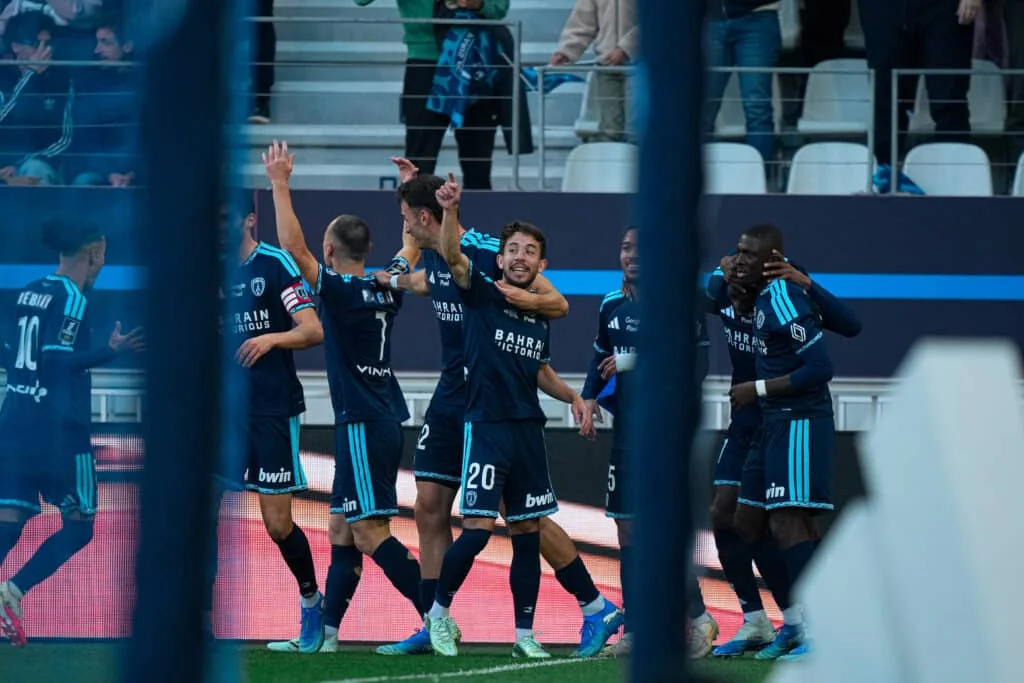
When Sinayoko comes short, he can offer Kebbal a nearby combination and draw a defender away from the back line. Somebody else then needs to threaten the space beyond. If no runner follows, the movement may only bring another defender towards the ball. If a teammate times the run well, the same short reception can open the route to goal. His connection with the supporting players is therefore more informative than the number 9 on its own.
Simon, number 27, offers extensive Ligue 1 experience from Nantes and international experience with Nigeria. His profile identifies a winger, giving Paris an option for maintaining width and challenging the defender nearest the touchline. The effect can extend beyond a dribble: an opponent forced to stay wide may leave more room for Kebbal or Lopez inside, while the Paris full-back can choose a supporting position underneath.
Koleosho, number 15, adds a different development history through Spain and England. His January loan became a permanent Paris FC move in July 2026. The club describes a quick player capable on both wings and effective in one-against-one situations. That flexibility can change which opponent Paris tries to isolate, rather than simply adding a second version of Simon to the same flank.
His involvement before Sinayoko supplied Lopez against Rennes demonstrates the wider chain. The final assist and finish emerge from earlier movement and progression. When a winger draws an opponent, releases the ball and continues forward, he can affect where the defence has to turn even without receiving the next pass. Those movements help explain an attacking contribution that a simple goals-and-assists comparison might miss.
Ikoné, number 93, provides a left-footed option with experience at Lille and Fiorentina. His background includes Lille's 2021 league title. For this squad, the relevant point is another attacking profile capable of changing the direction of a move. A left-footed receiver approaching from the right can look inside with a different body angle from a right-footed player, while the defender outside him still needs to preserve width if he leaves the touchline.
Pagis, number 7, joined from Lorient in July 2026. The club identifies versatility across forward, wide and attacking midfield positions. That makes him relevant to more than one combination: he can be read in relation to the main striker, to Kebbal between lines or to a full-back on the outside. His selection can redistribute attacking responsibilities without forcing the whole side to adopt a different formation.
Krasso, number 11, is a left-footed senior forward whose French career included Saint-Étienne before his Paris FC arrival in 2024. He gives the group another central option, with a different profile from simply inserting an extra winger. Using him can change the type of support available near the striker and the angle from which the ball is received. Any combination still needs to leave enough players able to press or protect midfield after possession changes.
Omar Sissoko, number 18, is also listed among the current attackers. His presence extends the development side of the squad, while the experienced options provide several immediate ways of sharing the main jobs. A current directory establishes membership; the match announcement establishes availability and responsibility for a particular fixture. An old loan story or a familiar name from a previous season should not be treated as sufficient evidence of either.
The attack's range creates a meaningful selection problem for Rosenior. Choosing more creators can help Paris combine around an organised block, but somebody still needs to threaten behind it. Choosing more runners can stretch the defence, but the team needs players capable of finding those runs. Sinayoko, Kebbal and the wide options offer different parts of that answer; their value lies in the relationships rather than the total number of attacking names selected.
Use the current Ligue 1 table to understand the competitive setting, then connect the actual Paris FC team sheet to these roles. The squad has senior experience, developing midfielders and several types of forward. Its most useful combinations are the ones that preserve width, passing support and central threat together, while leaving the defence protected when the attack ends.
Loading comments…