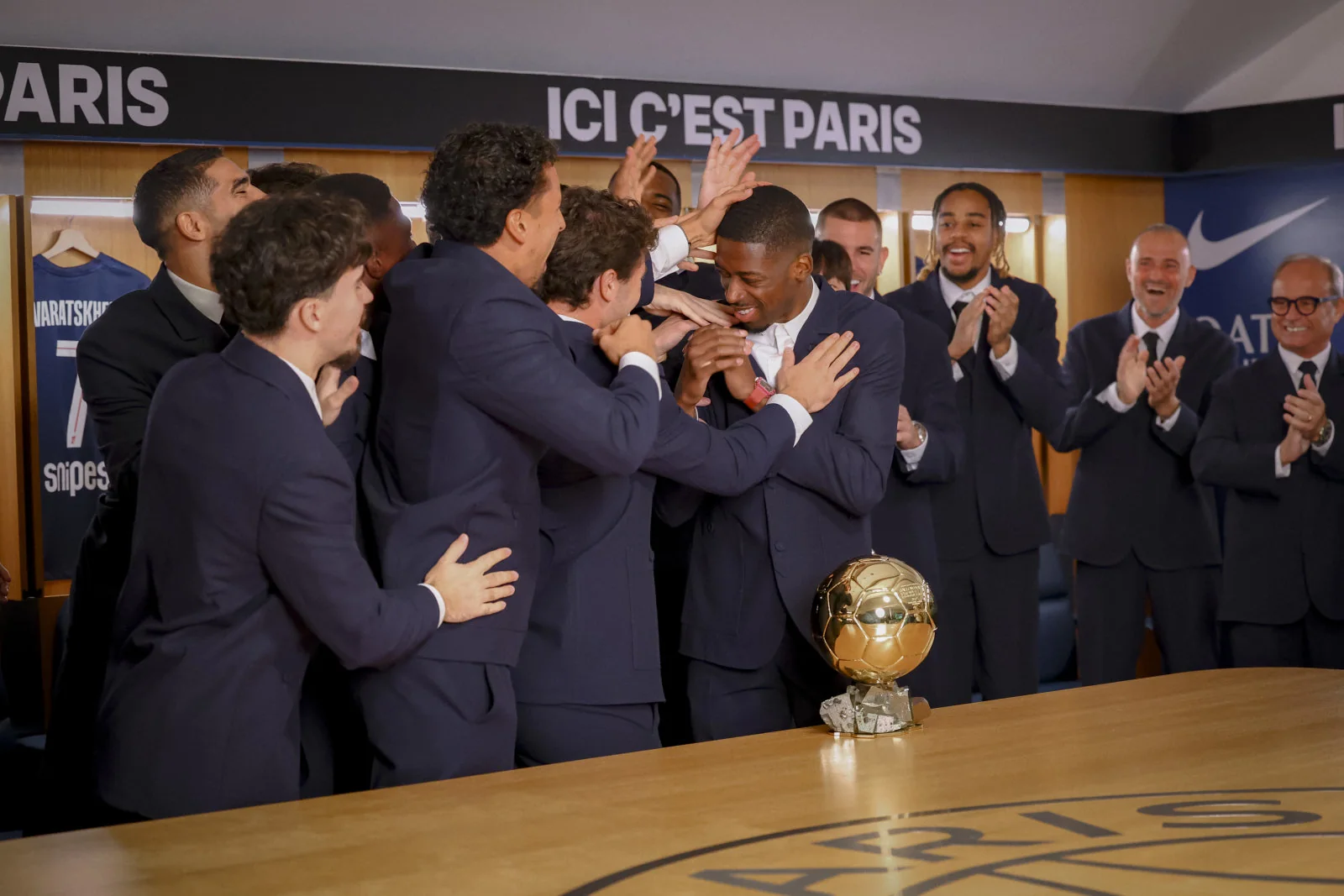
Ousmane Dembélé is PSG’s two-footed French forward, whose move from a familiar wing role into a more fluid central assignment helped define the club’s European breakthrough. He won the 2025 men’s Ballon d’Or after a season combining league goals, decisive European performances and work for the team. This guide explains his identity, career, position and scoring record, with facts checked on 20 October 2026.
Who is Ousmane Dembélé at PSG?
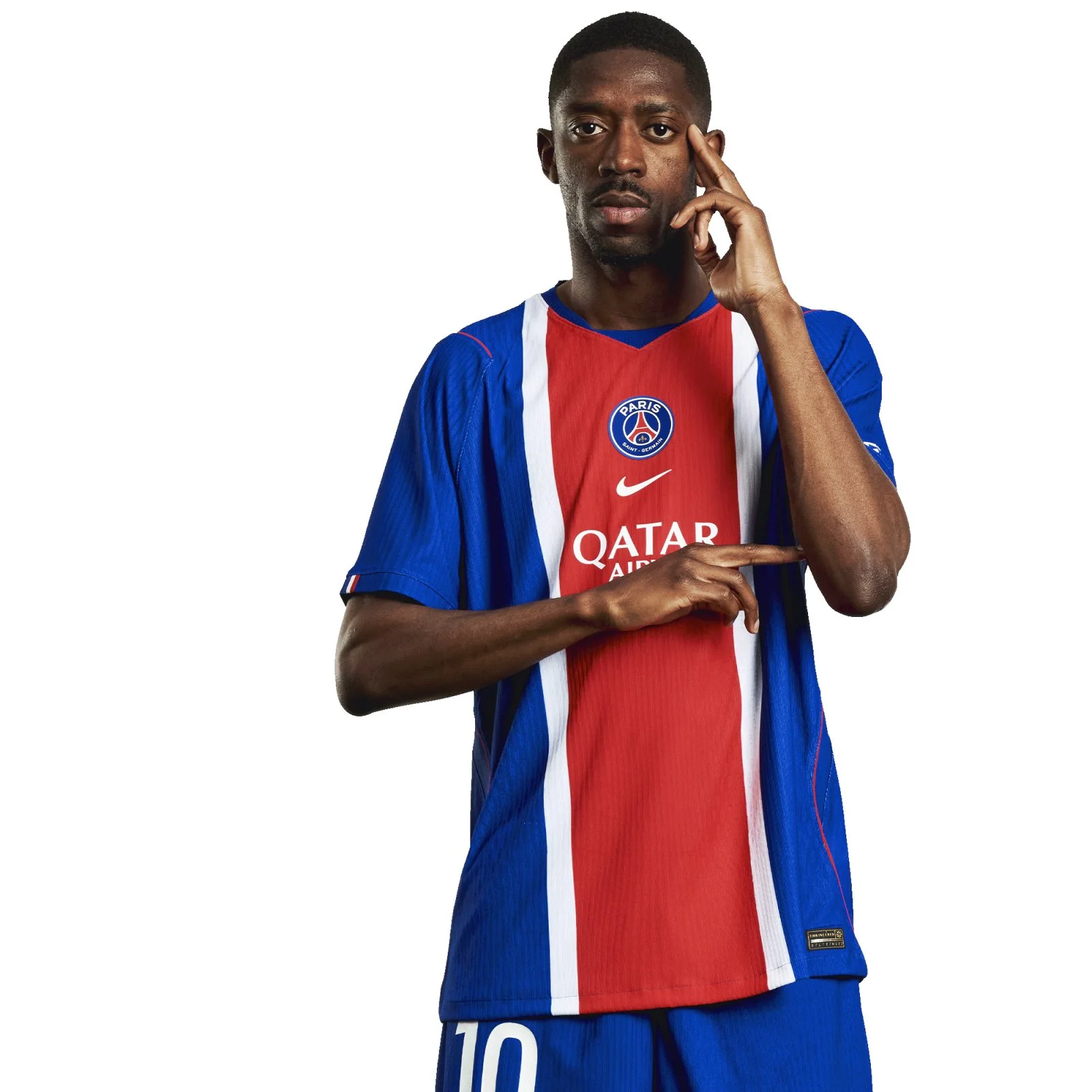
Ousmane Dembélé is the French forward wearing number 10 for Paris Saint-Germain. His full name is Masour Ousmane Dembélé, and he was born in Vernon on 15 May 1997. That makes him 29 on 20 October 2026. PSG lists him at 178 centimetres and describes him as comfortable with both feet in its official player biography. Those details answer the basic age, height and identity questions; understanding his football requires going beyond the profile panel.
Calling him a forward leaves room for several jobs. He can begin an attack near the right touchline, receive between midfield and defence, or occupy the central lane before moving away from it. A television formation usually records a starting arrangement. It cannot show every exchange of position during a possession. Similarly, wearing number 10 does not mean that he must spend the match as a traditional attacking midfielder behind another striker. The number identifies the player; his relationship with the ball and his teammates explains the role.
The ability to use either foot matters because a defender cannot rely on closing one familiar route. A player approaching from the right might cross without turning, cut towards goal, or combine inside. The practical consequence is uncertainty for the opponent, rather than a promise that every dribble succeeds. An unsuccessful take-on can still arise from the correct attacking situation. To judge the decision, look at the nearest support, the space behind the defender and whether losing possession leaves PSG exposed.
For a new Ligue 1 viewer, this is a better starting point than treating a reputation as a match prediction. Dembélé has an identifiable history and a distinctive skill set, but his next appearance depends on the team selected and the problem posed by the opponent. Check the Ligue 1 matches today, then look for his starting location and his first few movements. The difference between those two observations often explains more than the position printed beside his name.
From Rennes and Dortmund to Barcelona and Paris
The acceleration through Rennes and Dortmund
Dembélé’s route to PSG began in French football. He developed at Rennes and broke into the senior side during 2015/16, winning the league’s young-player award before moving to Borussia Dortmund in 2016. His emergence matters to the Ligue 1 story: Paris eventually brought back a player whose first professional reputation had already been established in the same competition. He did not arrive in France as an attacker unfamiliar with its clubs, stadiums or expectations.
The German period was short, but it contained a substantial competitive achievement. In the 2017 German Cup final against Eintracht Frankfurt, Dembélé scored Dortmund’s early opening goal in a 2-1 victory. The club’s own account of the final describes the move and the subsequent winning penalty from Pierre-Emerick Aubameyang. This was experience of helping decide a major match, well before his Paris awards.
That rapid progression also explains why a purely physical description is incomplete. Pace creates separation, but an attacker moving between ambitious clubs must also learn when to release the ball, how teammates occupy space and what a coach expects without possession. A successful cup final is one sample, not proof that a young player has solved every part of the game. It does establish that the later story began with considerable achievement, rather than with a blank page.
What six Barcelona seasons contributed
Barcelona announced his signing from Dortmund in August 2017. Its original introduction emphasised speed, dribbling and the ability to play on either flank. Those qualities explain why the winger label followed him so strongly. A player repeatedly receiving outside an opponent’s defensive block is naturally remembered through his one-against-one contests, crosses and changes of direction.
He remained at Barcelona until 2023, collecting domestic honours during those six seasons. PSG’s biography credits three Spanish league titles alongside cup successes. That record should remain part of the assessment even when discussing what changed later. Barcelona was a lengthy stage in his career, with different team demands and expectations. Describing the whole period simply as a prelude to Paris would erase both the experience gained and the contribution he made.
His return to France in summer 2023 therefore brought a combination of French development, German competition and Spanish possession football. The football question is how PSG used that combination. An attacker who can beat a full-back still possesses that option when moved centrally, but now the same first touch can eliminate a midfielder or draw a centre-back forward. The setting changes the value of an existing skill. That is a more useful explanation of his development than assuming that an entirely new player appeared when he changed shirts.
How his PSG position changes the attack
Central movement and the space around him
The central version of Dembélé asks a different question of defenders from a winger waiting outside them. If he comes towards midfield, should a centre-back follow and leave space behind? If the defender holds the line, who picks him up before he turns? These are tactical choices, rather than evidence that the attacker is allowed to wander without structure. The next teammate’s movement is what makes the first movement dangerous.
UEFA’s analysis of PSG at Arsenal in April 2025 identified repeated exchanges of position and runs in opposite directions. Its tracking illustration recorded 15 runs behind the defence by Dembélé in that particular match. Coming short was therefore only part of the assignment: the threat of going beyond the defensive line made his movement towards the ball more difficult to ignore.
For a supporter watching the next game, try following the space he leaves rather than only his touches. Does a midfielder arrive there? Does a wide attacker remain available to stretch the back line? Does the pass reach Dembélé while he can face forward, or with an opponent already tight to his back? Those observations help distinguish a useful rotation from several players simply gathering around the ball. A central position is valuable when it connects the attack and preserves a threat in depth.
The first defender when possession is lost
The same role has a defensive side. In its technical review of the 2025 Champions League final, UEFA counted 14 final-third pressing actions by Dembélé, the highest PSG total in that game. The important detail is the setting: this was a specific final against Inter, with teammates advancing behind the first pressure. It is not a season-long average or a guarantee of the same approach against every Ligue 1 opponent.
A forward can contribute to a recovery without making the tackle himself. Closing one passing lane may send the ball towards a waiting midfielder; a run towards the goalkeeper can encourage a long clearance. The visible result belongs to the next player, while the first runner helped create the situation. Conversely, an isolated sprint can be bypassed if the rest of the team remains too deep. Effort and coordination have to be assessed together.
That is why a quiet scoring evening need not be an empty performance. A useful evaluation asks whether he connected attacks, threatened space and helped the team defend in the intended area. It also leaves room to criticise a missed chance or an ineffective press. The role provides the context for judging those actions, rather than an excuse to ignore their outcome.
Dembélé’s goals: the season and competition matter
The clearest completed league benchmark is 2024/25: Dembélé scored 21 Ligue 1 goals and received the official Top Scorer award. Mason Greenwood also finished with 21 goals. The league’s season-ending explanation identifies fewer penalties as the distinction in Dembélé’s favour. Saying that he won the award is accurate; saying nobody else scored as many league goals would lose an important detail.
His Champions League record that season was separate: eight goals and six assists in 15 appearances, according to UEFA’s competition summary. Those eight goals should not be described as a league total. Nor should a number taken before the European final be compared casually with a later all-competition count. Cups, super cups and international football create different sets of matches, even when the same name appears at the top of each page.
A good comparison begins with three labels: season, competition and minutes. Appearances alone can conceal a large difference between starting most matches and entering from the bench. A goals-per-90 measure helps describe scoring frequency, but does not automatically establish who provided the greatest season-long contribution. A short, productive spell and a lengthy campaign of reliable availability answer different questions. Both can be valuable to a team without being interchangeable.
The same care applies when judging the balance between scoring and creating. A pass that releases the eventual assister may be crucial to a goal without appearing in the basic assist column. A missed chance remains a missed chance, but one unsuccessful finish cannot explain every part of a forward’s work. Watch whether the team is finding him in dangerous positions, whether he is supplying others and whether those patterns continue against stronger opposition.
This guide uses completed historical figures to explain his development. For a current match, open the 2026/27 Ligue 1 results and identify the actual fixture before interpreting a new goal or assist. That keeps an evolving match record separate from the established season which made his scoring transformation so significant.
Why Dembélé won the 2025 Ballon d’Or
The Champions League evidence
Dembélé won the men’s Ballon d’Or on 22 September 2025, finishing ahead of Lamine Yamal and Vitinha. That result is confirmed by UEFA’s award announcement. The question is therefore no longer whether his breakthrough season deserved to enter the conversation. It is how the combination of individual influence and PSG’s achievements made such a compelling case.
His European campaign supplied evidence beyond domestic dominance. UEFA’s season review identifies winning goals away to Liverpool and Arsenal in the knockout rounds, as well as his hat-trick at Stuttgart in the league phase. Different matches created different demands: converting a chance in an away knockout tie does not carry the same competitive setting as adding another goal to a comfortable lead. That does not produce a mathematical ranking of every goal, but it explains why the opposition and stage belong alongside the total.
PSG’s first Champions League title, secured with a 5-0 final win over Inter, provided the collective landmark. An individual could play exceptionally without winning that trophy; in this case, his contribution was part of a completed historic success. The link between performance and outcome was especially visible across the path to the final, rather than resting on a single spectacular evening.
An individual prize built on a collective season
There was wider recognition of the environment around him. PSG received the men’s club award and Luis Enrique the men’s coaching award at the same ceremony. In his subsequent PSG interview, Dembélé credited the team’s level and the coach’s support. Those comments are the player’s explanation of his experience; they are not access to the private reasoning of every voter.
For fans, the broader lesson is that an award debate works best when its criteria are stated. Scoring volume, creativity, decisive matches and contribution without the ball can point towards different candidates. Here, several strands reinforced one another. The scorer was also a connector in possession and a participant in a demanding defensive approach, within a team that finished its European job.
The 2025 prize now belongs to his record. A later match still needs to be judged on its own evidence, and a later award has its own field of candidates. Appreciating the achievement does not require treating every subsequent performance as equally successful. It means understanding precisely what he helped accomplish during the campaign that earned it.
France, the World Cup and watching his next PSG match
World Cup winner and finalist
Dembélé made his senior France debut against Italy on 1 September 2016. He was part of the squad that won the 2018 World Cup and reached the final again in 2022. The French federation’s player record supplies the useful distinction behind those medals: he appeared in four matches in 2018 and seven in 2022. Sharing a team’s tournament outcome does not mean having an identical role in every edition.
International football also provides a different setting from a club season. The surrounding players, the available training time and the demands of a short tournament affect the job an attacker is asked to perform. A PSG central assignment therefore should not be imposed automatically on his France appearances. Start with the actual team sheet and the shape in that match, then consider how often he receives the ball facing forward and which teammate supplies the main threat beyond him.
That distinction is especially helpful when a search for his World Cup record leads into a debate about PSG form. A successful club campaign is evidence of what he can contribute in that environment. It does not remove the need to examine a different opponent and combination of players. Equally, one difficult international evening cannot rewrite everything he has achieved for his club. The two records illuminate different parts of the same career.
What to watch in a Ligue 1 appearance
Begin with the current Ligue 1 match listings and verify that PSG are playing. Once the line-up is available, establish whether Dembélé starts or is among the substitutes. A squad profile describes a player’s abilities and history; it cannot promise his minutes in a particular match. If he enters later, the score and the opponent’s fatigue may create a very different task from the one the starting forward faced.
During the game, focus on a small sequence of connected actions. Where does he receive? Who moves when he comes short? What happens immediately after possession is lost? Then place the result in the league standings. The value of a narrow away win, for example, cannot be understood from a player’s personal scoring column alone. Team objectives and the resistance of the opponent give those actions meaning.
His career offers plenty to appreciate: the French breakthrough, the experience abroad, the Paris tactical development and the confirmed 2025 award. Following the next match with those distinctions in mind makes the profile useful beyond a birthday or a trophy list. Watch the decisions that connect his technical gifts to the needs of the team, and the familiar name becomes a much more interesting footballer to follow.
Loading comments…