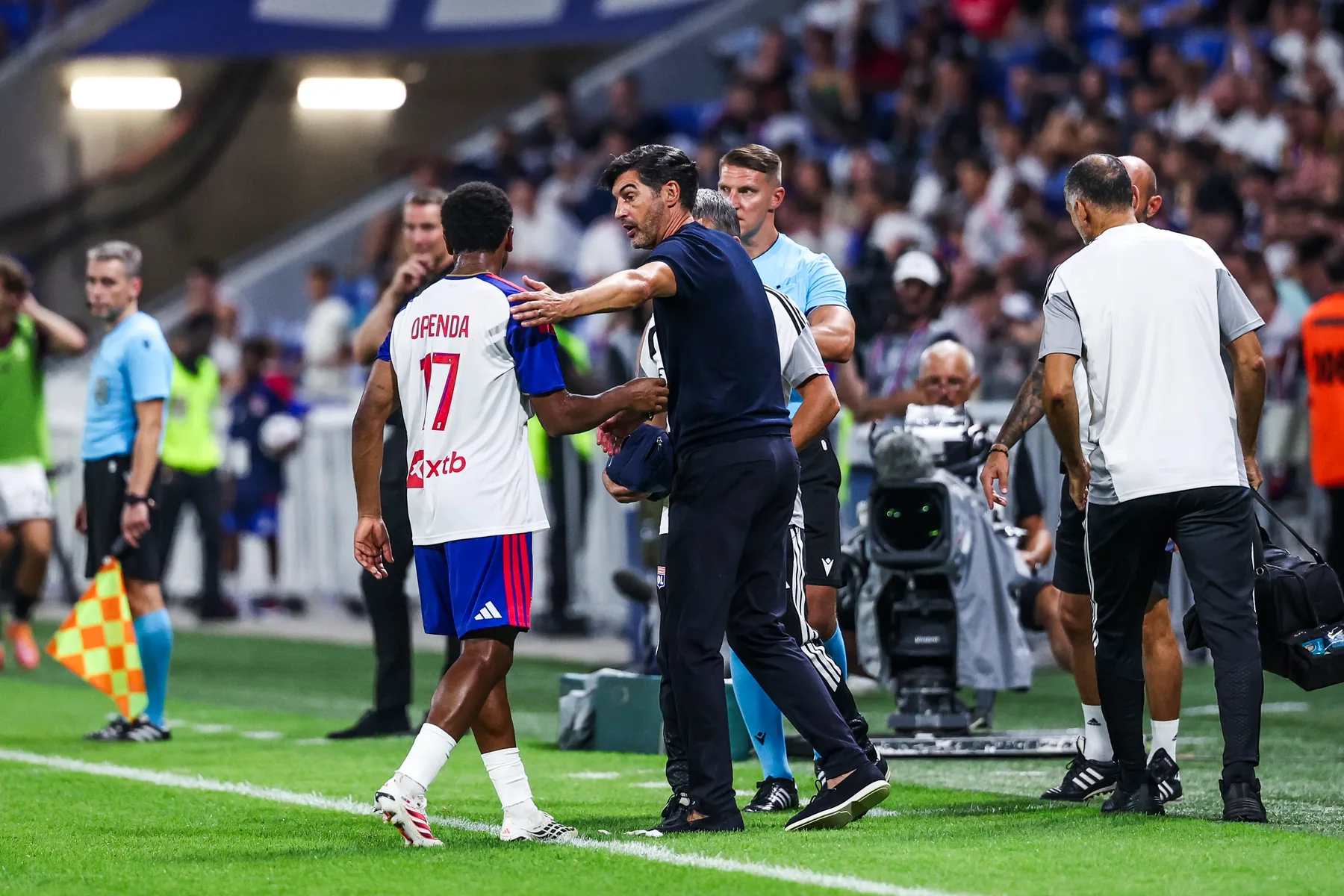
Lyon’s 2026/27 men’s squad combines experienced leaders, a rebuilt attack and younger players competing for a role under Paulo Fonseca. This guide explains the core names, their published positions and how their football responsibilities fit together. Squad membership and dated examples were checked on 20 October 2026.
Which players make up Lyon’s 2026/27 squad?
Lyon’s current group combines established figures such as Corentin Tolisso, Moussa Niakhaté and Clinton Mata with a series of newer options around them. Paulo Fonseca remains the coach. Loïs Openda supplies a new central attacking reference, while players including Mads Bidstrup, Felix Bacher, Zachary Athekame and Keito Nakamura broaden the choices in different parts of the pitch.
The core names below follow UEFA’s published Europa League squad as checked on 20 October 2026. They are grouped by the positions used in that competition directory. The list is a guide to the senior options discussed here, rather than an exhaustive register of every academy player or every contract belonging to the club. UEFA also identifies a separate List B, and registration in a competition does not itself establish a place in the next starting eleven.
| Group | Core players |
|---|---|
| Goalkeepers | Dominik Greif, Rémy Descamps |
| Defenders | Nicolás Tagliafico, Zachary Athekame, Abner Vinícius, Moussa Niakhaté, Felix Bacher, Ruben Kluivert, Clinton Mata, Steeve Kango, Mohamed Ouédraogo, Noham Kamara |
| Midfielders | Mads Bidstrup, Tanner Tessmann, Corentin Tolisso, Pavel Šulc, Khalis Merah, Tyler Morton, Julien Duranville, Noah Nartey |
| Forwards | Ernest Nuamah, Keito Nakamura, Loïs Openda, Kaïl Boudache, Rémi Himbert |
The directory’s labels need some interpretation. Duranville appears in the midfield group, for example, but his attacking work can be discussed alongside the wide forwards. Tolisso can contribute much closer to goal than the word midfielder might imply. What matters is the space a player occupies during an attack, his options when he receives and the work he performs once Lyon lose possession.
There is also a timing issue when reading squad pages. The league’s August season preview captures the project before the final days of the transfer window. It describes Fonseca’s attacking approach and the mixture of younger recruits with experienced players, but it cannot settle every later membership question. A player appearing in an August qualifying match or an all-season database should therefore not automatically be treated as a current October option.
That distinction gives the rest of this guide its purpose. The squad table identifies names; the following sections explain the different football problems those players can help solve. Goalkeeping, progression through midfield, attacking width and movement behind a defence are connected tasks, and Lyon’s combinations matter as much as the individual profiles.
Goalkeepers: Greif, Descamps and the first pass
Dominik Greif and Rémy Descamps give Lyon two senior goalkeeping options with meaningful first-team evidence behind them. Their contribution begins with preventing goals, but it also affects where the team can position itself with the ball. A goalkeeper who has an available short pass can help draw pressure towards the defence; a longer delivery may be the sensible choice when the opposition close those routes.
Greif’s earlier league record contains a concrete example of his shot-stopping contribution. In its May 2026 review of the 2025/26 season, the league credited him with three penalty saves, more than the other goalkeepers discussed in that category. This is a completed-season statistic, rather than a claim about the current campaign. It highlights one demanding part of his work, while leaving room to assess the wider performance: positioning before the shot, handling crosses and helping the defenders deal with pressure.
Descamps’ role is illustrated by Lyon’s opening league match of 2026/27. Fonseca rotated his side away to Toulouse with a European qualifier approaching, and Descamps helped preserve the clean sheet in a 2–0 victory. The match report records him turning Alejo Vignolo’s effort onto the post and dealing with another attempt from Santiago Hidalgo. Lyon’s later goals can dominate the memory of the match, but those interventions kept the game level while the visitors were still finding their attacking rhythm.
That example explains why the second senior goalkeeper remains important even when supporters recognise a preferred league starter. Rotation can put him behind a different defensive combination, and the quality of his communication becomes part of making that selection work. A clean sheet belongs to the team, but the goalkeeper still needs to make the interventions that the defensive structure cannot prevent.
When watching either player in possession, look at the options presented by the centre-backs and midfielders. A safe short pass depends on somebody creating an angle and being ready for the next action. If those options are covered, playing longer can move the contest into an area where the forwards and midfield can compete for the second ball. These are collective decisions, so a goalkeeper’s passing should be read alongside the shape in front of him rather than as an isolated preference.
Defence: an experienced core and new wide options
Lyon’s defensive group offers continuity in the centre alongside newer options who have already contributed this season. The task is broader than winning individual duels. Defenders also decide where the team starts its attacks, how much space the midfield can leave behind and whether a full-back can advance with sufficient cover.
Niakhaté, Mata, Bacher and the central group
Niakhaté and Mata provide an established partnership from the previous campaign. The league’s May 2026 assessment highlighted their combination, with Mata having moved into the centre after experience as a full-back. That positional background matters because the central defenders must do more than protect the six-yard box. They may need to follow an attacker into a wider channel or support the first passing sequence while the full-back moves ahead.
Niakhaté’s leadership also has a longer background. The league’s December 2025 profile traced his route through Mainz, where he became captain, before Nottingham Forest and his return to France. It described a more settled defensive influence at Lyon during his second season. That history supplies context for his importance without making every later performance or selection predictable.
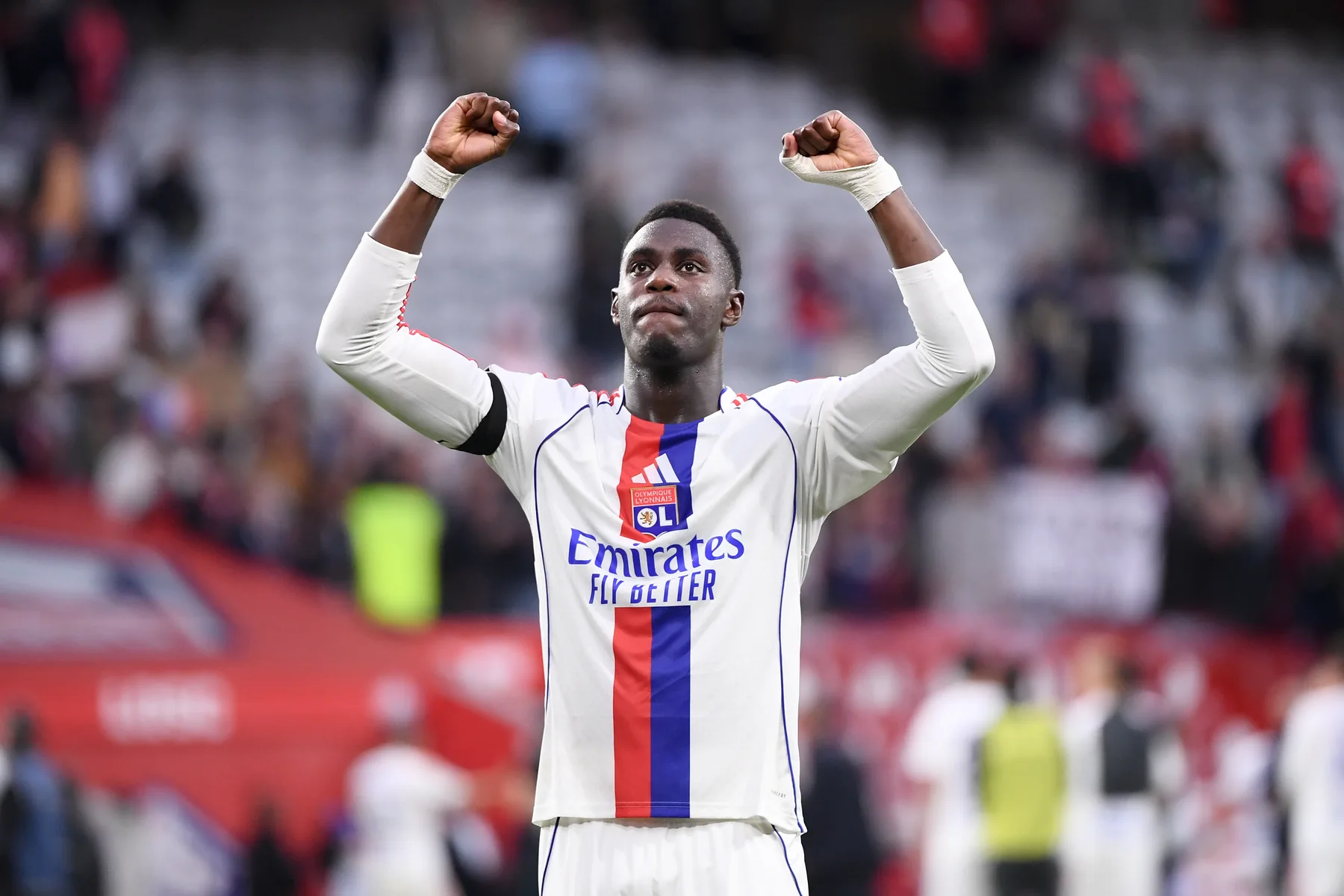
Felix Bacher adds another central option following his summer arrival. Lyon’s official announcement index records his signing on 2 August, and his early contribution was already attracting attention by September. The league’s international call-up report noted both his goal against Auxerre and his first selection for Austria. Those are concrete milestones in his introduction to the team, rather than a reason to judge a centre-back principally by goals.
Ruben Kluivert and Noham Kamara broaden the central group, while Steeve Kango is another defender in the published squad. The practical value of that depth becomes clear when Lyon change personnel across competitions. A new pairing must agree when to step towards a receiver and when to protect the space behind. Familiar individual names do not remove the need to establish those relationships every time the combination changes.
Athekame and the choices on the left
Zachary Athekame has supplied a measurable attacking contribution from full-back. After the 2–1 win over Nice on 18 October, the league recorded two goals and three assists in his first seven Ligue 1 appearances for OL, including the assist for Tanner Tessmann against Nice. The 19 October statistical review is a dated snapshot, but it demonstrates why his involvement should be watched beyond the defensive third. His movement can provide a route around an opponent whose midfield is protecting central spaces.
On the left, Abner, Nicolás Tagliafico and Mohamed Ouédraogo offer different selection possibilities. Abner’s crossing has an earlier match example: the league reported his delivery for Roman Yaremchuk’s opening goal against Auxerre in April 2026. That belongs to the previous campaign, but it illustrates how a full-back can help create a chance once an attacker occupies the centre-backs. If the wide forward comes inside, the defender’s outside run can maintain the width of the move. If that run is blocked, keeping an available supporting position may be more useful than advancing into the same crowded space.
Midfield: Tolisso’s influence and the players around him
Tolisso gives the midfield an attacking dimension that goes beyond wearing the captain’s armband. His goal against Nice in February 2026 is a useful example of how Lyon can distribute responsibility across a move. Tessmann advanced, Abner supplied the cross and Šulc attacked the near post, leaving Tolisso to arrive at the far post. The league’s account of his 50th OL goal describes a coordinated attack in which the final scorer benefited from the movements around him.
That is an important lens for the current group. Tolisso can help connect the early stages of an attack and still contribute near the finish. The players behind and beside him must read when to support that movement and when to hold their position. Selecting a productive midfielder involves building the conditions for his contribution, rather than simply moving him closer to the striker.
Morton, Bidstrup and Tessmann at the base
Tyler Morton has explained his own preference particularly clearly. In an August 2026 interview carried by the league, he said the deeper midfield role suits his passing and allows him to influence the tempo through frequent touches. He also described the need to understand whether a teammate wants the ball to feet or into space. That distinction is directly relevant to a squad containing both creative receivers and forwards who can run beyond a defensive line.
Mads Bidstrup arrived after three seasons at Salzburg, where the league’s transfer account recorded 116 appearances. His arrival adds experience from another competitive environment to the central group. Alongside Morton, the key relationship is the division of space: one player can make himself available near the ball while the other offers the next angle or protects the route back towards the centre-backs. Their positioning must also allow Tolisso to advance without disconnecting the midfield.
Tanner Tessmann supplies another option in those combinations. The February Nice move already shows him progressing an attack rather than remaining permanently in front of the defence. His October goal against the same opponent, from Athekame’s assist, offers a more recent reminder that a deeper starting position can still lead to a contribution in the final third. When one of these midfielders advances, the supporting arrangement becomes as important as the run itself.
Šulc, Nartey and Merah further forward
Šulc’s near-post movement in the earlier Nice example helps explain his value beyond recording the final touch. An attacker who attracts a defender can make another player’s finish possible. There was a related pattern in Lyon’s August 2026 win at Toulouse: the league described Šulc drawing defenders during the move that allowed Noah Nartey to score. Nartey’s contribution came from recognising the available space and finishing the move, a different task from merely standing in an attacking midfield position.
Khalis Merah adds another form of flexibility. In its analysis of Lyon’s April 2026 victory over PSG, the league highlighted his use as a false nine despite his midfield background. That was a specific response to the players available and the opponent, rather than proof that his permanent position is striker. It shows how receiving between lines and moving away from a defender can matter more than a nominal label. For Fonseca, the challenge is combining those creative movements with enough passing support and protection behind them.
Attack after the summer departures
The current attack should be read as a new combination, rather than a continuation of every name seen last season. Endrick’s loan ended, Afonso Moreira left, and the club’s September announcements confirmed Malick Fofana’s transfer to Sunderland. Openda, Nakamura and the younger wide options now sit alongside Nuamah and Himbert in the published group. Replacing an attacker involves replacing his movements and connections as well as his goals.
Openda’s movement through the middle
Openda’s return to France brings a recognisable Ligue 1 record. He scored 21 league goals for Lens in 2022/23, when the club finished second. The league’s profile of his return highlighted his speed, ability to turn and capacity to stretch play in ways that also involve the midfield. That history offers an explanation of his role; it does not set a guaranteed scoring total for a different team.
There is already an OL example of those relationships. In the 1–1 qualifying draw at Fenerbahçe on 18 August, Openda linked the move before making the near-post run to head in Tolisso’s cross. The league’s report describes a goal built through quick combinations, followed by the striker moving into the finishing position. Coming towards the ball and then attacking the box can ask two different questions of a defender within the same move.
That central movement can create choices for Morton and the other midfielders. If a centre-back follows Openda short, a teammate may be able to run into the space behind. If the defender stays, Openda may receive with room to combine. The timing of the next pass determines whether either advantage becomes a chance; the striker cannot create the whole attack alone.
Nuamah, Nakamura and the wide alternatives
Nuamah supplies an established wide attacking option after his return to competitive action. The league’s August qualifying coverage recorded his goalscoring contribution as Lyon overcame Sparta Prague. It is a dated example of his renewed involvement, rather than an October medical assessment. His presence gives the attack a player who can begin wide and threaten the space around the central forward.
Nakamura offers another route into the final third. He scored on his first Lyon start in the 2–1 Europa League win at Anderlecht on 16 September. Lyon Foot’s report described him starting on the left, coming inside and scoring with a deflected shot. It also reported Fonseca’s appreciation of his decisions with the ball. The practical distinction is useful: a winger can help through retaining possession and selecting the right moment to accelerate, alongside taking on an opponent.
Julien Duranville and Kaïl Boudache broaden the options. The league documented Duranville’s arrival from Borussia Dortmund after a loan spell at Basel, while its profile of Boudache explained that the former Nice player can operate on either flank or more centrally. Their inclusion means changes need not reproduce the exact characteristics of the player leaving the pitch. A different receiver or runner can alter the full-back’s task and the passing lane available to the midfield.
Himbert and the academy route
Himbert supplies a particularly clear connection to Lyon’s academy. On his first senior start, against PAOK in January 2026, he scored in a 4–2 European win. The league’s July profile also recorded consecutive pre-season hat-tricks against Mâcon and Saint-Gall and emphasised the timing of his movement. Those friendlies are different tests from league or European matches, but the senior PAOK goal already gives substance to his place in the discussion.
His opportunity sits within a group containing more experienced forwards, so the value is a further attacking solution rather than a predetermined place in the hierarchy. A run away from a marker, an available pass when the midfield is pressed or a fresh option against a tiring defence can all matter before a goalscoring chance arrives. His next contribution depends on how those actions fit the teammates selected around him.
How Fonseca can combine the pieces
A formation graphic is useful for identifying the starting positions, but it cannot describe every phase of Lyon’s play. The league’s analysis of the April 2026 win at PSG offered a clear example: Kluivert could begin on the left of the defence while Abner moved into midfield, changing the arrangement once Lyon had the ball. That was a particular solution for a particular game. Its wider lesson is that one player’s movement creates a responsibility for somebody else.
In the current group, Athekame advancing on the right can require a midfielder to offer support behind him. Openda coming short can open space for a winger or a midfielder moving beyond him. Tolisso arriving in the area can add a target, provided Lyon still have a route to recover the ball if the cross is cleared. The squad contains several ways to fulfil these tasks, so the final combination should be assessed through its balance rather than through reputation alone.
Rotation is another part of that balance. The August win at Toulouse showed Fonseca changing personnel around a European qualifier while still drawing decisive contributions from both the starters and the bench. An alternative selection can preserve a team’s principles if the players understand the connections: who offers the first pass, who stretches the opposition and who protects the centre when a move ends.
The calendar continues to make those choices relevant. As checked on 20 October, UEFA’s match list has Lyon visiting Hoffenheim on 22 October. The domestic schedule and European commitments give different players opportunities, but they do not establish anyone’s selection in advance. A published squad guide describes the options; the confirmed team sheet reveals how Fonseca wants to use them against the next opponent.
Use the 2026/27 Ligue 1 calendar to follow the league sequence, the results page for completed games and today’s matches for the immediate fixture. When the next selection appears, the most revealing question is how the chosen players connect the goalkeeper, midfield and attack into one working team.
Loading comments…