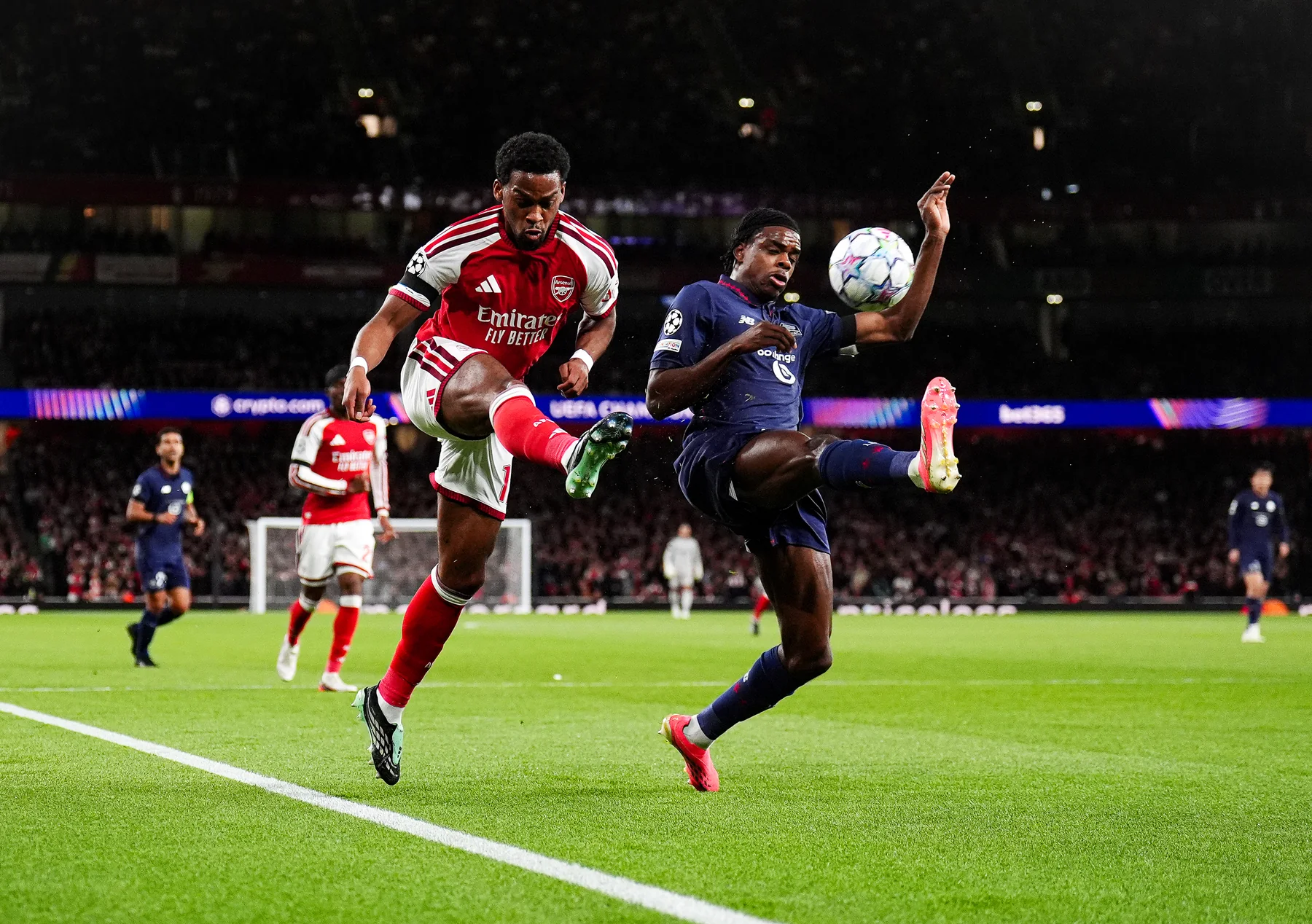
Updated 20 October 2026. Lille’s squad is built around Özer in goal, André’s midfield leadership and several combinations behind the central striker. This guide identifies the current LOSC players, their positions and the football choices their different profiles create.
The current Lille squad starts with Özer and a changing defence
Lille's 2026/27 squad combines an established midfield leadership group with new options at goalkeeper, centre-back and centre-forward. Davide Ancelotti is the coach listed by the club. For supporters trying to recognise the side, the most useful starting points are Berke Özer in goal, Benjamin André in midfield and the different attacking combinations around Hákon Haraldsson. Behind the familiar names, the defensive selection has already had to respond to an important change on the right.
The official LOSC player directory is the reference for names and numbers, but its broad position categories need interpreting. A player listed among the attackers may spend much of a match connecting midfield to the striker. A defender can provide attacking width. The membership of the squad and its actual arrangement on the pitch are related questions, rather than identical ones.
Özer and Gill: a clear goalkeeping hierarchy
Özer wears number 1. His club profile identifies the Turkish international's earlier career, including Eyüpspor, and describes his goalkeeping qualities. More decisively for a squad guide, Lille was explicit about its hierarchy when Orlando Gill arrived in August: the Paraguayan was recruited as Özer's deputy. Gill wears number 12. This is clearer evidence than guessing the first choice from a shirt number or counting the keepers on a third-party squad page.
The Gill announcement describes a goalkeeper with international experience and a tall physical profile, joining on a contract through 2031. The football value of that signing is depth in a specialist position. Substituting an outfield player can change a role for the last half-hour; a goalkeeper change requires the defence to communicate with a different reference behind it. A credible deputy lets the coach make that decision without treating the whole defensive structure as a new experiment.
Hierarchy still does not mean a guarantee of every start. Ancelotti can choose differently for a particular match, and availability can alter the decision. The useful distinction is between a club-confirmed starting order and a prediction about the next team sheet. Özer's position gives fans a reference point; Gill's presence explains how the group is supported if that reference changes. There is no need to invent a goalkeeper controversy simply because both have senior experience.
The full-backs and centre-back partnerships
Tiago Santos, number 22, belongs to the official defensive group, but an October squad guide must also acknowledge his serious knee injury. In the 13 October Arsenal report, Lille explained that Maxima Goffi was being trusted on the right after replacing him previously. That is a dated selection consequence, not a recovery forecast. Goffi's number 38 and his presence in the first-team directory identify the player stepping into that part of the team.
The same match paired Nathan Ngoy with Alexsandro centrally and Romain Perraud on the left, with Calvin Verdonk replacing Perraud later. Loun Srdanovic and Isaac Cossier add to the listed defensive options. These names cover different needs: changing a full-back can affect the team's width and recovery runs, while changing a centre-back alters the partnership directly protecting goal. A long list under “defenders” conceals those differences unless each choice is connected to its task.
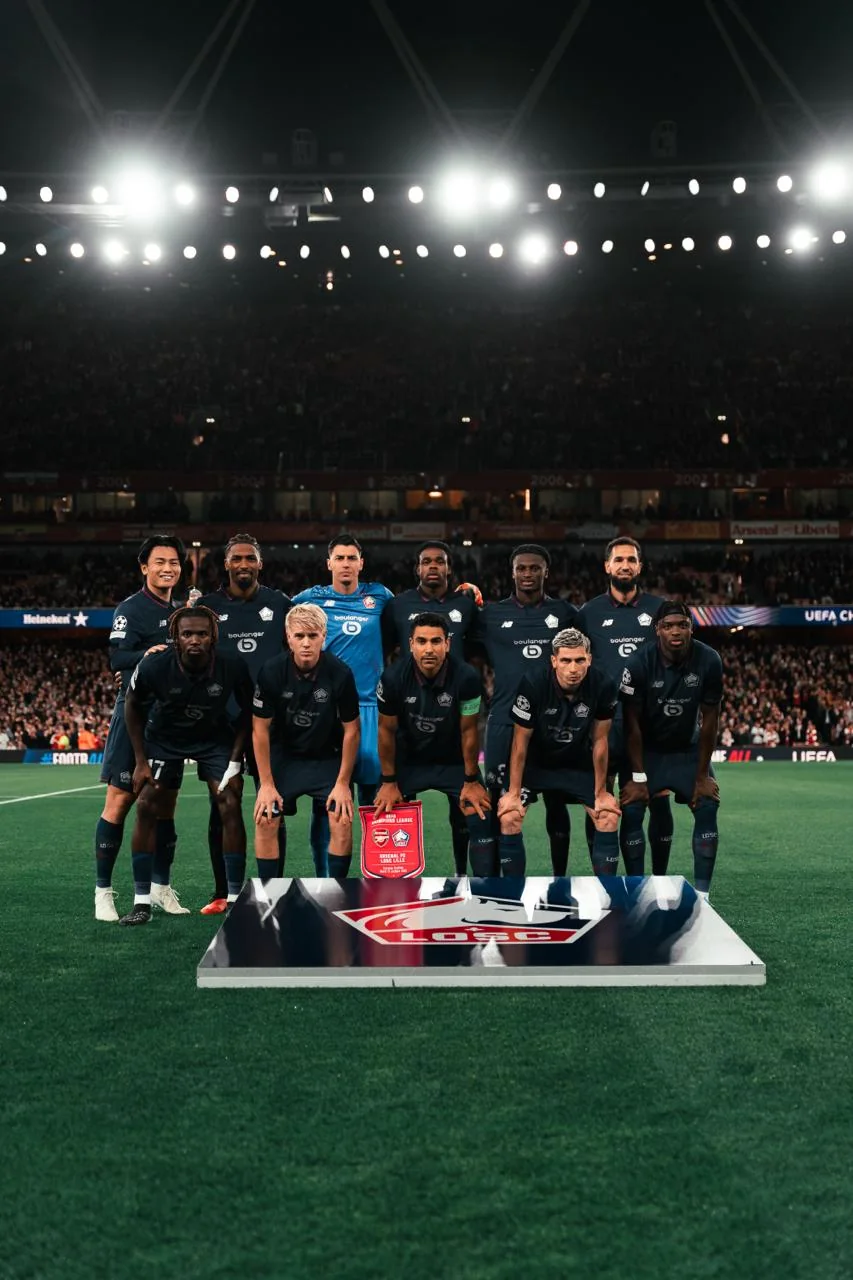
Tanguy Nianzou offers another central option. Lille's July arrival announcement describes a technical defender with aerial qualities and experience at PSG, Bayern and Sevilla, capable of playing in front of the defence as well. That background broadens the options, but it does not make him an automatic starter. The immediate football question is how his qualities fit those of the selected partner and the midfield screen.
If a full-back advances, a centre-back may have to defend the channel behind him. If both central defenders stay narrow, the midfielder on that side needs to delay the opposing wide attack. Those are linked decisions. For Goffi, adapting to senior responsibilities involves the support around him as well as his own defending; for Perraud or Verdonk, the position of the left-sided attacker affects how freely they can move forward. Follow the Lille fixtures and results to put those combinations beside the opponents they actually face.
André, Bentaleb, Mukau and Kjærgaard in the centre
André, number 21, is the central reference in both senses: a midfielder who links the side and the captain around whom younger teammates can orient themselves. His official biography emphasises positioning, activity and experience. Those qualities help explain a role that is not captured by goals and assists. A team needs somebody to recognise where the next contest for possession will happen before the ball reaches it.
That responsibility connects André with the back four. If a full-back is advanced and a centre-back has to move towards the touchline, the central midfielder cannot simply chase the ball in the same direction. He may need to block the next pass into the middle instead. Conversely, when Lille wins possession, staying available for a short return pass can give a teammate the confidence to attempt something more ambitious. The apparent simplicity of the supporting pass can make the more visible attacking action possible.
Bentaleb, number 6, adds a different history to the same area of the field. The Lille-born Algerian international returned to his home city after experience in England and Germany. His role beside André gives Lille another senior receiver in front of the defence. When both midfielders are available at different angles, the centre-backs have a better chance of passing around the first line of pressure rather than being forced straight towards the touchline.
The important word is different. If André and Bentaleb stand on the same horizontal line behind the same opponent, an apparently balanced pair can become easy to screen with one forward. If one moves to support the ball and the other finds space beyond that opponent, the next pass becomes more useful. This is a way to read their relationship during a match, not an invented measurement of their passing performance. The opposition's pressing shape determines which movement is most valuable.
Mukau, number 17, broadens the central options. The club describes him as a versatile box-to-box midfielder with physical potential and substantial activity. At Arsenal, he appeared in the midfield ahead of the André–Bentaleb pairing. That selection is a useful reminder that a player can occupy an advanced starting position without becoming a conventional winger or centre-forward. An additional midfielder can support the press, move towards loose balls and provide a receiver closer to the striker.
Mukau's position therefore affects Haraldsson and the wide players as well as the deeper midfielders. If he moves towards the ball, somebody else needs to occupy the space behind the opposing midfield. If he stays higher, André and Bentaleb need routes to find him. Those movements can make the same nominal formation feel quite different from one phase to the next. The player category is only a starting point for understanding the actual arrangement.
Kjærgaard's September arrival supplies another distinct profile: a tall, left-footed midfielder whose preferred role is central and whose previous experience includes several other positions. Lille highlighted his pressing background and capacity to carry the ball through lines. That gives the coach an option for changing how the midfield advances, rather than merely inserting a fresh player into an identical task.
At Arsenal, Kjærgaard replaced Bentaleb, while Sahraoui replaced Mukau. Those substitutions changed two different parts of the connection between defence and attack. Supporters can apply the same reading to league matches: identify which central job changed, then watch whether the remaining players still supply cover, a passing outlet and a route towards the forwards. André, Bentaleb, Mukau and Kjærgaard provide several ways to share those responsibilities. Their effectiveness depends on how the selected combination fits together, especially when the full-backs and attackers are already moving ahead of the ball.
How Haraldsson and the wide players connect to Lille’s strikers
Haraldsson is number 10, and the most useful description of his job comes from his individual club profile: an attacking midfielder recognised for technique, game intelligence and passing. The broader directory places him with the attackers. Both descriptions make sense when his job is to connect the central midfielders to the players finishing moves. He can be part of the front line without being the player expected to occupy the centre-backs on every attack.
That distinction matters when Lille builds through the middle. A striker remaining high can hold a defender's attention while Haraldsson receives in the space ahead of midfield. If the defender follows him, a runner can attack the gap; if the defender stays, he may have room to turn. The value of the role depends on teammates maintaining those different positions. Putting several technically gifted attackers into the same small area does not automatically create more useful passing options.
Ueda, Giroud and Igamane at centre-forward
Ueda, number 18, arrived from Feyenoord in August and became Lille's first Japanese player. His club biography highlights composure in the penalty area. That makes his position at the end of an attack an important reference for the players supplying him: a winger's delivery and Haraldsson's final pass need a forward who has judged where the space will appear as defenders turn towards their own goal.
A current guide must nevertheless distinguish membership from immediate availability. Lille's 17 October Brest report said Ueda had been injured against Arsenal and was missing that match. Giroud started centrally instead. The statement establishes the selection context for that fixture; it does not establish how long Ueda will be absent. There is no basis here for promising his return in the next team.
Giroud, number 9, brings experience accumulated at Montpellier, Arsenal, Chelsea, Milan and Los Angeles before this Lille chapter. At Brest, his equaliser was a penalty after Ethan Mbappé drew a foul. The practical lesson is that the centre-forward's contribution connects to the work around him. One player carries the ball into danger; another takes responsibility for the finish. The team needs both actions, even when the score sheet records only the second name.
Giroud's presence also gives Lille a clear central reference for deliveries from wide positions. The question for a winger is then whether to cross early, continue towards the byline or return the ball to midfield. A forward occupying the middle can make each choice more credible, because the defence has to respect a target while dealing with the player on the ball. This is a structural benefit of the role, not a claim that every cross is effective.
Igamane, number 29, remains another centre-forward option in the group. The Moroccan international's profile records his Rangers background and injury during the previous season. It describes a player aiming to regain his level, so a squad guide should not turn his name into an unsupported forecast of immediate starts. His presence expands the longer-term attacking picture while current match announcements determine whether that option is available.
Bakwa, Sahraoui and the supporting attackers
Bakwa, number 7, is a left-footed dribbler developed at Bordeaux and established at Strasbourg before experience with Nottingham Forest. That profile offers a specific way to disturb an organised defence: beat the first opponent or draw a second one towards the ball. For Haraldsson, the consequence can be extra space inside. For the full-back, it can be a decision between overlapping outside and staying behind to secure possession.
Sahraoui, number 11, supplies another form of movement around the striker. The club describes a technical, explosive player comfortable centrally or wide. Moving inside can create a combination near Haraldsson, but the side still needs somebody occupying the outside lane. His selection therefore changes the relationships with Perraud or Verdonk as well as the relationship with the centre-forward. Width is a team responsibility, even when a winger is the obvious name on the team sheet.
Mbappé, number 8, provides a concrete example of an additional attacker affecting a match through movement: his run into the area produced the penalty against Brest. Soriba Diaoune, number 35, entered from the bench in that game. Gaëtan Perrin and Başar Önal add further listed attacking choices. These players should be assessed through the jobs they can supply around the main forward, rather than collapsed into a single queue labelled “backup strikers.”
There is one important omission from immediate selection discussions. Félix Correia still appears on the directory, but Lille's 1 September announcement confirms a loan to Sevilla through June 2027. He should not be included as a current Lille bench option. The dated announcement resolves that difference between squad cards and actual playing location.
The resulting attack has several routes towards goal: Haraldsson between lines, Bakwa or Sahraoui disturbing opponents from wider positions, supporting runs from the younger options and a selected striker occupying the centre. Which route matters most depends on the opponent and the available players. Pair the Ligue 1 standings with the actual Lille team announcement to understand the match context, then watch how those roles connect rather than expecting the same eleven to answer every problem.
Loading comments…