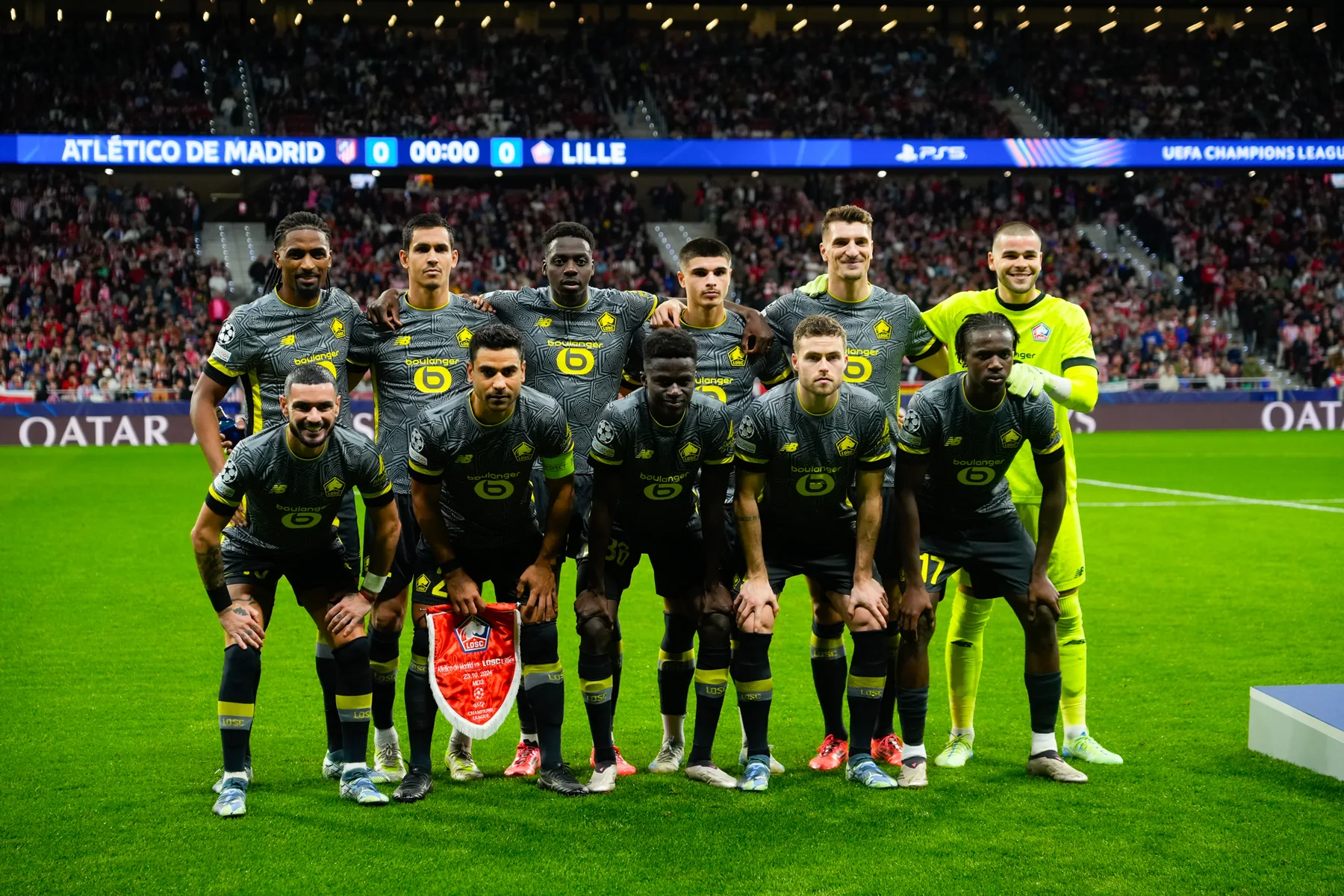
Lille’s best Champions League finish is the round of 16, reached in 2007, 2022 and 2025. Their 2026/27 league-phase return adds a new chapter to a history that includes wins over Milan, Real Madrid and Atlético. Here is how those memorable nights fit into the club’s wider European record. Facts checked on 20 October 2026.
Lille’s 2026/27 Champions League return
Lille are in the 2026/27 Champions League league phase after finishing third in Ligue 1 in 2025/26. Their best completed campaigns in the competition have ended in the round of 16, reached in 2006/07, 2021/22 and 2024/25. That gives a new supporter two useful reference points: LOSC are an experienced participant, but a place in the quarter-finals would represent a new historical high rather than a routine expectation.
The league’s season preview explains how the current opportunity was earned. Lille finished with 61 points, one ahead of Lyon, securing direct Champions League qualification. A 1–0 away win at Monaco on the penultimate weekend proved particularly valuable: even a final-day defeat against Auxerre did not remove them from third. The qualification story was therefore a season-long points contest with a narrow final margin, rather than a reward for one spectacular European result.
There was also a change in the dugout. The club appointed Davide Ancelotti in June 2026, succeeding Bruno Génésio. His experience assisting at major European clubs provides background, while Lille is his own project as head coach. Supporters should judge that project through what LOSC produce against their actual opponents, rather than transferring every achievement associated with the Ancelotti name to this team.
UEFA’s current club guide describes this as Lille’s ninth group-stage or league-phase campaign. It also identifies captain Benjamin André as the club’s leading Champions League appearance holder and an important midfield presence. The return combines that continuity with a new coach; it is not simply a replay of the side that beat the Madrid clubs two years earlier.
As of 20 October 2026, the campaign is still in progress. An eventual finishing round cannot be attached to it yet. The history below provides context for the matches, while the domestic table shows the separate contest to earn another European season. That distinction lets a fan enjoy the occasion without confusing current participation, future qualification and the club’s established historical record.
The earlier runs that established Lille’s European ceiling
Lille’s three round-of-16 appearances were separated by long gaps and achieved in different formats. Before the Madrid double of 2024, two campaigns had already shown that LOSC could turn a difficult group into a place in the knockout rounds. Both also showed that getting through the first phase and winning a two-legged knockout tie are distinct accomplishments.
2006/07: from San Siro to Manchester United
The breakthrough came on 6 December 2006 with a 2–0 win away to Milan. Peter Odemwingie and Kader Keita scored as Lille reached the last 16 for the first time. UEFA’s report from San Siro places the goals within a purposeful away performance: Odemwingie reacted to a parried Mathieu Bodmer shot, while Keita later combined with Bodmer before finishing. The names are worth remembering together. The goalscorers decided the score, but Bodmer’s involvement helped create both openings.
That was a landmark qualification night rather than the start of a march to the final. Manchester United won both last-16 legs 1–0. In the first, played in Lens on 20 February 2007, Ryan Giggs scored from a quickly taken free-kick late in the game. The official first-leg account makes the venue and timing clear. A supporter revisiting the archive should not assume that historical European home venue is the address for a modern LOSC match.
The 2–0 aggregate defeat demonstrated a familiar knockout difficulty: when the first leg gives the opponent an advantage, creating enough chances in the return must be balanced against preventing the tie from moving farther away. Lille had proved they could win at a celebrated stadium, but that result did not remove the need to solve a new opponent over two matches. The first round-of-16 appearance remained a major step even though the next round was beyond them.
2021/22: winning a group before facing Chelsea
The 2021/22 route was built on an impressive change of pace. Lille had only two points after their first three group matches, then won their final three: away to Sevilla, at home to Salzburg and away to Wolfsburg. UEFA’s official results publication records the final total of 11 points and first place in Group G. That recovery matters more than a simple label saying “group winners”: Lille produced their wins when the remaining opportunities were running out.
Chelsea then won 2–0 in London and 2–1 in the return in France, advancing 4–1 overall. Burak Yılmaz’s penalty in the home leg briefly reduced the aggregate deficit, but Christian Pulisic equalised before half-time and César Azpilicueta scored after the break. The return-leg report also records Xeka striking the post. Lille created moments of pressure, while the holders supplied the responses that secured the tie.
Winning a group had given Lille a strong platform, but it had not guaranteed a favourable knockout result. The comparison with 2007 is revealing: different group stories, different opponents and the same eventual finishing round. For LOSC, the quarter-final barrier remained in place, ready to become the next reference point when another strong European campaign arrived.
2024: beating both Madrid clubs in one month
Lille’s October 2024 was memorable because the two Madrid victories asked them to win in different ways. At home to Real, they protected a one-goal lead. Away to Atlético, they recovered from falling behind. The opponents supplied the glamour, but the contrasting match situations explain the football achievement. These were league-phase points won in two separate matches, rather than a knockout tie against the city of Madrid.
A home clean sheet against Real Madrid
Jonathan David’s penalty before half-time settled Lille’s 1–0 win on 2 October. UEFA’s official match record confirms the score and penalty at Stade Pierre Mauroy. A penalty supplied the only goal, but describing the performance only through that moment would remove the work needed to make it decisive. Lille also had to prevent a strong attacking opponent from finding an equaliser.
Real Madrid’s own match report records Lucas Chevalier denying Endrick early, Tiago Santos clearing a late Antonio Rüdiger header from the line, and Chevalier making further saves as Madrid searched for a goal. It also acknowledges Andriy Lunin stopping a David header at the other end. Those details show a competitive match with decisive interventions in both penalty areas, rather than a score produced by a single isolated incident.
For Lille, the goalkeeper and the covering defender were as important to the final result as the penalty taker. A one-goal margin makes every successful defensive action potentially decisive. That is an interpretation of the recorded saves and clearance, not a claim that LOSC never faced danger. The tension was part of the achievement: the clean sheet survived the late pressure and turned David’s finish into three points.
The comeback at Atlético
Three weeks later, Lille won 3–1 at the Metropolitano after Julián Álvarez had put Atlético ahead. The official LOSC report describes a difficult first half and Chevalier interventions that kept the deficit manageable. That foundation mattered: a comeback becomes far less plausible if an opponent converts enough of its early chances to move out of reach.
The attacking replacements then supplied the goals. Edon Zhegrova, introduced early after Rémy Cabella had to leave the match, equalised with a left-footed shot after cutting in from the right. David arrived from the bench later, converted an awarded penalty and added the late third. The match narrative and team sheet place the final goal slightly differently by minute, so its importance is clearer than any need to insist on one timestamp: it secured the result near the end.
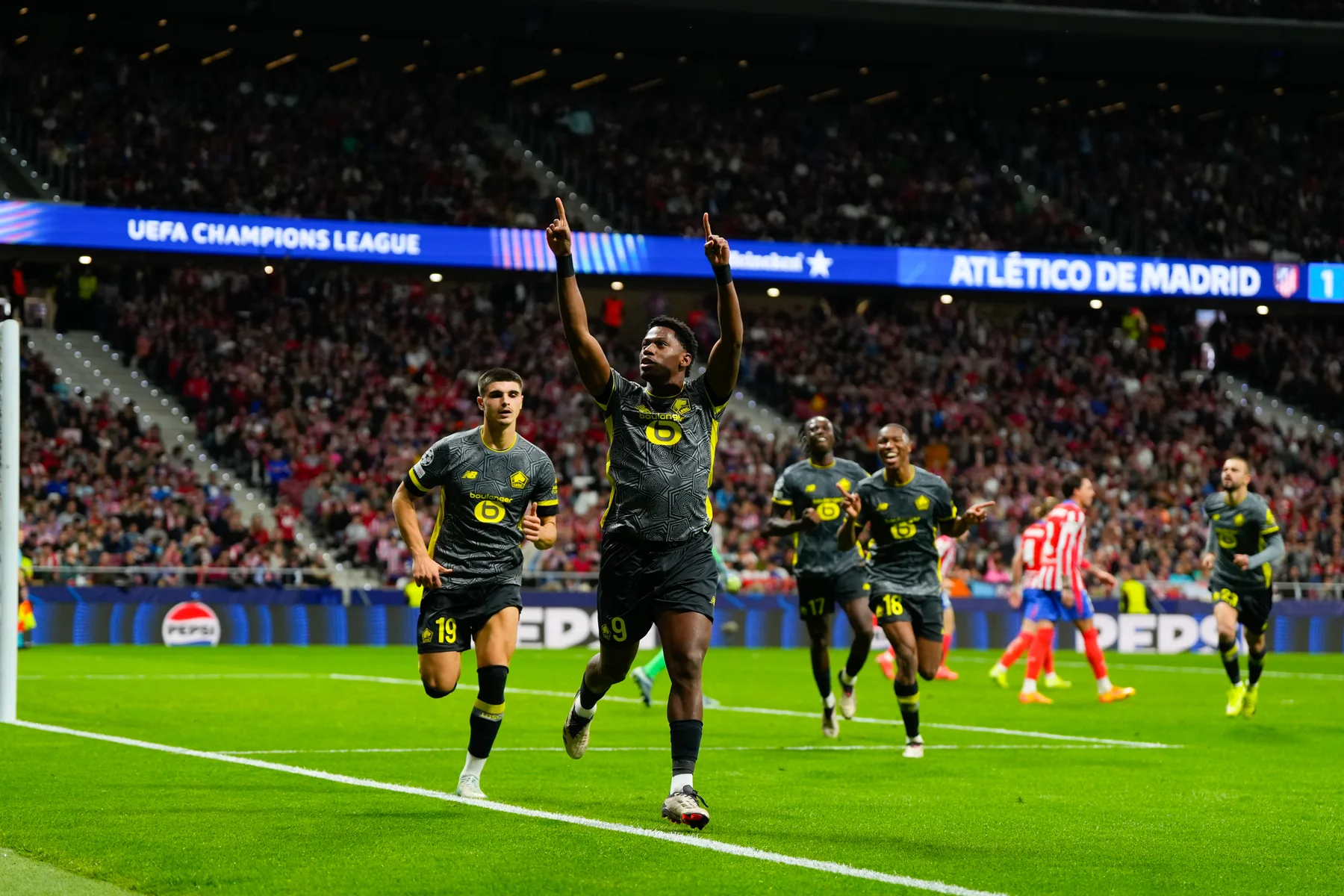
The substitutions give this victory a particular character. LOSC did not need the same starting forward line to deliver every decisive action. Zhegrova changed the attacking threat from the right, and David gave the later chances a finishing target. Meanwhile, defending and goalkeeping were still necessary as Atlético tried to respond. The team needed contributions at both ends to turn a losing position into a clear final margin.
Together, the two wins illustrate why home and away context matters. Against Real, a lead had to survive; against Atlético, a deficit had to be repaired. Lille showed they could handle both tasks within a demanding month. That strengthened their league-phase position and created lasting memories, but the victories did not decide their eventual tournament finish. That question would still depend on what happened against later opponents.
Why the 2024/25 run still ended in the round of 16
Lille completed the 2024/25 league phase in seventh place after a 6–1 home win over Feyenoord. The club’s review of that achievement records both the position and the record margin. Finishing inside the top eight meant direct passage to the round of 16, avoiding the additional knockout play-off tie. It was a substantial reward for the whole eight-opponent phase, rather than a special exemption granted for beating famous clubs.
The Feyenoord match also demonstrated the value of continuing to attack after the immediate result seemed secure. A broad league table makes the final margin part of the ranking picture, and Lille finished the phase with an emphatic performance. The league’s contemporary report confirms the direct qualification and the benefit of avoiding two more games. That calendar advantage created a better platform for March; it did not settle the next opponent.
Borussia Dortmund provided that opponent. The first leg in Germany finished 1–1, with Hákon Haraldsson equalising after Karim Adeyemi had scored. The official Lille account identifies Jonathan David’s contribution in releasing Haraldsson for the goal. Returning home level gave Lille an opportunity to complete a first quarter-final qualification, but both teams still had a full match in which to change the tie.
David then scored after five minutes in the home leg on 12 March. Emre Can’s second-half penalty and Maximilian Beier’s finish reversed the game, however, and Dortmund won 2–1 on the night and 3–2 on aggregate. Lille’s return-leg report also describes later attempts from David and Chuba Akpom being saved. The early advantage had brought the next round closer; it had not made the remaining minutes a formality.
That ending explains the apparent contradiction in describing the campaign as both exceptional and another round-of-16 exit. The Madrid results, seventh-place finish and dramatic individual performances were real achievements. The knockout outcome was also real. Lille had strengthened their European reputation without moving their best finishing round beyond the mark already reached in 2007 and 2022. Appreciating the campaign requires preserving both parts of that account.
What Lille’s Champions League history tells a supporter
Lille’s history rewards two kinds of attention. One is to the match that becomes a memory: winning in Milan, defending a lead against Real Madrid or overturning Atlético away. The other is to the longer campaign that makes such nights possible. A club must earn its place, accumulate points against several opponents and then meet the demands of the next round. A celebrated win can illuminate the quality of a team without describing everything about its season.
The three round-of-16 finishes make that distinction tangible. The 2007 side qualified through a final group match in Italy, the 2022 side accelerated across its final three group games, and the 2025 side finished in the top eight of the new league phase. Each achieved progression, but none won the subsequent knockout tie. That is a more useful historical comparison than ranking the teams by the reputation of their most famous defeated opponent. It identifies both a repeated strength and a frontier still to cross.
The current players also deserve to be understood on their own terms. Ayase Ueda arrived from Feyenoord in August 2026 after scoring 25 goals in 31 Eredivisie appearances, according to his official signing announcement. His European experience came with a different club before he joined Lille. He should not be inserted into the LOSC team that beat the Madrid sides in 2024 simply because a present-day squad page lists him as a Lille forward.
Nathan Ngoy offers another example of why a club’s European story extends beyond its best-known strikers. In February 2026, he scored the extra-time winner in Lille’s 2–0 away victory at Crvena Zvezda, helping overturn a first-leg deficit and reach the Europa League last 16. The club’s match report from Belgrade identifies his late arrival from the bench and decisive contribution. That match belongs to the Europa League, but it helps explain the experience a younger defender brings into the current Champions League setting.
André’s continuity, Ueda’s arrival and Ngoy’s development therefore provide different reference points for watching the 2026/27 team. The captain connects seasons, the new forward changes the attacking options, and a defender has already experienced a decisive European moment. None of that guarantees a particular starting eleven or final finishing round. It does give a supporter more to watch than a famous badge on the opposite side of the fixture.
For the next domestic match, use the Ligue 1 results and the season calendar to place the European nights inside the wider schedule. Lille’s past shows how much can change between an early setback, a decisive final group game and a knockout return. The most rewarding way to follow the present side is to give each stage its proper weight while keeping the quarter-final ambition in view.
Loading comments…