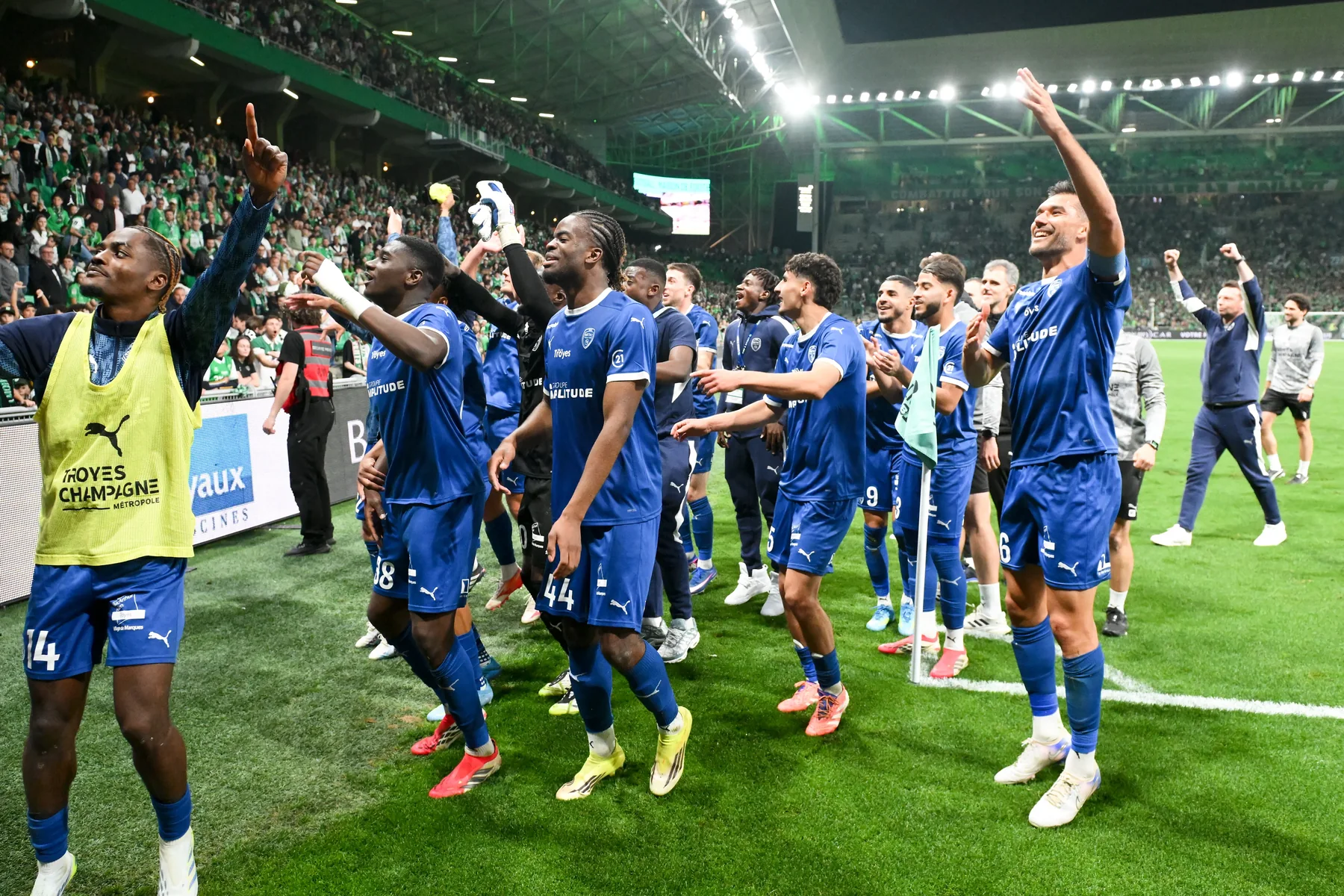
For the 2025/26 season, Ligue 2's first two clubs earned automatic promotion to Ligue 1. Third, fourth and fifth entered a two-round Ligue 2 play-off, and its winner met the 16th-placed Ligue 1 side over two legs for one possible extra place. Troyes and Le Mans went up directly in 2026; Nice beat Saint-?tienne in the final tie, so there was no third promoted club.
The direct route from Ligue 2 to Ligue 1
In the 2025/26 French professional league system, the simplest promotion route was to finish in the top two of Ligue 2. Those places brought automatic entry to Ligue 1 for 2026/27. The clubs did not need to win an end-of-season play-off after securing those ranks. ESTAC Troyes and Le Mans FC took the two direct places. A third Ligue 2 club could still go up, but only by winning the play-offs and then defeating a Ligue 1 opponent in a separate two-legged tie.
The phrase automatic promotion is worth taking literally. It means the final regular-season position, not a subjective judgment about which side plays the most attractive football, decides entry. The league's late-April 2026 report said Troyes had already secured a return to the top flight while the second automatic place was still contested. Troyes could begin to plan for the higher division before the last Ligue 2 matches were complete. The chasing clubs still had points to earn and, for some, the fallback of a play-off position.
Le Mans eventually finished second with 62 points in 34 Ligue 2 matches, according to the league's 2026/27 club preview. The same account says the club had lost only four league matches. Those numbers help explain how a newly promoted second-tier side could climb again immediately: sustained consistency over the whole schedule mattered more than one isolated cup-style result. Le Mans was returning to Ligue 1 after a 16-year absence, making promotion both a sporting outcome and a significant change in the club's immediate audience and travel map.
Direct promotion creates a different kind of final-week pressure from a knockout. A side defending second place might need a draw or win in the league, depending on rivals' results. It cannot simply save its best performance for a single play-off final. Every dropped point in winter and spring has the same arithmetic value as a dropped point in the last round, even though the final round feels more dramatic. That is why judging a promotion race requires a table with matches played and remaining fixtures, not only a highlight from the last weekend.
The top-two threshold also explains why the difference between second and third can be far larger than one place on a table suggests. Second gains a confirmed Ligue 1 berth. Third enters a sequence of elimination matches and may still have to face a top-flight side fighting for survival. The third-placed club can be an excellent side across 34 games and yet stay down if it loses one of those later contests. Conversely, a fifth-place side can make the most of a late run and win promotion even though it was behind third across the regular season. The system rewards both season-long performance and a separate opportunity for the next group.
For clubs, certainty affects preparation. Once a direct place is secured, the football staff can plan around a known division: the level of opponent, the length and dates of the season, and the likely demands on the squad. Supporters can begin to identify away trips and rival fixtures, though exact match dates still require the official schedule. Play-off contenders must plan under two scenarios until their last tie ends. That uncertainty is real even if promotion probability seems high. A ticket campaign or a rumored transfer cannot by itself confirm which league a club will play in.
There is also a naming point. The second division is branded Ligue 2 BKT and the top division Ligue 1 McDonald's in this period. Those commercial names identify two steps in the same professional ladder. A club promoted from Ligue 2 has not joined a sponsor's private league; it has moved into France's highest men's professional division. The official play-off explainer describes third, fourth and fifth as the group still pursuing the possible third route after the regular season. That is the starting point for the next stage.
This guide uses the 2025/26 pathway and confirmed 2026/27 entrants as its concrete example, checked on 18 September 2026. Competition formats can be amended in future seasons, so a supporter asking about a later year should confirm that year's LFP regulations. The underlying reading habit remains useful: separate the two automatic places from the conditional play-off route, then check the final outcome of the top-flight tie before counting the number of promoted teams.
The Ligue 2 play-offs and the Ligue 1 survival tie
Finishing third, fourth or fifth in Ligue 2 kept a 2025/26 club's promotion hopes alive, but none of those places awarded Ligue 1 entry by itself. The route had two stages. First, the three Ligue 2 clubs played a short knockout ladder. Its winner then met the 16th-placed Ligue 1 club over two legs. The official competition explainer separates the stages because they use different match formats and different procedures if scores are level.
The third-to-fifth-place knockouts
In Play-off 1, the fifth-placed Ligue 2 side travels to the fourth-placed side. The winner travels to the third-placed side in Play-off 2. Both are single matches, not home-and-away ties. If a match is level after 90 minutes, the teams go directly to a penalty shootout; there is no extra time in these two Ligue 2 rounds. Third place thus carries a practical advantage beyond a higher line in the standings: it skips the first contest and hosts the second. Fifth place means winning two away knockouts just to earn a meeting with the Ligue 1 club.
The 2026 example makes the ladder tangible. Red Star finished fourth and hosted fifth-place Rodez. Rodez won 3–2 at Stade Bauer, according to the league's match report, and went on to face third-place Saint-Étienne. This was not a two-leg comeback by Rodez; it was one away match. The result removed Red Star from the promotion race despite Red Star finishing above Rodez over the regular season. That is the risk a knockout adds to a league-based reward.
Saint-Étienne then hosted Rodez and the teams were goalless after 90 minutes. The official report records a 7–6 penalty shootout win for Saint-Étienne. The scoreline illustrates the rule precisely: a drawn match did not continue for another half hour. Penalties chose the winner immediately, and Saint-Étienne advanced to face Nice. A supporter who only sees “0–0” in a results list could wrongly assume neither team advanced; the shootout outcome is essential context.
Why give third place a shorter route? The standings are intended to reward the better 34-match campaign. The third-place side has already finished above fourth and fifth; making the lower finishers play one extra away match preserves some value in that advantage. It is not a guarantee. A side can win consistently all season and still lose a single tight match on penalties. For a club's fans, that is the emotional difference between the play-off ladder and direct promotion: a season's work earns a better position in the bracket, while the decisive moments still happen on the day.
The two-legged promotion/relegation play-off
The Ligue 2 ladder's winner then faces the team placed 16th in Ligue 1. Under the official 2026 format, the first leg is at the Ligue 2 club's ground and the return is at the Ligue 1 club's ground. The scores from both legs are combined. If the aggregate is level after the second 90 minutes, extra time can be played, and penalties follow if the teams remain level. That is a different decision procedure from the two one-off Ligue 2 play-off rounds, which go straight to penalties after regulation time.
The 2026 pairing was Saint-Étienne against Nice. The first leg ended 0–0 at Stade Geoffroy-Guichard. That did not award anyone promotion or survival: there was still a return match. Nice then won 4–1 at home, and the league confirmed Nice's top-flight status for 2026/27. Saint-Étienne remained in Ligue 2. The sequence shows why a 16th-place Ligue 1 finish is not the same as relegation: the top-flight club has a final opportunity to defend its place.

Home order matters without determining the result. The Ligue 2 representative gets the first chance to build a lead in front of its own supporters. The Ligue 1 representative then knows exactly what aggregate score it needs in its home return. A goalless first leg leaves every major outcome open; a narrow first-leg advantage can change the second leg's tactical choices. A team protecting a lead may value compact defending and time management, while the trailing side must take more attacking risk. Those are general game-state incentives, not claims that either 2026 coach used a particular system.
There is one calendar trap in the 2026 example. An early official schedule preview listed provisional May dates, but the actual match reports place the Saint-Étienne–Nice legs on 26 and 29 May. Use completed match reports when reconstructing what happened; use the latest official schedule when arranging attendance for a future play-off. The format is the central rule, while dates can change around domestic cup commitments and other scheduling decisions.
The final tie can create a third promoted club, but it does not always do so. Nice's 2026 victory meant the two automatic Ligue 2 clubs, Troyes and Le Mans, were the only clubs that moved up for 2026/27. The play-off winner from Ligue 2 had reached the last door and could not pass through it. This is the simplest way to read the system: two guaranteed promotion places from the final Ligue 2 table, plus one contingent place decided against the 16th-placed Ligue 1 club.
What promotion changes for clubs and supporters
Promotion changes the entire opponent list. Troyes and Le Mans moved from Ligue 2 to Ligue 1 for 2026/27, while Nantes and Metz moved down and Nice stayed up after its play-off. The immediate supporter consequence is practical: a fixture list that once included second-tier rivals now includes PSG, Lens, Lille and the rest of the top flight. A club's home matches are different occasions, and away supporters face a different map of grounds. That does not predict results, but it does explain why securing promotion is a major sporting and planning milestone.
Troyes and Le Mans reached that milestone by different routes within the same automatic-promotion system. Troyes won Ligue 2, finishing five points clear, according to the league's Troyes preview. Le Mans took second place, the league's Le Mans preview recording 62 points and only four losses. The title and runner-up positions carry different pride and history, but both delivered the same direct place in Ligue 1. A fan considering the transition should therefore separate the race for the Ligue 2 trophy from the question of whether a club reached an automatic promotion slot.
The promotion moment can also transform expectations. In Ligue 2, Troyes finished ahead of every opponent; in Ligue 1, the club starts a new table against stronger established sides. Its previous first-place ranking is evidence of a successful second-tier campaign, not a transferable lead in the top division. Le Mans's low loss count in Ligue 2 shows consistency there, but it cannot guarantee the same defensive record against top-flight attacks. This is why a promoted team's first months are best judged by actual points, performances and opponent quality rather than by last season's place alone.
Confirmed status helps supporters plan. A direct promotion can be known before every play-off match is settled, so season-ticket decisions, travel ideas and expectations can be framed around the top division earlier. A play-off contender has to wait. In 2026, Saint-Étienne reached the final tie, but Nice's 4–1 return-leg win meant Saint-Étienne supporters still needed a Ligue 2 schedule for the new season. Celebrating a play-off semi-final victory as if it already secured promotion would have led to the wrong fixture expectations. The second leg against the Ligue 1 club is the final answer.
For promoted clubs, the calendar is not merely a list of dates. Home and away order can affect travel, recovery and the atmosphere around an early run. A promoted side might open with an incumbent club at home or face a difficult away trip; the first result should be interpreted with that context rather than taken as a verdict on the whole season. The official 2026/27 calendar announcement includes Le Mans and Troyes and sets a 34-matchday season. Use the season calendar for the match sequence and the current table for what those matches have produced.
Promotion also explains why relegation worries persist at the other end. Ligue 1 has 18 places in this format. The arrival of two confirmed promoted clubs means at least two places must be vacated. In 2025/26, Nantes and Metz did so through direct relegation. The possible third exchange depended on whether Saint-Étienne could defeat Nice; because Nice won, there was no third change. This makes the play-off more than a bonus fixture. It determines whether the next season contains one more new club and one fewer returning top-flight side.
Look one season ahead and the same distinction will return. The LFP's 2026/27 dates announcement sets the final league round for May 2027 and lists a subsequent two-leg promotion tie in June. That schedule can help a supporter understand when a 16th-place club's fate will finally be settled. Individual match times and dates still deserve a fresh check closer to play, especially because schedules can be revised. The general promotion mechanism is understandable now; future participants and results are not.
When someone says “three teams go up from Ligue 2,” ask whether they mean a possible maximum under the play-off format or a confirmed count for a particular season. In 2026, the confirmed count was two: Troyes and Le Mans. In another season, the play-off winner might defeat the Ligue 1 side and make it three. That one-sentence clarification prevents an otherwise common error in club lists and historical tables. It also directs fans to the right final source: the result of the second leg, after the Ligue 2 knockouts and the regular-season tables are already complete.
The key is to separate guaranteed league-table places from the contingent play-off place. A third-place finish gives a favorable knockout route, yet promotion is only confirmed after the final Ligue 1/Ligue 2 tie. Check that season's official rules and match reports whenever you move beyond the 2026 example.
Loading comments…