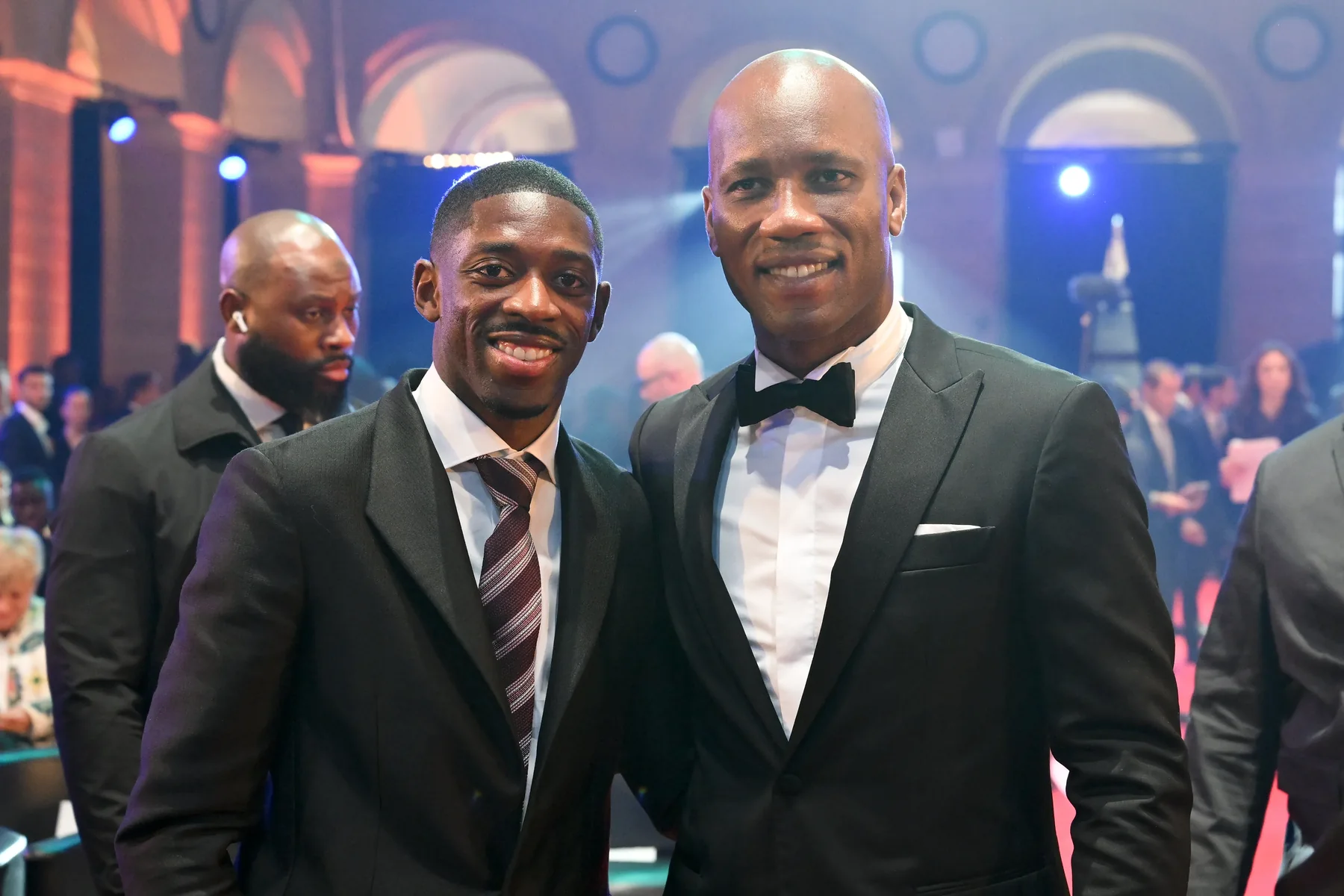
The best Ligue 1 players in 2026 cannot be chosen by one goal chart. Ousmane Demb?l? was the official 2025/26 Player of the Year, while the new 2026/27 season is still young as of 18 September 2026. This guide separates the completed-season evidence from early new-season form, examines forwards and less celebrated roles, and explains how to compare modern standouts with the competition's historical greats. Any current ranking should be dated because every new match can change it.
Start with the 2025/26 awards, then look at 2026/27 form
If “best Ligue 1 player in 2026” means the best performer in the last completed French league season, Ousmane Dembélé has the clearest official answer. He won the 2025/26 UNFP Ligue 1 Player of the Year award, his second in a row, according to the league's award report. If the question means the player who will be best over the developing 2026/27 season, no final answer exists yet. The two questions require different evidence and different dates.
What the official awards recognize
The 2026 UNFP ceremony gave a credible snapshot of peer and professional recognition at the end of 2025/26. Dembélé received the senior player prize; PSG teammate Désiré Doué received Young Player of the Year; Robin Risser of Lens received the goalkeeper prize. The club's own report confirms Dembélé's award. Those trophies name winners in defined categories, not a timeless list of every player who has ever appeared in France. A forward's individual prize, a young player's prize and a goalkeeper's prize reward different contributions and should not be flattened into one unqualified “top three.”
The nominees also matter. Before the winner was known, the league listed Vitinha and Nuno Mendes of PSG alongside Lens's Florian Thauvin and Marseille's Mason Greenwood in the senior-player field. The mix of a creative midfielder, a full-back and productive attackers shows why one number cannot decide every case. A goal total may support an argument for a forward, yet it will miss what a defender does to preserve a lead or what a midfielder does to move play through pressure. The ballot provides a serious starting shortlist, while the football question still requires role-sensitive judgment.
The official Team of the Season widens the frame further. Its XI included players from PSG, Lens, Lyon and Marseille, with Robin Risser in goal and Thauvin, Dembélé and Greenwood across the forward line. Team selection is useful because a league needs more than a scorer to win: ball progression, recovery, positioning and chance prevention all influence results. Yet an XI has formation constraints and only one spot at some positions. A player omitted from it can still have had an excellent season, especially if two outstanding candidates competed for the same role.
Why September form is an incomplete verdict
The 2026/27 season started in late August, as the official calendar confirms. By 18 September 2026, the league had completed only an early fraction of its 34-match schedule. A player can score twice in an opening match and lead a live chart without sustaining that pace through winter and spring. Minutes also distort quick comparisons: a substitute's output per 90 minutes may look spectacular on a tiny sample, while a starter has already faced a wider range of game states and opponents.
The right approach is to label the evidence. “Dembélé was the 2025/26 award winner” is a settled historical claim. “Player X is leading the 2026/27 race” is a dated observation that should be checked against current matches and revised as the season develops. A strong performance against a title rival away from home may tell more about a player's influence than a similar stat line in an easier home fixture, but neither one match should determine an annual honor. Use the schedule and standings to understand opponent strength and stakes before forming a present-tense verdict.
The forwards who shape a match
Attackers are often the first names in a best-player debate because goals are visible, countable and decisive. The 2025/26 Ligue 1 season offers several different kinds of forward case. Dembélé won the main UNFP award with an excellent goal-involvement rate; Lens's Florian Thauvin combined scoring with creation for the runner-up; Monaco's Folarin Balogun put together a long scoring streak; and Marseille's Mason Greenwood was capable of a four-goal match. The correct question is what each contribution says about a player's season, not which isolated headline is largest.
Production needs more context than goals
The league's season statistics give Dembélé 10 goals and seven assists in 1,062 league minutes, a direct goal contribution about every 63 minutes among players with at least 400 minutes. That rate is a strong argument for his impact when available. It is not the same claim as saying he played every round or led every total-volume chart. Minutes are part of the assessment. A forward with a brilliant rate over fewer appearances and a forward who sustains a slightly lower rate over almost the whole campaign offer different forms of value to a team.
Balogun's run is another way to look at production. The same official statistics say he scored in eight consecutive league matches between late February and mid-April 2026. A scoring streak suggests repeatability across several matchdays, which is more informative than a single extraordinary afternoon. It still needs context: whom did Monaco face, were the matches home or away, and did those goals turn draws into wins or add to already comfortable leads? A streak is evidence of consistency in one period, not a complete one-number season grade. It should sit beside total minutes, chances created for others and the club's results.
Greenwood's four-goal game against Le Havre, also noted in the league review, shows the opposite extreme: maximum impact in a particular match. Four goals can decide a fixture emphatically and deserves recognition. But a single-match high should not substitute for the entire season. To judge whether a forward belongs on a best-player list, ask whether that level of threat repeated against a range of opponents and whether the player's team could rely on it in tighter games. The award shortlist gives an additional check: Greenwood was among the official senior nominees, so his candidacy rests on more than that one outburst.
Creation, movement and opposition quality
Thauvin illustrates why a forward can matter beyond the final touch. The 2026 UNFP shortlist included him alongside players from PSG and Marseille. A league editorial review credited him with 11 goals and six assists across the completed campaign and described his role in creating attacks for Lens. That total is useful, but the assist statistic still misses a pass that opens space two actions before a goal, a run that draws a defender away, or a recovery that starts an attack. Those actions need match evidence, not invented numerical credit.
The opening 2026/27 Lens match offers a caution about reading the live scoring chart. Thauvin scored twice as Lens beat Auxerre 5–2, but the official report specifies that both goals were penalties. Converting penalties has real value and pressure, especially in a close game. It is nevertheless a different route to a two-goal tally from repeatedly creating open-play chances. A careful best-player comparison records how a player got the goals and what else he contributed, rather than treating every two-goal line as identical.
Opponent quality and score state finish the picture. A pass that breaks a compact title rival's defense away from home may be harder to produce than a similar assist when a match is already open. Conversely, a forward on a lower-ranked team may receive fewer high-quality chances and still carry a greater share of that team's attack. The results page lets you pair a player's recent output with the actual fixture and result. That is a sounder path to a 2026/27 judgment than sorting a goals list in September and declaring the season decided.
Midfielders, defenders and goalkeepers deserve their own lens
A list drawn only from goals and assists would be a list of attackers, not the league's best players. The 2025/26 award selections point toward a fuller answer. The UNFP Team of the Season named Robin Risser in goal; Hakimi, Malang Sarr, Willian Pacho and Nuno Mendes in defense; and Mamadou Sangaré, Vitinha and Corentin Tolisso in midfield. These names give concrete candidates, but they do not remove the need to ask what each role contributes to a match.
Midfield control and chance creation
Vitinha, Sangaré and Tolisso illustrate three ways a midfielder can enter the conversation. PSG's title campaign depended on moving the ball cleanly through midfield as well as finishing chances. Lens, the runner-up, needed recoveries and forward connections to maintain pressure across 34 matches. Lyon's fourth-place finish required players who could link phases and make the team more than a collection of isolated attacks. The official XI put those three midfielders together, but that does not imply they performed identical jobs or should be compared by one shared number.
A separate league data-led XI included Sangaré and Vitinha but selected Paris FC's Maxime Lopez as its third midfielder. That difference is healthy evidence that a “best XI” depends on method. One selection may emphasize a season's overall performance profile; another reflects the award electorate's view of influence. Neither automatically makes the other wrong. A fan can ask whether the ranking rewards carrying possession, creating the final pass, winning the ball back or being decisive in high-pressure fixtures.
Sangaré has another concrete honor: the 2026 Prix Marc-Vivien Foé, awarded to the best African player in Ligue 1. That prize has its own eligibility and voting context. It supports his standout season, while it should not be misrepresented as the same prize as UNFP Player of the Year. This distinction is useful whenever a midfielder appears on one honors list and not at the top of another. Awards answer their defined questions; football analysis joins them to the actual role.
Defending beyond clean sheets
A clean sheet is a team event. It may reflect excellent center-backs, an alert goalkeeper, effective pressure from forwards, a cautious opponent or some combination of all four. When judging Pacho or Sarr, ask whether they prevented danger before a shot existed, covered space behind a teammate and handled direct balls. When judging Hakimi or Mendes, include both defensive recovery and the way a full-back changes the attacking width. Goals conceded by the team are important context, but they cannot allocate credit among those tasks by themselves.
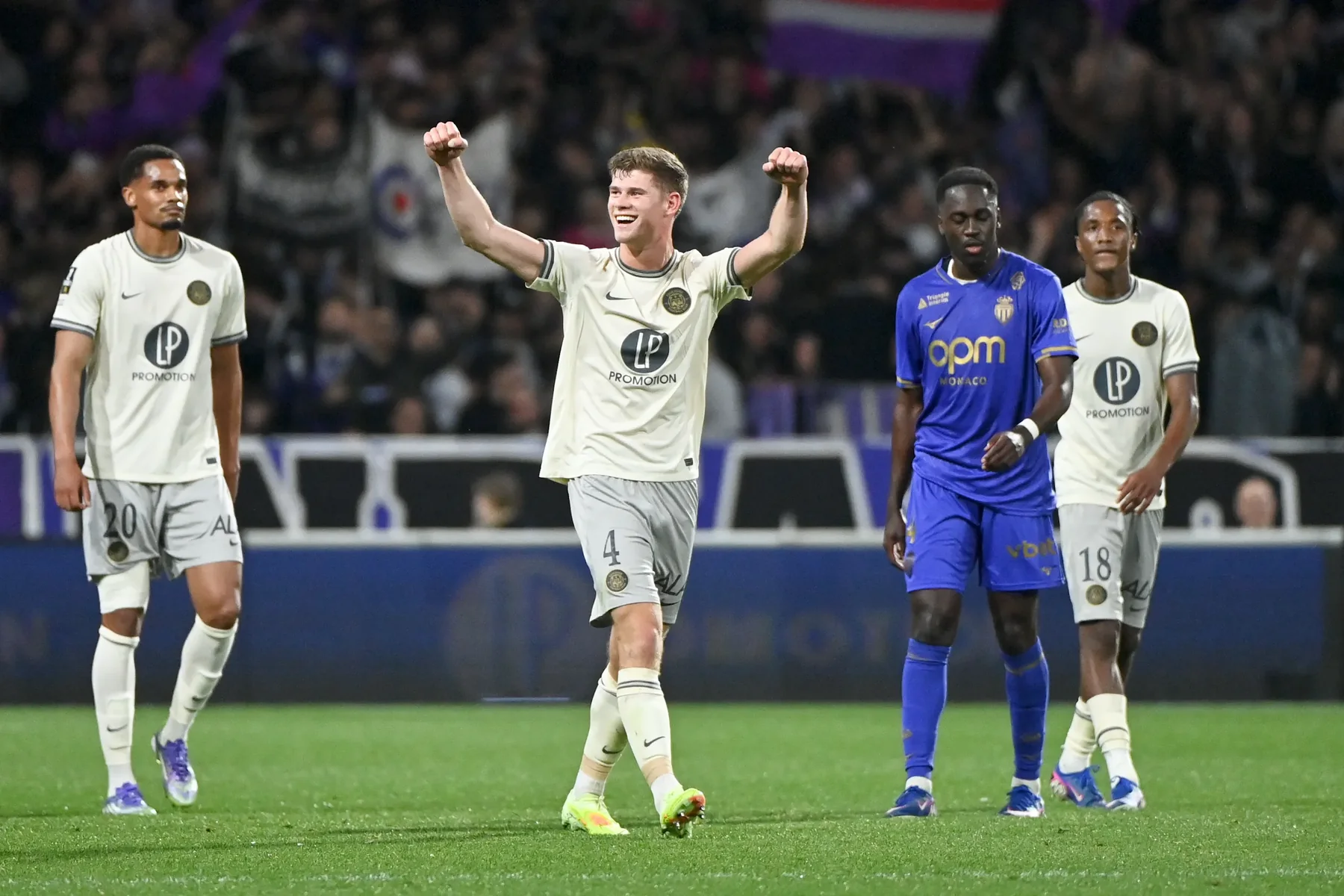
The league's post-season defender debate considered Mendes and Pacho, among others. It is explicitly an editorial opinion, valuable for understanding what observers valued rather than an official statistical verdict. A fair comparison should also note the situations each defender faced. A dominant team may give its back line fewer long spells of pressure, while a mid-table defender has more chances to record clearances. High clearance volume can signal good defending or simply a great deal of defending to do.
Goalkeeping and the limits of save totals
Risser won the 2026 UNFP Goalkeeper of the Year award for Lens. Angers goalkeeper Hervé Koffi presents a strong alternative statistical case: the league's season review credits him with 123 saves and about 13 goals prevented in Opta's expected-goals-on-target model. The model compares shot quality faced with goals conceded, excluding own goals in the cited calculation. That is more informative than a bare saves total, because a routine catch and an exceptional stop do not impose the same difficulty. It still depends on the model's definitions and the shots that actually reached the goalkeeper.
Risser's prize and Koffi's model-leading figure can coexist. The award evaluates a season through the voters' criteria; the shot-stopping measure evaluates a defined subset of goalkeeping. A keeper also claims crosses, positions behind defenders, distributes under pressure and communicates when the team is defending a narrow lead. Those actions may determine whether a shot occurs at all. If you make your own 2026 list, give goalkeepers a separate comparison before deciding whether one belongs in a mixed-role top ten. That is fairer than rewarding the keeper whose defense allowed the most attempts simply because his saves total is largest.
The all-time conversation: icons and different eras
Calling someone the greatest Ligue 1 player of all time sounds like a single question, but it contains several. Does “greatest” mean the most decisive peak, the most seasons of elite work, the largest share of team trophies, or the strongest individual scoring record? A player can dominate one of those measures without leading the others. There is also a boundary worth keeping: a footballer's later fame with a national team or another league may enrich his career story, but it cannot be counted as something he did in the French championship. The most useful all-time list therefore declares its criteria before arranging the names.
Dominance in France versus international fame
The official UNFP award archive offers one way to see who repeatedly stood above contemporary rivals. Kylian Mbappé won the Ligue 1 player award five times, in 2019 and in each season from 2021 through 2024. Zlatan Ibrahimović won it three times, in 2013, 2014 and 2016. Eden Hazard won successive awards in 2011 and 2012. These are substantial achievements because each season involved comparison with players facing broadly similar opponents and conditions. Awards are judgments, though, rather than a complete ledger of every contribution. Voting preferences, available positions and the strength of a season's field can affect the outcome.
The historical scoring table answers a different question. In the league's official all-time list, Delio Onnis leads with 299 goals, ahead of Bernard Lacombe on 255 and Hervé Revelli on 216. That is an extraordinary longevity and finishing benchmark. Yet raw totals alone cannot tell you how a winger, midfielder, defender or goalkeeper changed a game, and they do not adjust for differences in the number of league matches across careers and eras. Mbappé's repeated awards and Onnis's record are both legitimate all-time evidence; they measure different kinds of excellence. You can reasonably place either higher once you explain the weight you give sustained scoring against season-by-season dominance.
Names such as Zinedine Zidane and Didier Drogba need the same discipline. The award archive records Zidane as the 1996 winner and Drogba as the 2004 winner. Their later international reputations can make their Ligue 1 spells seem bigger in memory than the league evidence alone warrants. That observation does not diminish their French years. It simply asks the reader to evaluate those years on their own: the performances, honours and impact they actually delivered within this competition.
Longevity, peak and club impact
Juninho's Lyon years make the case for sustained influence clearer than a goal chart could. The league recounts Lyon's seven consecutive top-flight titles from 2002 through 2008, and its Juninho retrospective places him across that entire run. The midfielder's value was not limited to his famous free kicks. He helped give a dominant team a repeatable way to control matches, create pressure and decide tight contests season after season. Club success is never one person's property, but being a central figure through a seven-title streak is powerful evidence of durability and influence.
Drogba offers a useful counterpoint: his 2004 player award captures a remarkable Marseille peak, even though his Ligue 1 career was much shorter than that of the longest-serving French league greats. A ranking that prizes the best individual season may give his peak considerable weight. A ranking built around years of top-level league production will favor the longer record of someone like Juninho or Onnis. Both are coherent answers if the rule is stated. What makes an all-time debate weak is quietly shifting criteria from one player to another—counting a later career elsewhere for one star, domestic trophies for another, and goals alone for a third.
Era comparisons require modesty as well. Roles have changed, the schedule has changed, and the quality and availability of statistics differ greatly between Onnis's years and the modern data era. Use contemporary awards and official records as anchors, then describe what those anchors cannot measure. That produces a more interesting discussion than a definitive numerical order pretending every decade offered the same test.
A fair way to build your own best-player list
Begin by choosing the question your list will answer. “Best players of 2025/26” is a completed-season retrospective; “best players in 2026” might combine that season with the opening weeks of 2026/27; “best of all time” requires a historical standard. Mixing those time frames without saying so allows one candidate's full season to be compared with another's three recent matches. Write the cutoff date beside your list and be prepared to change it as new matches are played.
Next, build a shortlist by role before making a single combined ranking. Compare forwards on scoring, chance creation, movement and the quality of chances they receive. Compare midfielders on progressing play, creating opportunities, ball recovery and the balance they provide. Compare defenders on positioning and the chances they prevent as well as the actions that appear in a box score. Compare goalkeepers on shot stopping, command of the area and distribution. Only then decide whether a player has been so influential within his job that he deserves a place above a strong player in another role. This order stops a goals table from silently becoming the entire award.
Use both totals and rates, and record minutes. A player with ten goals in limited minutes poses a different case from one with ten goals across nearly every match. The league's 2025/26 statistics review makes that distinction visible for attackers and goalkeepers alike. Rates can flatter a brief hot spell, while totals can reward availability more than per-match quality. Neither should stand alone. Ask how the player performed against strong opponents, away from home and when the team needed a different type of contribution. If those details are not supported by reliable match evidence, mark them as an impression rather than a measured fact.
Finally, disclose which evidence drives your choice. The UNFP selections recognize outstanding seasons, while the league's separate data-led XI applies a different lens. Their differences are a reminder to explain your method, not a reason to dismiss either. For the new season, follow the 2026/27 calendar, review completed results, and check the table before updating your list. A good ranking is a dated, reasoned judgment that a reader can challenge with the same evidence, rather than an unexplained claim of certainty.
The strongest answer depends on the period and the role: Demb?l?'s award is a clear 2025/26 reference point, but league history also belongs to prolific scorers, serial winners and players who transformed how their teams played. Keep those different kinds of excellence visible, and keep watching the evidence as the 2026/27 season unfolds.
Loading comments…