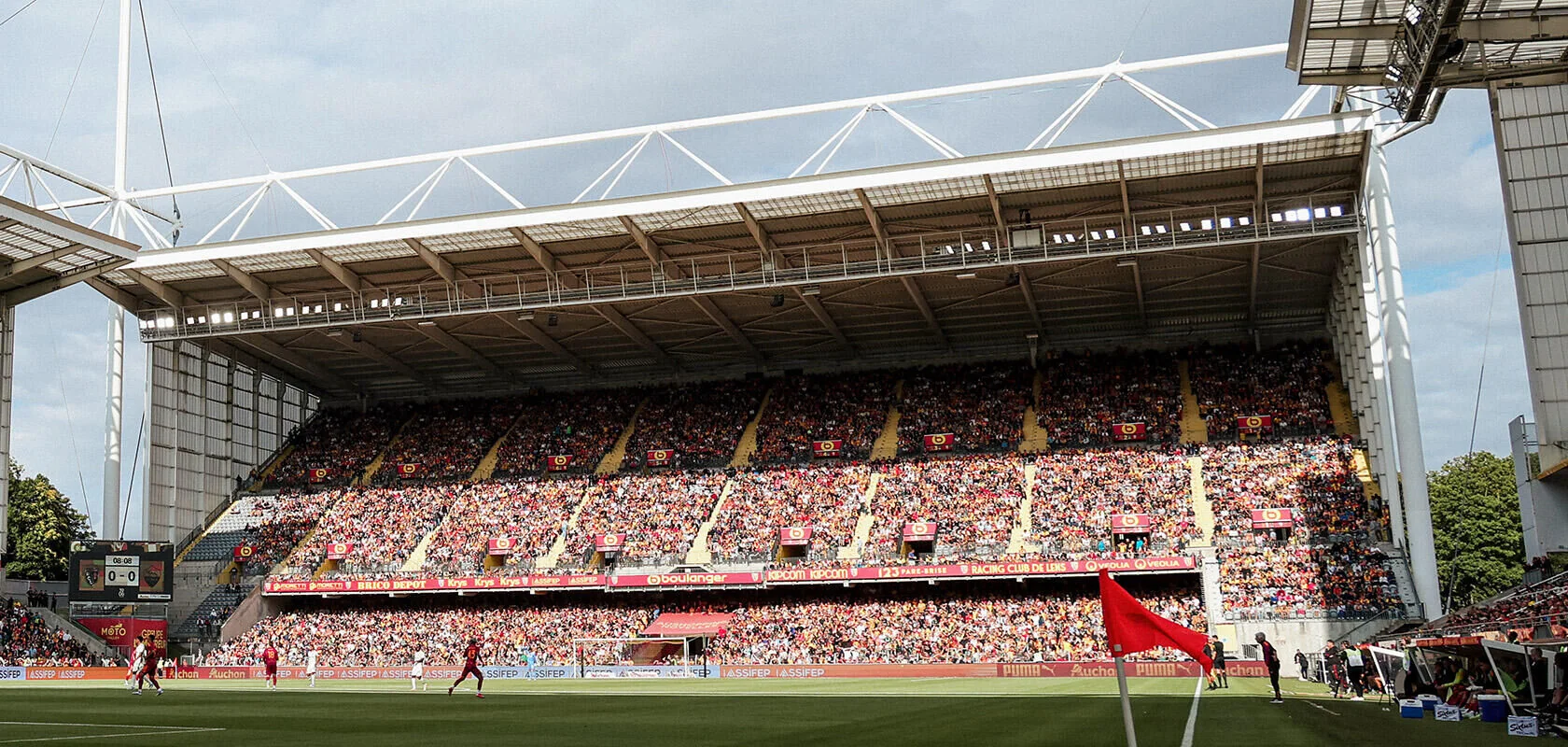
Paris Saint-Germain are the strongest 2026/27 Ligue 1 title pick as of 18 September 2026, while Lens have the clearest recent evidence of a challenge. The European places and relegation fight are more open. These are editorial judgments based on completed 2025/26 results and the opening weeks of this season, with the questions that could change each view made explicit below.
What a useful Ligue 1 prediction should measure
A prediction about Ligue 1 in September 2026 is a reasoned view of the remaining season, not a declaration of its final order. The 2026/27 campaign has 18 clubs and 34 matchdays, and most of those games still lie ahead. A credible forecast should start with what clubs demonstrated over the completed 2025/26 season, add the new season’s evidence, and then explain what could change the call. That approach is more useful to a fan than a list of 18 positions with no account of opponents or uncertainty.
The baseline: last season versus this season
Paris Saint-Germain start from the strongest completed-season result: the club won the 2025/26 championship, its fifth consecutive title and 14th overall, as the league confirmed. Lens finished second and Lille third, according to the league’s podium review. Those are facts about the last campaign, not proof that the same order will recur. They tell us which clubs have most recently sustained a high level across a full season. The new question is whether each can reproduce it against this year’s opponents, under this year’s schedule and with this year’s squad.
The current 2026/27 table is a second piece of evidence, but it needs a date stamp in the reader’s mind. By 18 September 2026, only the opening weeks have been played. A good start matters because points banked now remain points in May; it is still too small a sample to define a club’s ceiling. The results page lets you inspect who produced those points. A high position built against several difficult opponents tells a different story from one built through an easier opening sequence. Home and away context matters too.
The schedule adds a third layer. The official season calendar spans 34 matchdays and pauses for winter after round 14. A forecast written after four matches has not observed how a team handles that break, the spring run-in or a tight series of head-to-head games. Reading the full fixture sequence prevents an early point total from being mistaken for a final-season trajectory.
Why a forecast is a range rather than a final table
Football seasons have many paths to the same early table position. Two teams can each hold eight points while one has played more away games and the other has faced a weaker group of opponents. One can have a settled approach but limited scoring; another can create more chances and still drop points through finishing or defensive errors. That is why this guide groups clubs into title, European and survival cases instead of pretending to know an exact May ranking in September.
Last season’s more detailed statistics show why context helps. The league’s 2025/26 statistical review records Lens’ strong points-per-match performance and Lille’s unusually high number of late goals. A runner-up place or third place captures the outcome; those patterns help explain how the clubs got there. This year’s evidence may confirm, weaken or replace those patterns. A team that repeatedly needs late recoveries has a different risk profile from one that controls matches early, even if their points totals temporarily match.
No numerical probability is attached to the judgments below. An editorial forecast should say what it is assuming and what would make it change. A sustained run of results against strong opponents, improved away form or clear evidence that a promoted club can defend at top-flight pace can move a club’s outlook. One isolated weekend rarely should. The practical value lies in knowing which questions to watch as the season unfolds.
The title race: who can really trouble the champions?
As of 18 September 2026, Paris Saint-Germain are the most defensible title favorite. That is an editorial judgment built on completed seasons, not a claim that the league has already been won. The best counterargument starts with Lens, which chased PSG deep into 2025/26. Marseille, Lille and Monaco have the quality or ambition to shape the contest, but each needs a sustained run against strong opposition before it can be placed on the same footing as the defending champion.
PSG's proven margin and the challenge of a long season
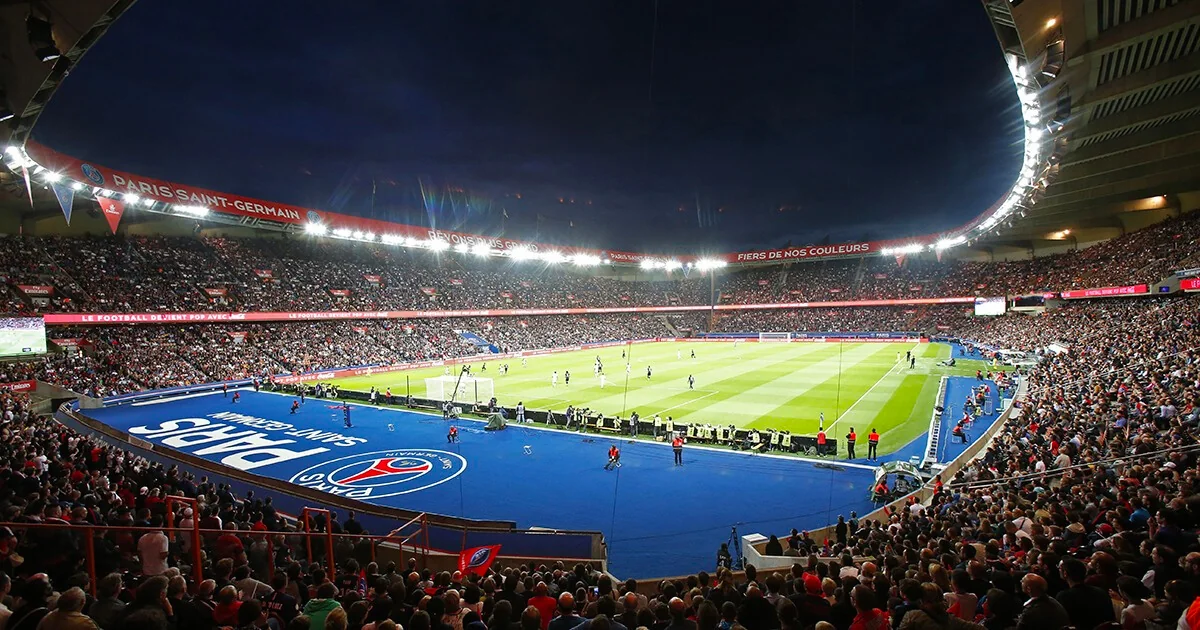
PSG’s advantage is unusually clear in historical terms. The club has won five consecutive French championships and reached 14 total titles, according to the league’s 2025/26 title review. A single strong attack or a deep squad cannot explain a run that long by itself. The practical significance is that PSG have repeatedly found enough results across changing opponents, competitions and seasonal conditions. For a rival to overtake them, it must do more than win one headline fixture; it must collect points at a similarly reliable rate over 34 matchdays.
The league’s 2026/27 PSG preview points to continuity under Luis Enrique and an unusually deep group of players. Continuity reduces one source of early-season uncertainty: the team does not have to learn an entirely new way of playing. Depth matters because a title challenge is tested on ordinary weekends as well as against direct rivals. A club must still win when a first choice player is unavailable or when the preceding match consumed energy. This is why PSG remain the baseline even if another side briefly sits above them in September.
There are limits to that edge. The same league preview acknowledges that Lens applied pressure in 2025/26, and PSG did not mathematically secure the title until May. A champion involved in other competitions faces demanding decisions about selection and recovery. None of that proves a collapse is coming; it identifies where the gap can narrow. A challenger needs to turn those weekends into points rather than merely hope the champion loses. The result sequence is a better test than one dramatic scoreline.
What Lens, Marseille and other challengers need
Lens have the strongest recent league case among pursuers because they finished second in 2025/26. Their opening 2026/27 league win, a 5–2 home result against Auxerre, showed attacking force, but it was one match at Stade Bollaert-Delelis. To mount a full title challenge, Lens must keep winning the less glamorous fixtures and take enough away points to prevent PSG’s greater depth from deciding the spring. The question is not whether Lens can beat a strong side once; its last campaign already established that it can compete. The question is whether it can sustain that standard while opponents adjust.
Marseille remain an important test for any title race, and the league described a Lens–Marseille meeting in January 2026 as a clash of title challengers. That description belongs to its moment; it should not be converted into an unsupported claim that Marseille were runners-up. For 2026/27, the route is straightforward to describe but hard to achieve: turn home intensity into a dependable base, avoid costly away drops, and take enough points in direct games. Lille’s third-place finish last season gives it a credible upper-table baseline, while Monaco’s seventh-place 2025/26 finish shows that a prestigious name can still require a genuine rebound.
My current call is PSG first in the title conversation, Lens the clearest demonstrated pursuer, and the rest needing fresh evidence. That ordering can change. If another side produces a long run of points against difficult opponents, particularly away from home, it earns a stronger case. The live table tells us whether the gap is closing; the fixture list tells us whether the run has been tested.
The race for Europe is wider than the title race
A season prediction should not treat “challenging PSG” as the only meaningful ambition. For several Ligue 1 clubs, the sharper contest is for a place in Europe and the level of competition that place provides. That race can remain open even when one team has created a title gap. It is also harder to forecast precisely because cup outcomes and qualification rules can affect which final league positions receive which reward. The more reliable question in September is which clubs can sustain upper-table form.
Squad depth, match load and head-to-head games
Lille are a clear example of opportunity and workload arriving together. The club finished third in 2025/26 with 61 points and entered the 2026/27 Champions League picture, according to its league preview. That makes Lille a credible upper-table pick, but it also creates more demanding weeks. A team that can win with a different lineup after a midweek match has a stronger European qualification case than one whose performance drops sharply when a few regulars rest. Lille’s new coaching chapter adds another reason to judge current evidence rather than simply copy last season’s third-place line.
Lyon entered the campaign with European ambitions of its own, as the league’s preview describes. Competition commitments can help a squad gain experience, but they also test recovery, travel and depth. For a forecast, count the difficulty of the next four or five league fixtures rather than treating every weekend as equal. A club may look exceptionally strong after two home wins and still have its most demanding away stretch to come.
Direct meetings are especially useful because they produce both points and comparison evidence. The 2026/27 calendar includes Lille against Marseille and Monaco against Lyon in a March round. By that point, those matches could shape a tight table. They will not have the same meaning if one side has already pulled away, so a reader should check the current standings before attaching a “six-pointer” label. The date and kickoff should also be rechecked closer to the game.
Which clubs have a credible top-end case
My broad European-race group includes Lille, Lens, Marseille, Lyon, Monaco and Rennes, with room for another club to force its way in. This is a tier of cases, not a claim that all six will qualify. Lille’s most recent podium finish and Lens’ runner-up campaign are firm completed-season evidence. Rennes returned to the European discussion late in 2025/26, according to the league’s run-in report. Monaco’s 2026/27 preview is a reminder that past strength is not immunity: after successive podium finishes, it slipped to seventh in 2025/26. That creates a plausible recovery case, not an automatic top-four forecast.
The standings will tell us which candidates take points; the results reveal how they take them. I would upgrade a club that repeatedly handles direct rivals, wins difficult away matches and avoids long dry spells after European fixtures. I would downgrade one that relies on narrow home wins but cannot create chances or prevent defeats on the road. These are observable signals a supporter can follow without pretending to know a final table months in advance.
Be careful about turning “European place” into a fixed competition label. The league’s explanation after the 2026 Coupe de France final shows that a cup result can change qualification consequences for league positions. When a final ranking matters, check the current competition rules and cup picture. For now, the useful prediction is that the chase behind the title favorite should be crowded and decided by sustained form, not by the size of a club’s name.
The relegation picture and the newly promoted clubs
The bottom of a September table is a warning light, not a final verdict. A club can start slowly because it faced several title contenders, while another can bank points from a gentler opening schedule and still have harder weeks ahead. The cost of a poor run is real, however: every missed chance to beat a nearby rival creates pressure later. My current relegation forecast is therefore conditional. Newly promoted Troyes and Le Mans face a clear adjustment test, and any established club that struggles for goals or away points can be drawn into the same conversation.
What promotion tells us—and what it does not
Troyes and Le Mans earned their places. Troyes’ promotion was secured with a 3–0 away victory at Saint-Étienne, while Le Mans completed consecutive promotions after a strong Ligue 2 season. The league preview gives Le Mans 62 points and only four defeats in 34 second-tier matches. Those are meaningful measures of a winning habit and resilience. They do not translate automatically into a top-flight points total, because the opposition and match demands change.
The opening round offered evidence of competitiveness without settling the survival question. Le Mans drew 2–2 with Brest, and Troyes drew 0–0 with Paris FC, according to the league’s match report. A promoted side can draw confidence from taking points immediately, especially if it avoids being overwhelmed. But the next test is repetition: can it create scoring chances against different defensive setups, handle pressure away from home, and recover after a disappointing weekend? Those patterns require a sequence of matches, not an opening-day label.
The histories are different too. Troyes returned after a shorter spell out of the division. Le Mans had not played in Ligue 1 for 16 years, the league preview says, and rebuilt through the divisions. That story makes Le Mans fascinating to follow but provides no sporting exemption from relegation pressure. Supporters should resist the easy assumption that every promoted team is doomed. Recent French seasons have also shown that existing top-flight clubs can become vulnerable if results deteriorate. The current table should be read as a moving set of clues.
Early warning signs to monitor
The first signal is whether a team can convert home fixtures against direct rivals into points. Such matches are not mathematically worth more than others, but they both help one club and deny a nearby competitor. A second signal is goal difference. A run of narrow defeats may suggest a team remains competitive, while repeated heavy losses can reveal deeper structural problems; neither measure should be interpreted without considering opponent quality. A third is away production: even a defensively sound home team needs something from travel over a 34-match schedule.
There is a specific line on the table that fans should recognize. The league’s 2026/27 calendar decision says the club finishing 16th in Ligue 1 is due to meet the Ligue 2 play-off winner over two legs on 3 and 6 June 2027. That makes 16th a precarious position, not automatic safety. It also shows why a prediction about the bottom should be updated through spring rather than frozen in September. A team that looks secure with a small cushion can still face a tense final month.
For now, I would watch Troyes and Le Mans closely because the step up is real, while keeping the field open. If either club repeatedly takes points against established opponents, its survival case strengthens. If another side cannot score away, loses direct meetings and sees its goal difference worsen, its prior reputation should not protect it in a forecast. The results list gives that evidence match by match. It will tell a far better story than a September prediction pretending to know who falls in May.
How to update the forecast after each matchday
The point of a forecast is to become more accurate as the evidence grows. Set a review point after each full matchday, not in the middle of a weekend when some clubs have played and others have not. Start with the completed results and note which opponents each candidate faced. Then compare changes in points and goal difference on the current table. Finally, look forward on the fixture list. The next run of opponents can make a short-term rise look more or less sustainable.
For the title race, I would revise PSG’s favorite status only after repeated evidence. A challenger taking points at PSG’s pace over several difficult games is significant. One upset is an important result, but it does not erase a five-title baseline. For European positions, pay particular attention to direct games and the weekends around continental fixtures. If a club’s results remain strong despite heavy scheduling, the evidence for its depth improves. If it drops points repeatedly after those matches, its final position becomes less secure.
For survival, a steady supply of points against nearby sides matters more than a single eye-catching draw with a favorite. Track whether a team is being outscored badly, whether it can create enough chances away from home, and whether its home fixtures offer a route to recovery. The 16th-place play-off line gives those small differences practical weight. A point gained or lost now is real, even though a September placing is provisional.
Use a date and season label whenever sharing a prediction. This article’s judgment reflects information checked on 18 September 2026. The official 34-matchday calendar makes clear how much of the campaign still lies ahead, including a winter break and simultaneous final rounds. A prediction that was defensible after four matches may need a new explanation after fourteen, and again in April. That is a strength of honest analysis rather than a failure to sound certain.
When checking a particular day, the today page helps distinguish a live fixture from a game already completed or a date with no match. If you follow one club closely, the calendar tool can keep its fixtures at hand. Those live tools should carry the changing facts. This article supplies the questions to ask about them: how strong were the opponents, where were the matches played, and what evidence has genuinely changed?
PSG remain the benchmark, but 34 matchdays leave room for challengers and surprises. Follow the evidence as it arrives: opponent quality, away results, direct meetings and how clubs cope when the schedule becomes harder. The forecast is most useful when it changes for a reason.
Loading comments…