
Paris Saint-Germain won the 2025/26 Ligue 1 title with 76 points, six ahead of Lens. Lille completed the podium, Nantes and Metz were relegated directly, and Nice stayed in the division after a play-off. This is the fixed final regular-season table and a review of what its positions meant; current 2026/27 standings tell a different story.
The final 2025/26 Ligue 1 table
Paris Saint-Germain finished the 2025/26 Ligue 1 season as champions with 76 points from 34 matches, six clear of Lens. Lille were third on 61, Lyon fourth on 60, and Marseille and Rennes each finished on 59. At the other end, Nantes and Metz occupied the two direct relegation places. Nice finished 16th and therefore had to defend its place in a separate play-off. These are final regular-season positions, fixed after the last league round in May 2026; they should not be confused with an early 2026/27 live table.
| Pos. | Club | Played | Points |
|---|---|---|---|
| 1 | Paris Saint-Germain | 34 | 76 |
| 2 | Lens | 34 | 70 |
| 3 | Lille | 34 | 61 |
| 4 | Lyon | 34 | 60 |
| 5 | Marseille | 34 | 59 |
| 6 | Rennes | 34 | 59 |
| 7 | Monaco | 34 | 54 |
| 8 | Strasbourg | 34 | 53 |
| 9 | Toulouse | 34 | 45 |
| 10 | Lorient | 34 | 45 |
| 11 | Paris FC | 34 | 44 |
| 12 | Brest | 34 | 39 |
| 13 | Angers | 34 | 36 |
| 14 | Le Havre | 34 | 35 |
| 15 | Auxerre | 34 | 34 |
| 16 | Nice | 34 | 32 |
| 17 | Nantes | 34 | 24 |
| 18 | Metz | 34 | 17 |
The table is a compact account of nine months of football, but its gaps need interpreting. PSG's six-point advantage over Lens was decisive: the runner-up produced a strong 70-point season and still could not match the champion. A larger nine-point break separated second-place Lens from third-place Lille. That tells a different story from a three-club title sprint. It also prevents the common mistake of treating every podium position as evidence that a club was equally close to the title. Lens was the direct challenger; Lille was the best of a much tighter next group.
That next group was exceptionally compressed. Only two points separated third-place Lille from sixth-place Rennes. One late win can be worth three points, so the final order among Lille, Lyon, Marseille and Rennes was sensitive to late match results. Marseille and Rennes ended level on 59 points but in different positions under the league's ranking criteria. The LFP revised tie-break rules for 2025/26; fans should not assume that the displayed order always follows goal difference alone. When a pair is level, the official ranking and applicable tie-break criteria are more reliable than a quick glance at one statistic.
Below eighth, the table had another sharp break. Strasbourg finished on 53, eight points ahead of Toulouse and Lorient on 45. Toulouse, Lorient and Paris FC were then separated by just one point. A mid-table label hides those distinct experiences: Strasbourg was within one point of Monaco, while a club on 45 was much farther from eighth but also well clear of the relegation fight. The 34-match sample matters here. Each club faced the same league schedule length, so the final point totals are directly comparable within this season.
The bottom five show how the survival pressure developed. Angers had 36, Le Havre 35 and Auxerre 34, then Nice occupied the play-off place with 32. Two points separated Auxerre from Nice, a gap small enough for a single match result to reverse the immediate outcome if other results allowed it. Nantes on 24 and Metz on 17 were considerably farther away. Nice's later play-off survival did not change the fact that the club finished 16th in the regular league table. For historical comparison, retain the table rank and note the subsequent play-off result separately.
The league's podium review confirms the PSG–Lens–Lille top three and notes that Monaco, seventh, missed the podium. This independent editorial check helps anchor the numerical table. As you read it, remember that qualification labels can also depend on domestic cup outcomes and competition access rules. The numbers above are the final league standings; the next section explains what the title and upper positions meant in context.
How the title and European races were settled
The six-point final margin can make the title look straightforward. The decisive moment was more pointed than a routine lead at the top of the table: Paris Saint-Germain travelled to second-place Lens and won 2–0, a result that mathematically secured the championship. It was a direct meeting of the two clubs that would finish first and second. A win in that setting does two jobs at once: it adds to the leader's total and denies the only remaining direct challenger a chance to close the gap. That is why the match is a better summary of the title race than simply saying PSG finished first.
Paris Saint-Germain's title campaign
PSG finished with 24 wins, four draws and six defeats in 34 league matches, according to the final standings. Those results produced 76 points and a positive goal difference of 45. The points are the scoreboard of the season, but the match pattern is the more useful measure of control: the champion converted a large majority of rounds into wins and could withstand occasional defeats without losing first place. Lens won 22 matches, an impressive figure, yet PSG's two extra victories and their relative draw/loss balance created the final separation.
The league's title review says this was PSG's 14th top-flight championship and fifth consecutive league title. These are two different historical claims. Fourteen counts the club's total titles across its history; five consecutive counts an uninterrupted run ending in 2025/26. They put the 2026 achievement in context without making an unsupported claim that every year in the run was won in the same way. A title secured against Lens after a close pursuit is not identical to a title sealed weeks earlier by a huge margin.
The Lens match also shows why an away fixture can carry unusual pressure. The leader could have been forced to keep looking over its shoulder if the runner-up had won at home. Instead PSG took all three points at Bollaert-Delelis. That result did more than decorate a champion's record: it removed a route by which Lens might have made the final rounds a live title contest. The late-season fixture therefore belongs in any account of how PSG won, not merely that they won.
Lens deserves its own sentence in the title account. The club's 70 points were worth roughly 2.06 per match, a level that the LFP season statistics identify as Lens's second-best season by points per game. Finishing six behind PSG does not make a 70-point campaign mediocre. It says the champion was better over this particular 34-game sample. That distinction matters to supporters comparing Lens across eras: the runner-up's performance can be excellent even when the trophy goes elsewhere.
The chase for European places
The contest below Lens was much tighter than the title margin. Lille's 61 points secured third place, but Lyon had 60 and Marseille and Rennes each had 59. The league's late-season report described Lille moving onto the podium after winning at Monaco while Lyon slipped to fourth. That example shows the practical weight of a direct rival's result. When the margins are one or two points, a single win and a rival's dropped points can change the competition a club enters the following season.
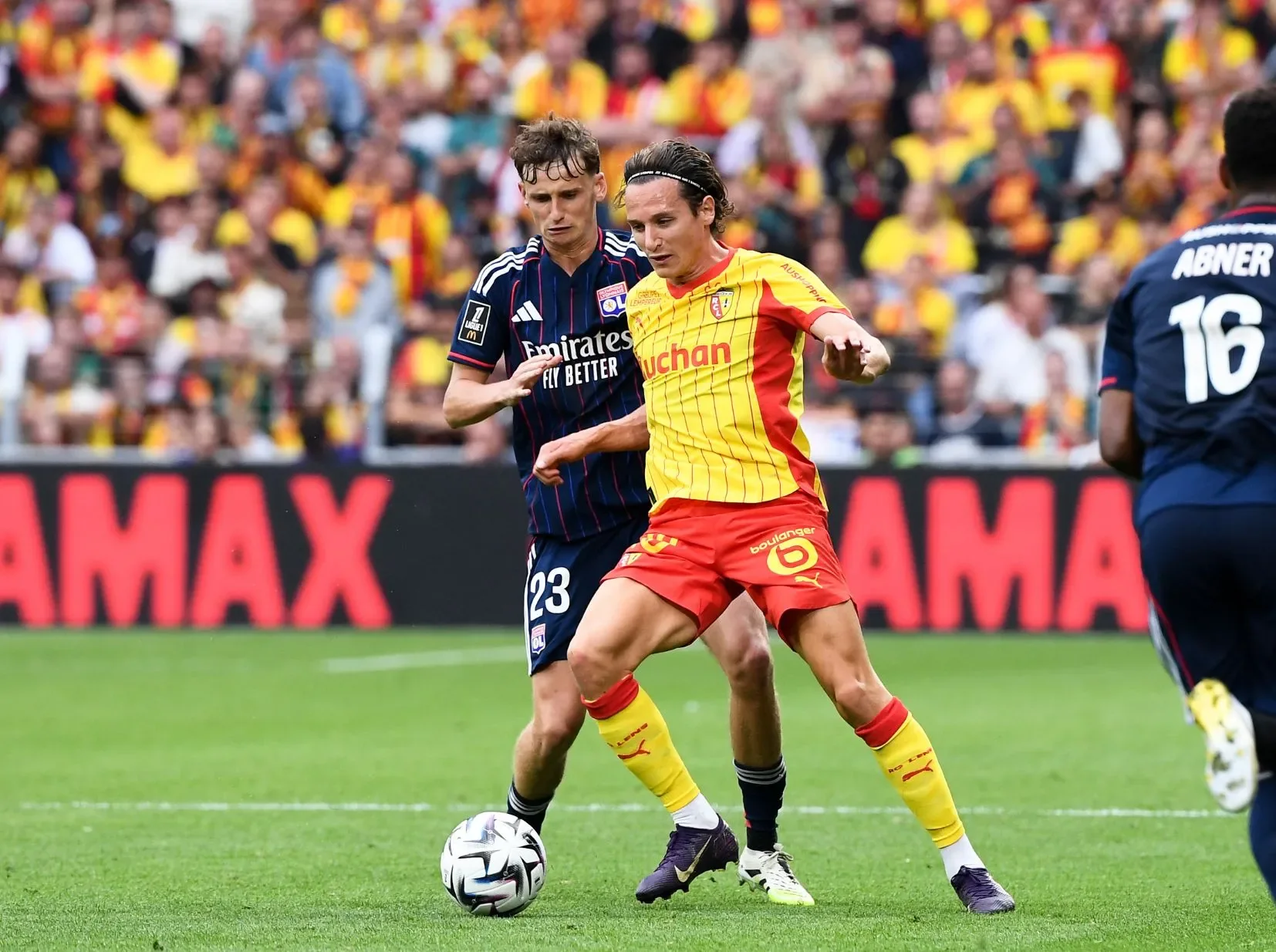
Third place and fourth place are not cosmetic labels in this context. The LFP's post-season qualification explanation describes the top three as reaching the Champions League league phase, with fourth entering its qualifying route. Lille therefore ended with a more direct path than Lyon, despite only one point between them. For a fan, this gives an otherwise small numerical gap a tangible consequence: one team could plan around a confirmed league-phase place, while the other faced additional qualifying matches.
Marseille and Rennes finished level on points. The final league ranking placed Marseille fifth, Rennes sixth, but the European allocation did not stop with the initial league table. Lens later won the Coupe de France while already qualified for the Champions League through its second-place league finish. The LFP explained that this moved Rennes into the Europa League and extended the Conference League route to seventh-place Monaco. This is exactly why an early final-day article can become incomplete after a cup final: the league places are fixed, but the destination attached to some places can move under the competition access rules.
Monaco's seventh-place finish is a useful case study. The club ended on 54 points, one ahead of Strasbourg, and initially had no European place from the ordinary top-six allocation. Lens's cup win turned that seventh position into a Conference League play-off opportunity. A single point above Strasbourg thus mattered in a way that was not fully clear at the final league whistle. The table records sporting rank; the later cup result determined whether that rank opened a continental door.
Supporters should read all European labels with a date. The league table as of the last matchday, the domestic cup result and the final access list are linked but separate facts. This account uses the post-Cup allocation as confirmed by the LFP on 28 May 2026. It avoids projecting a future UEFA outcome from a qualifying place: entry to qualifying is an opportunity to reach the main phase, not proof that a club has already qualified for it.
Relegation, promotion and what carried into 2026/27
A final table is also the bridge into the next season. It tells us which clubs earned another year in the top division directly, which clubs went down, and which one had to win a separate tie. The 2025/26 finish is unusually clear in one respect: Nantes and Metz were 17th and 18th, while Nice was 16th. The first two places meant direct relegation. Sixteenth was a second chance, not an automatic demotion. That distinction is essential when someone asks whether Nice was “relegated in 2026”: the club finished in danger but then survived the play-off.
The clubs that left Ligue 1
Metz ended with 17 points from 34 games, a long way behind the last secure position. Nantes finished 17th on 24. The Nantes figure can be checked against the club's own final standings page, which lists five wins and nine draws: three points for each win plus one for each draw equals 24. An LFP season-statistics paragraph gives 23, but that conflicts with the published win-draw record and the club's table. The article therefore uses the arithmetically consistent final ranking. The relegation outcome itself is not in dispute.
The contrast between the bottom two is instructive. Nantes was seven points above Metz yet still eight behind Nice's play-off position. It is possible to finish comfortably above last place and still be cut adrift from safety. Once the season reaches its final rounds, the relevant comparison is not the team below you but the team occupying the place you need to reach. A supporter following Nantes late in the season would therefore watch Nice and Auxerre results more closely than Metz's, because the route to survival ran through those positions.
Nice's route was different. A final-day draw against already relegated Metz left the club 16th, and the league's match report identified Saint-Étienne as its play-off opponent. The two-leg tie was a new contest after the 34 league rounds. Nice held the first leg to a draw and then won 4–1 at home in the return, according to the official second-leg report. The result kept Nice in Ligue 1 and left Saint-Étienne in Ligue 2. It did not rewrite Nice's regular-season rank from 16th to 15th; it determined where the club would play next.
This sequence gives the lower table a sharper meaning. Auxerre's 34 points bought direct survival by two points over Nice. Nice's 32 bought only the right to contest a further tie. Nantes' 24 and Metz's 17 bought neither. Those are three materially different outcomes across only four adjacent rows. Saying “the bottom three went down” would be wrong for 2025/26, because the 16th-place club won its survival match. Historical tables should preserve the play-off marker rather than color all three rows the same way.
The clubs arriving from Ligue 2
ESTAC Troyes and Le Mans were the clubs that came up from Ligue 2 for 2026/27. The league reported Troyes' promotion before the second automatic place was settled. Its Le Mans preview later confirmed that Le Mans finished second in Ligue 2 with 62 points and returned to the top flight after 16 years away. Both clubs therefore entered through their league position, without needing to win the Ligue 1/Ligue 2 survival tie. Saint-Étienne had the opportunity to become a third promoted club but lost that tie to Nice.
For supporters, the change is more than two names in a list. Troyes and Le Mans bring new opponents and away trips for incumbent Ligue 1 clubs; Nantes and Metz leave the top-flight fixture list. A club's schedule is reshaped even when that club itself remains in the division. This is one reason to check the 2026/27 calendar rather than reuse an old set of opponents. The official new-season calendar includes Le Mans and Troyes and continues to include Nice, matching the confirmed promotion and play-off outcomes.
Comparisons between the two seasons should therefore state which population of clubs they cover. A team that finished 12th in 2025/26 did not necessarily face the same set of 17 rivals in 2026/27. An especially difficult away trip may disappear from the calendar; another may arrive with a promoted side. League-wide goals, points and relegation thresholds can move for many reasons, and the changed membership is one of them. The final table is the correct archive for what happened in 2025/26, while the current fixtures and standings are the right tools for what is happening now.
The final table records 34 rounds, but the full season story includes PSG's direct win over Lens, a tight European race, Lens's cup-driven qualification changes and Nice's separate survival tie. Use these final positions for historical comparisons and the current-season pages for new results. Keeping those timelines separate preserves both the numbers and their meaning.
Loading comments…